Gold surpasses Euro in global international reserves

Since 2009, strong central bank gold purchases and a rising gold price have increased the precious metal’s proportion in worldwide foreign reserves at the expense of fiat currencies. By the end of 2023, gold has eclipsed the euro, with the US dollar being the next fiat currency to be challenged.

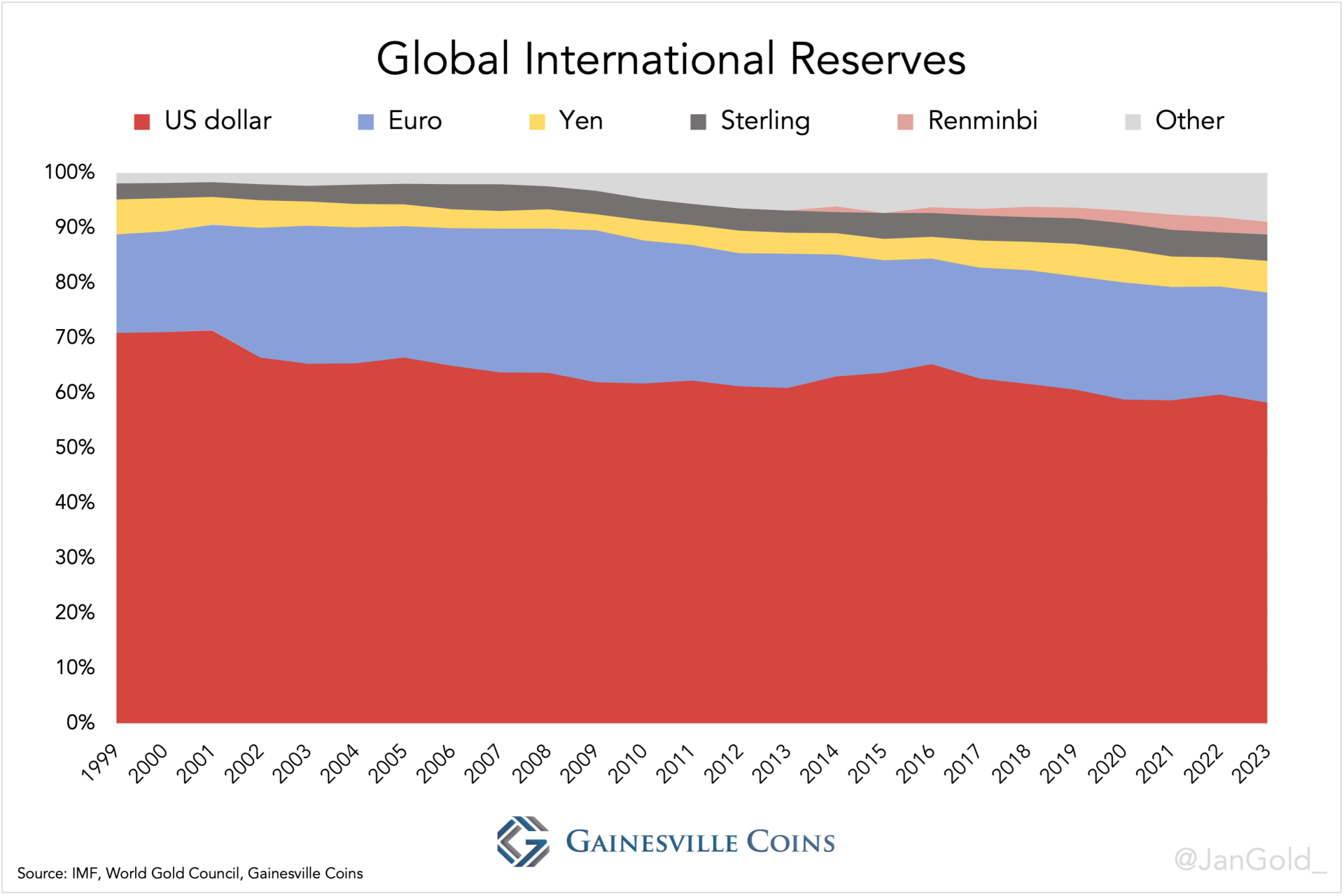
When financial experts make charts depicting the distribution of international reserves, they frequently focus on foreign exchange (excluding gold) and begin with the introduction of the euro in 1999. According to similar figures, the dollar’s proportion of global reserves looks to be progressively declining, from a high of 72% in 2001 to 58% in 2023. Furthermore, it appears that no one currency is directly competing with the dollar.

Chart 1. A typical chart showing worldwide foreign exchange reserves.

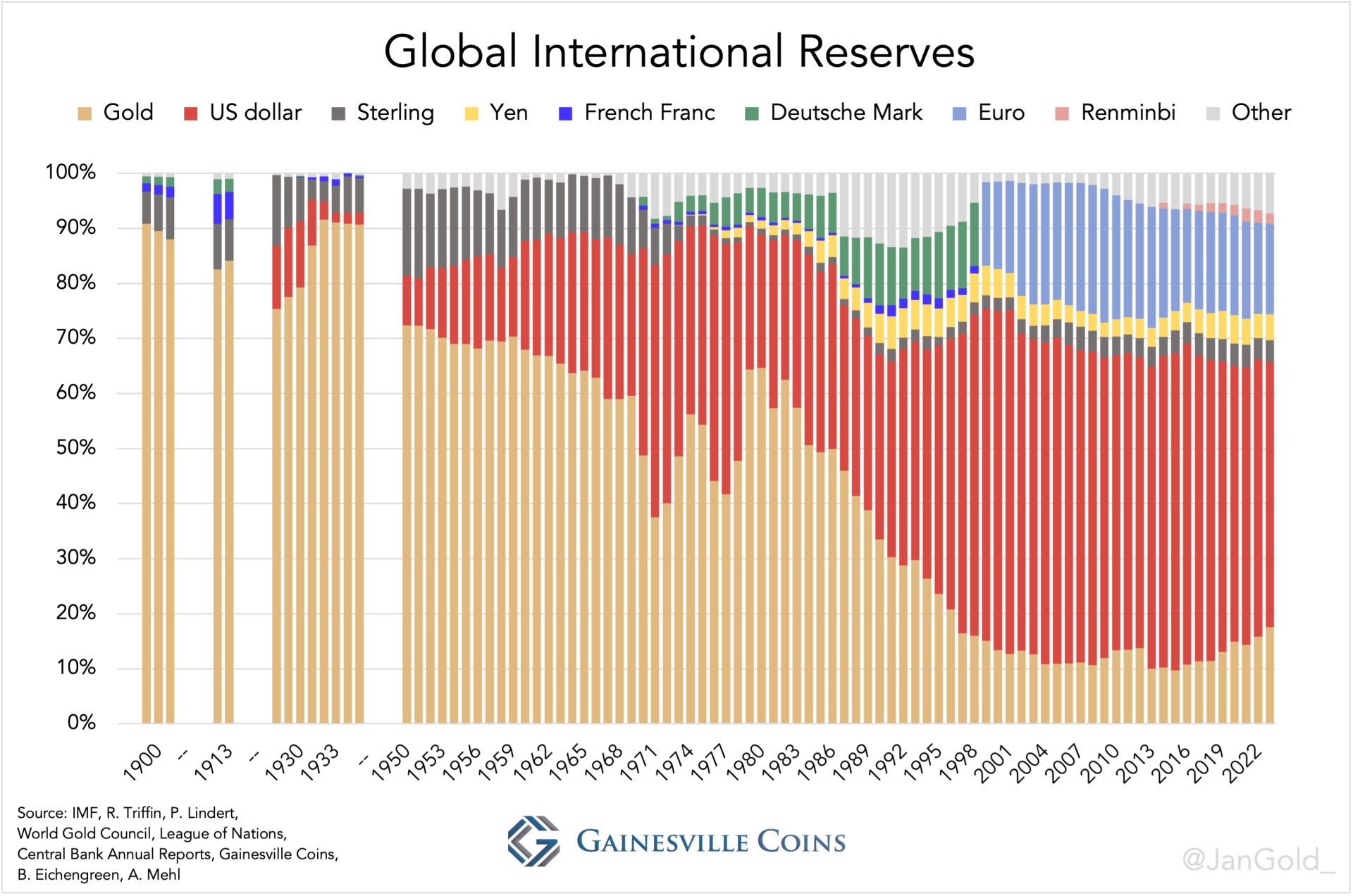
Why not add gold and go back as far as possible? By merging numerous sources, we can see how reserve currencies spread from 1899 to 1935 (both fiat and gold), as well as a more complete picture beginning in 1950.

Chart 2. Global international reserves from 1899 to 2023. Data before 1950 are approximations. Special Drawing Rights are excluded as they are unimportant in the overall scheme of things.

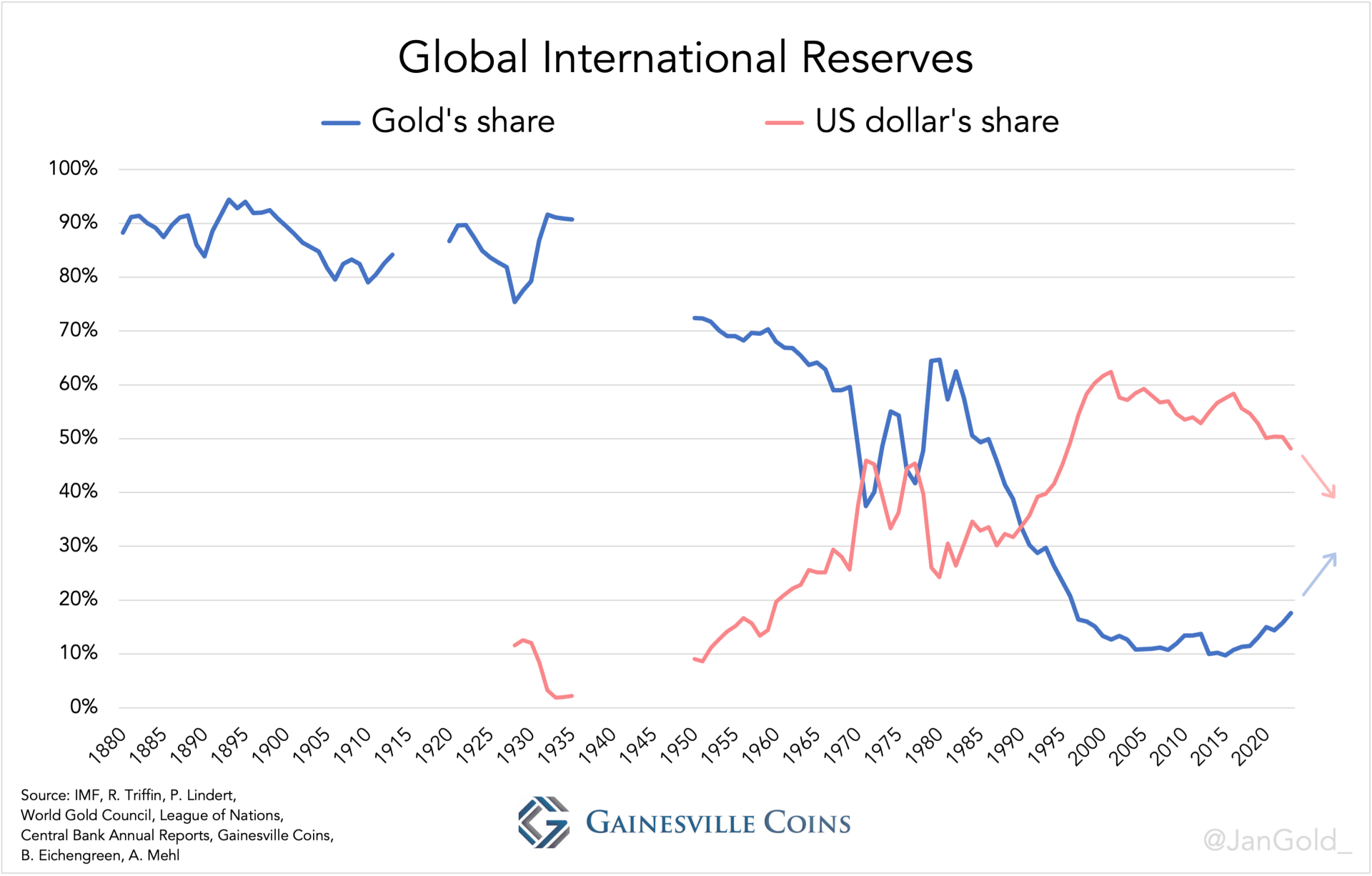
This tells a very different story. Instead of focusing just on the dollar’s slow decline, the historical balance between gold and fiat currencies is shown. Normally, the international monetary system is backed by gold rather than dollars. Gold used to account for the vast bulk of foreign reserves, even when sterling was regarded as the world reserve currency before the dollar. In a chart that spans more years but only includes gold and the dollar, the latter’s dominance appears even more relative.

Chart 3. Gold and the dollar’s share of global international reserves since 1880.

The graphic above shows that the dollar’s share of global reserves has declined to 48% by 2023, owing to a diminishing faith in “credit assets” (fiat currencies) as a result of alarming asset bubbles, growing conflicts, and inflation fears, while gold is gaining momentum.

According to estimations of the gold researcher Jan Nieuwenhuijs of official gold holdings that include covert acquisitions, such as those made by the Chinese central bank, gold’s share of total reserves increased to 18% in 2023, up from 11% in 2008. Gold has currently eclipsed the euro, which has been locked at 16%. Because the difficulties plaguing fiat currencies are unlikely to be resolved anytime soon, gold may replace the dollar in the coming decade.

You are welcome to contact us for any additional information.

We do not offer investment advice:
This information is provided solely for general information and educational purposes. It is not, and should not be construed as, an offer to buy or sell, or as a solicitation of an offer to buy or sell, or as investment advice in general

Gold Data by Central Banks for March 2024

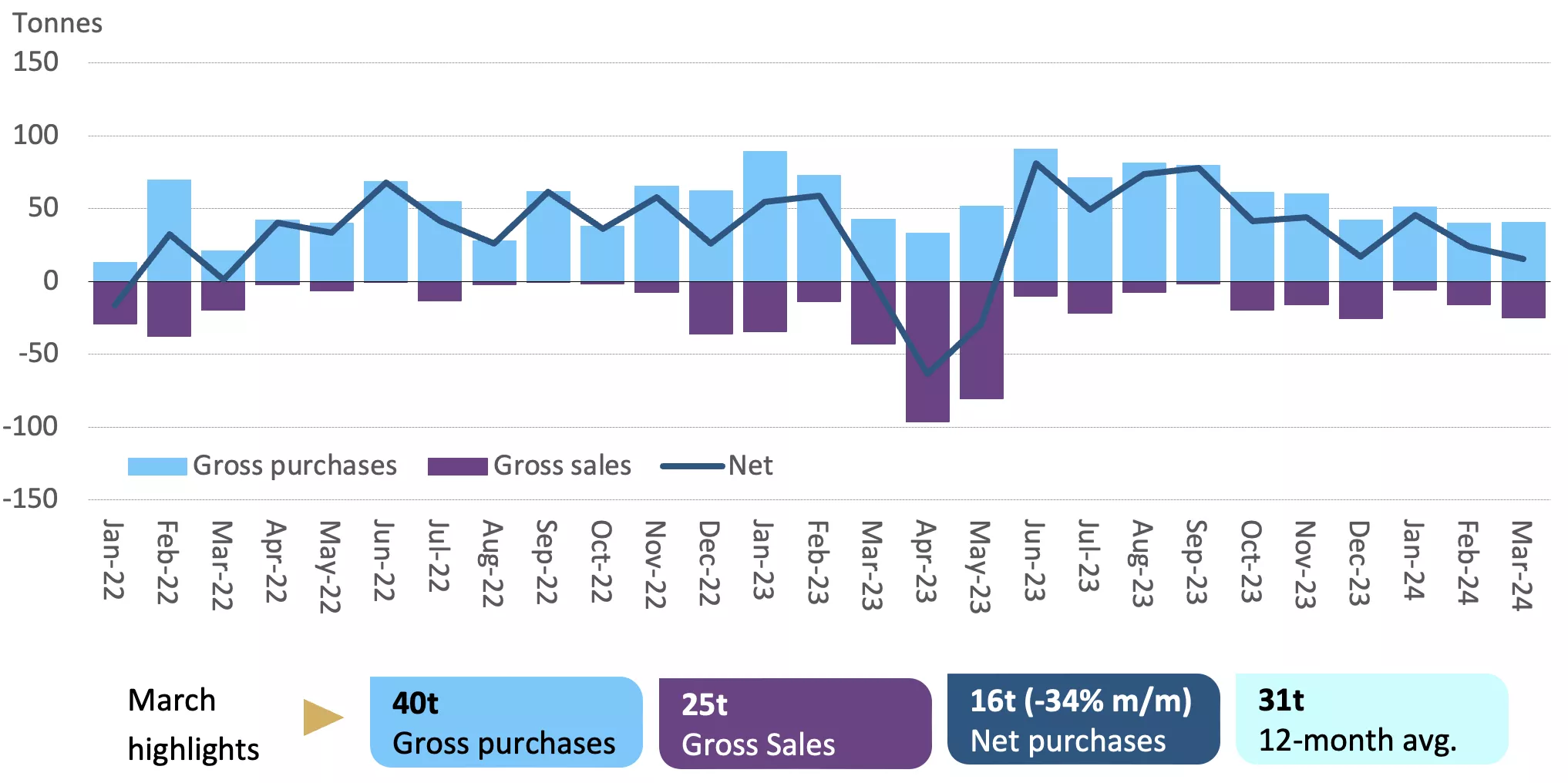
According to the IMF and other public data sources, central banks recorded 16t in net purchases in March.

Demand was strong: monthly gross purchases were stable m/m at 40t, somewhat offset by gross sales of 25t*.

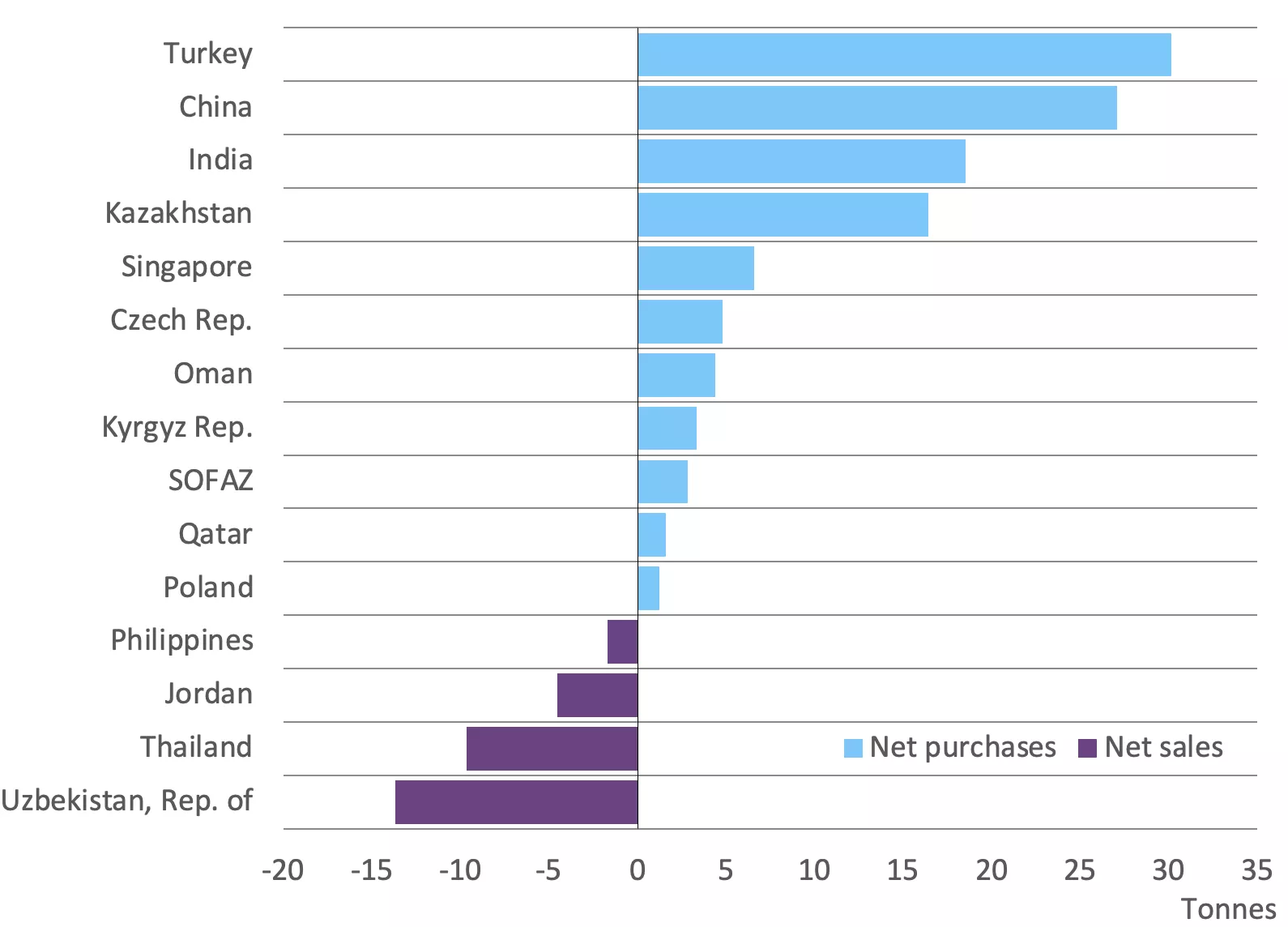
Changes by country (March)

March trades were driven by central banks that had lately been active.

Major purchases were all from emerging markets. The Central Bank of Turkey added the most gold (14t) this month, followed by the Reserve Bank of India and the People’s Bank of China.

**The Republic of Azerbaijan’s State Oil Fund had a 3t rise in gold reserves between January and March 2024.

***This is an adjustment to report only gold with a purity of at least 995/1,000. This has no effect on the quantity of gold held as Net Foreign Assets and reflected in the BOT’s financial statements.

Changes by country (year-to-date)

Buying strength has persisted into 2024, with developing market banks driving both purchases and sales.

Singapore’s Monetary Authority remains the only developed-market bank to add gold to its holdings.

SOFAZ is significant since it is the only sovereign wealth fund to report increasing its gold holdings by 3t y-t-d.

*Numbers may not add up because of rounding. SOFAZ is excluded since it only publishes statistics on a quarterly basis.

Change by nation and year-to-date change charts only reflect changes of one tonne or more.

You are welcome to contact us for any additional information.

We do not offer investment advice:
This information is provided solely for general information and educational purposes. It is not, and should not be construed as, an offer to buy or sell, or as a solicitation of an offer to buy or sell, or as investment advice in general

Q3 2023 Gold Demand Trends: Gold Is Outperforming the S&P 500 Index

The 2023 outlook calls for a rise in overall investment demand, including OTC, in contrast to the decreased fabrication demand resulting from higher gold prices. This year, central bank purchases have continued at an explosive rate and may surpass the record set last year. There is a good chance that mine production will reach a record yearly amount.

The best-performing precious metal for the last week of October 2023 was palladium, up 1.78%. U.S. stocks are in their third monthly decline while underwhelming corporate earnings and yields climbing above 5% have investors pondering their choices. When other assets don’t look so safe, gold may find a more welcome buyer. As of Friday afternoon, gold is up more than 10% year-to-date and the S&P 500 is now up only 7%. Russia saw gold production drop 9.2% year-on-year and 4.1% month-on-month in September 2023, the Federal State Statistics Service (Rosstat) said in a statement. Despite the declining monthly data, the overall volume of domestic gold production rose 1.7% for the first nine months of this year.

Eldorado Gold’s earnings per share (EPS) of $0.17 above the average estimate of $0.04, in part due to lower-than-anticipated expenses across the board. Pre-released third-quarter output totaling 121,000 ounces of gold showed increased production from the previous quarter, but the consolidated AISC of $1,177 per ounce was 21% less than the consensus AISC of $1,486 per ounce. Above the $0.12 consensus, Alamos announced adjusted EPS for the third quarter of $0.14. Driven by ongoing outperformance at Mulatos, production of 135,400 ounces at total cash costs of $835 per ounce and AISC (all-in sustaining costs) of $1,121 per ounce surpassed consensus by 12%, 4%, and 7%, respectively. The business reiterated its cost projection with AISC of $1,125–$1,175 per ounce and upped its production guidance for the fiscal year 2023 from 480–520,000 ounces of gold to 515–530,000 ounces of gold.


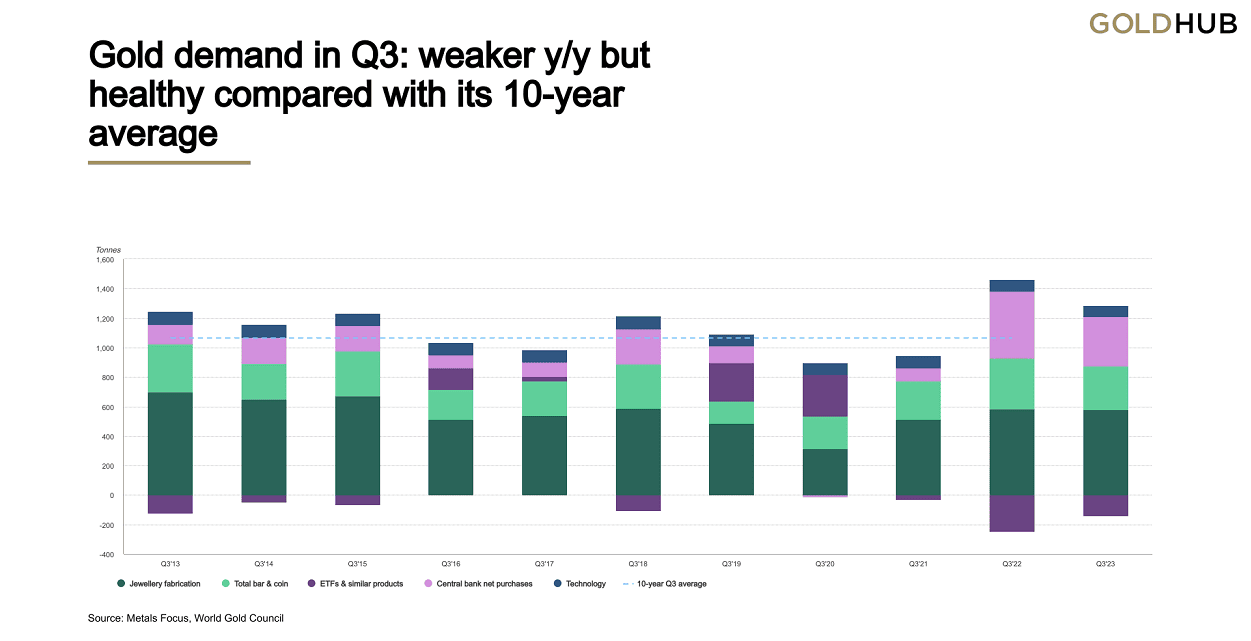
Gold demand in Q3: weaker y/y but healthy compared with its 10-year average

While still at a historic rate, central banks’ purchases of gold fell short of the record set in Q3 of 2022. The demand for jewellery decreased little despite the high price of gold, but the outlook for investments remained uncertain.

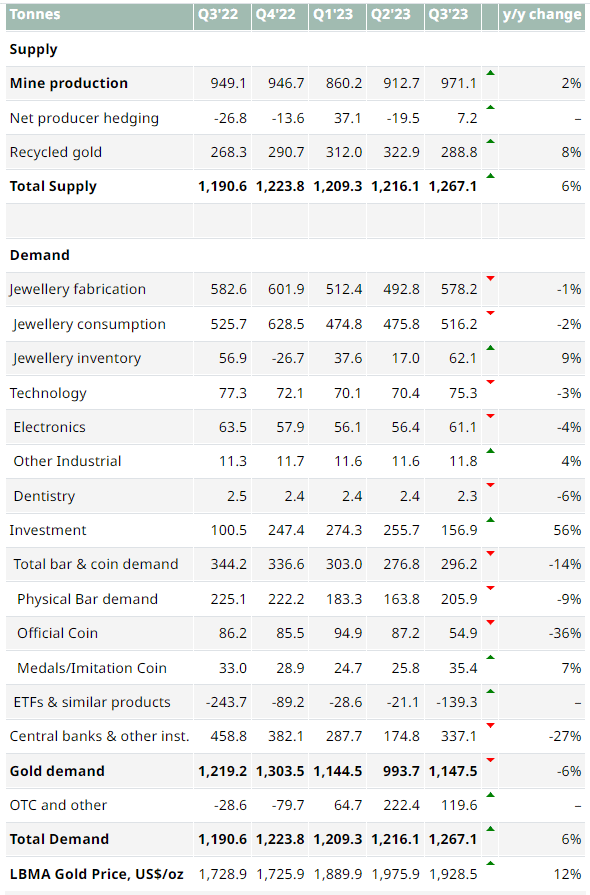
With the exception of OTC, gold demand in Q3 was 8% higher than its five-year average at 1,147t, but 6% lower year over year. With stock movements and OTC included, overall demand increased 6% year over year to 1,267t.1

The third best quarter for net central bank purchases, with 337t, was not able to surpass the remarkable 459t from Q3’22. However, demand from central banks is at a record 800t, 14% more than it was at the same time last year.

Despite being 56% higher year over year, Q3 investment demand of 157t was not as strong as its five-year average of 315t. Global gold ETFs saw a 139t loss in Q3, a far lesser outflow than Q3’22 (-244t).

Bar and coin investment fell 14% year over year to 296t, although it was still much higher than the 267t quarterly average over the previous five years. Sharp declines in Europe are mostly to blame for the y/y reduction.

In Q3, OTC investments amounted to 120t. The gold price found strong support for a large portion of Q3, despite ETF withdrawals and declining COMEX futures net longs, indicating once again this opaque source of demand.

The consumption of jewellery decreased by 2% year over year to 516t, despite the ongoing rise in the price of gold. The production of jewellery was only slightly more robust, declining 1% to 578t as a result of inventory build-up.

The demand for fragile consumer devices kept undermining the amount of gold used in technology, which decreased by 3% year over year to 75t.

In Q3, mine output hit a record 971t, contributing to the overall increase in gold supply to 1,267t (+6% y/y). Recycling increased 8% to 289t year over year.
 

 Highlights

In Q3, the average price of gold on the LBMA (PM) was US$1,928.5/oz. 12% higher year over year, although being 2% behind the record high observed in Q2. Due to their currencies’ weakening relative to the US dollar, several jurisdictions, namely China, Turkey, and Japan, witnessed an increase in their local gold prices.

Year to Date, net central bank gold purchases are 14% ahead of 2022. The amount of gold that central banks have purchased so far this year—800t net—is the biggest amount ever for those nine months. There is a core group of devoted, consistent purchasers, but the countries whose central banks have increased their reserves in recent quarters are diverse.

There is a mixed demand for investments. Because of the H1 strength in the Middle East, Turkey, and China, bar and coin investment is about in line with Q1–Q3 of last year. In contrast, gold ETFs have had 189t of withdrawals so far this year, and they have now experienced six consecutive quarters of negative demand.

Mine output also hit a new y-t-d high of 2,744t following a record-breaking Q3. This means that a new yearly high can be attained in 2023. With 924t (+9%), the y-t-d supply of recycled gold is likewise higher. While high gold prices have helped this supply factor, the US economy’s resiliency and the Middle East’s compelling investment appeal have limited it.
 

Principal points

Year to Date, net central bank gold purchases are 14% ahead of 2022. This year’s Q1–Q3 saw central banks purchase 800t of gold, the most ever for those nine months.

In Q3, jewellery consumption decreased 2% year over year to 516 trillion pieces. The y/y fall was mostly caused by the high price of gold and the state of economic uncertainty, especially in some of the more price-sensitive countries in Asia and the Middle East.

Despite being 56% higher year over year, Q3 investment demand of 157t was not as strong as its five-year average of 315t. Global gold ETFs saw a 139t loss in Q3, a far lesser withdrawal than Q3’22 (-244t). Due to significant declines in Europe, bar and coin investments were 14% worse year over year, but they are still stable over the long run.

Mine output also hit a new y-t-d high of 2,744t following a record-breaking Q3. This means that a new yearly high can be attained in 2023.

You are welcome to contact us for any additional information.


We do not offer investment advice:
This information is provided solely for general information and educational purposes. It is not, and should not be construed as, an offer to buy or sell, or as a solicitation of an offer to buy or sell, or as investment advice in general.

Professional support: How To Avoid Popular Gold Scams In 2023?

In recent years, gold has been a popular investment. Many investors around the globe were drawn to “safe haven assets” such as precious metals due to the geopolitical issues and market instability. Gold, like any other investment, is vulnerable to scams and frauds. Here are main gold scams to be on the lookout for:

Scam #1 Fake Gold: In this fraud, a trader may attempt to sell gold that is counterfeit or of lower purity than stated. This is why it is critical to buy gold from a reliable dealer.

Scam #2 Cash for Gold: These scams frequently include companies that offer quick cash in exchange for shipping in your gold jewellery. They frequently pay significantly less than the gold’s worth. Keep track of the purity of your gold and the current spot price. To establish the market value of your gold, use a calculator like this one.

Scam #3 Overpriced Gold: Some gold companies might attempt to sell gold at prices considerably in excess of its existing market value. During the COVID-19 pandemic, many investors and retirees took advantage of government support to purchase overpriced gold.

Scam #4 Leveraged Accounts: Some dealers may persuade investors to purchase gold with borrowed funds, claiming that it will boost their return on investment. This technique, however, is hazardous because if the price of gold declines, you may lose more than your initial investment. Furthermore, you must recuperate any premiums and fees paid above the spot price with this technique.

Scam #5 Rare Coin Scams: Some merchants may attempt to sell you collectible or rare coins, saying they are more valuable because of their scarcity or historical significance. However, the value of these coins is subjective and is not always linked to the price of gold. As a result, this makes them a risky investment, particularly for new investors. Beginner investors should most likely concentrate on high-purity gold bullion that trades at lower premiums.

Scam #6 Doomsday Salesmen and Fearmongers: Some salespeople will try to persuade you to convert all of your savings to gold, stating that the market and financial systems are about to implode and that you will lose your entire life savings if you do not invest in gold right away. This is a clear red flag and you should avoid it. While allocating a percentage of your portfolio to gold is a good idea, you should never put all of your eggs in one basket.

Conclusion

Unfortunately, frauds and fraudulent practises have targeted popular investing options for individuals seeking to protect and grow their savings. In a world where financial frauds abound, it’s critical to understand the risks involved with gold investments and take necessary precautions to safeguard your hard-earned money.

Liemeta ME Ltd. provides individuals with segregated and allocated custody storage of gold, silver and other precious metals.

Gold and silver etc. stored with us is allocated to our clients’ name and stored in custody for our clients. Our clients’ precious metals do not form a part of our own assets and are not assets of anybody else. All precious metals within our storage facilities in Liechtenstein, are fully insured and have an Evidence of Insurance certificate (EOI).

You are welcome to contact us for any additional information.


We do not offer investment advice:
This information is provided solely for general information and educational purposes. It is not, and should not be construed as, an offer to buy or sell, or as a solicitation of an offer to buy or sell, or as investment advice in general.
What Makes Gold a Persuasive Asset for Investment?

Gold has been regarded as a precious metal for ages. People used to own gold for several purposes. These days, many people invest in gold for variety of advantages. The benefit is that you are not limited to having physical bars, coins, or ornaments. Bonds and stocks are two other gold investment alternatives that you have.

You may want to invest in this metal but are curious if it’s a wise move. The following information could help for an informed decision.

Below 4 factors make gold a desirable investment:

  1. It provides more stability;
  2. It promotes portfolio diversity;
  3. It acts as an inflation hedge;
  4. It is easier to sell.

It Provides more Stability

Compared to many other assets, such as Platinum, gold is a more stable investment. 
In reality, platinum prices can occasionally surpass those of gold. However, its value is highly affected by supply and demand. Considering platinum is rarer than gold, its supply reduces if a producing country faces political or economic issues. And, as a result, its price rises. Additionally, the price of platinum decreases when there is a high supply but low demand. In such situation, the value could potentially fall below that of gold.

Thus, many people might consider platinum as a more volatile investment. Many prefer alternative assets because it’s a risky investment that requires a lot of tolerance.

People believe that investing in gold is safer and more stable. This is due to the fact that it has remained valuable despite historical crises, and so many people consider it as a safe haven for their money. Although, change in supply and demand affect the price of gold, its volatility is nevertheless lower than platinum, stocks, and other assets. As a result, after a while, you’ll find that gold’s value will always be higher.

It Promotes Portfolio Diversity

Diversification means to invest in a variety of investment instruments. Bonds, stocks, shares, property, or precious metals are all options. Investing in multiple assets will lowers your risk by limiting losses.

It is best to think about investing in non-positively connected financial products. Otherwise, if one wins or loses, the other also does. Investing in multiple of these assets at once is risky. You lose more if they fall in value.

When stocks and other financial instruments are underperforming, gold performs better. Gold is a great asset to diversify your portfolio because of its minimal correlation to other assets. So, if the value of your invested assets has reduced, gold will offset your losses.

It Acts as an Inflation Hedge

Gold is a popular choice among experienced investors since it serves as an inflation hedge. Inflation arises when the average price of goods and services rises. In such case, a currency unit will lose its value. As a result, it makes fewer purchases than before.

The value of the majority of currencies has decreased over time. This means that money that has been kept in banks for a while, has depreciated. This is why investing instead of saving money may be preferable in the long term. Furthermore, gold has consistently held its value over time, while this hasn’t been the case for many other assets.

The price of gold has increased since a few years ago. Therefore, investors who invested in gold in the past, are now enjoying higher returns. Considering all these, gold is a better form of investment for protecting your money against inflation.

It is easier to sell

Selling Gold is considerably easier compared to some other assets. Furthermore, gold has preserved its position in the market, and market demand for gold remained unchanged. If any change, the need for this asset has raised over time.

Some investors look for gold to make jewellery or for cultural purposes. In addition, others may purchase gold for portfolio diversification, and other benefits. As a result, it will be easy to find a buyer if you ever decide to sell your gold coins, bars, or bonds.

Conclusion

Gold has existed for a very long time. At first, people used it as an exchange medium, as a measure of wealth, and to make ornaments. It was traded in the form of jewellery, bars, and coins.

Gold is still a valuable asset and has gained popularity as a form of investment. It provides more stability and acts as a hedge against inflation. Additionally, it is beneficial for portfolio diversification and easier to sell. These are a few reasons why people consider investing in gold amongst other assets.


We do not offer investment advice:
This information is provided solely for general information and educational purposes. It is not, and should not be construed as, an offer to buy or sell, or as a solicitation of an offer to buy or sell, or as investment advice in general.
Gold Price Forecast 2023

As we approach the end of the year, investors are anticipating the year ahead and what to expect for precious metals like gold. The gold price was highly unpredictable in 2022 with much uncertainty over the direction the gold price would take, and the price prediction for 2023 is also uncertain.

The year 2022 had begun with the hopes of recovery. The lifting of pandemic restrictions worldwide promised the beginning of a recovery, as people would be able to spend in ways that had been severely limited in 2020 and 2021. However, as had been warned, the price of sustaining the global economy during the pandemic emerged; skyrocketing inflation drove prices higher and higher, squeezing many people’s incomes. The invasion of Ukraine by Russia which seemed unthinkable just a few years ago, added energy crisis to the mix. In an effort to reduce inflation, interest rates have been aggressively raised.

The gold price forecast for 2023 therefore has various driving factors to consider, such as US dollar, Geopolitical concerns, Inflation and Interest rates. Although no one can predict what will happen to the price of gold in the future, but how these factors continue to evolve and combine in 2023 will affect the price of gold.

US Dollar

In 2022, the dollar has gotten stronger, which has had a significant impact on the price of gold and other currencies. Compared to the major global currencies, the dollar Index, shows a 20-year high, and some investors turn to the dollar as a safe haven for their funds.

Despite increasing inflation, the US economy has performed well this year, supporting low unemployment. Due of this, the Federal Reserve has been able to aggressively raise the country’s interest rates, which are now between 3 – 3.25%. This is much above the European Central Bank, which has a rate of 0.75%, and is comparable to the Bank of England, which has a rate of 2.25%.

As gold is valued in US dollar, the strength of the dollar has led to a lower price; over the past six months, the price of gold in US dollar has decreased by 14%. If the Fed keeps raising rates aggressively and the US economy avoids a recession, the dollar is anticipated to be strong in 2023, keeping the price of gold stable. Ultimately, it would be expected that high interest rates would slow growth and could cause a recession even in a robust economy like the US. The dollar may decline again as a result, increasing the price of gold.

Inflation and Interest Rates

Inflation and interest rates are, of course, Linked to the strength of the dollar. In many countries inflation has stayed high throughout 2022. While the latest figure from the US put CPI at 8.3% year-on-year, the UK is forecast to reach 11% by the end of the year.

In an effort to reduce inflation, central banks including the Fed, ECB, and BoE have already raised interest rates, but with limited impact so far. As long as inflation is strong, rates will keep rising. Although high inflation is typically seen as a plus for gold as a hedge against inflation, high interest rates are generally seen as a negative for gold as a non-yielding asset.

These two forces are currently acting against gold; interest rates are driving down its price while inflation keeps prices high. The direction central banks take, will then have an impact on the price of gold in 2023. The price of gold could decrease more if rates continue to increase and inflation does decline. However, if inflation remains fixed, this should still offset the negative impact of high interest rates.

Geopolitical Concerns

A major geopolitical shock occurred in 2022 as a result of Russia’s invasion of Ukraine. The sanctions imposed on Russia have put additional pressure on the global economy, particularly as a result of the skyrocketing gas prices. Europe is expected to face a difficult winter or energy rationing, further damaging any industrial output from key countries like Germany.

The conflict has dragged on for several months, and there seems to be no conclusion in sight. There have also been concerns raised over any further escalation, which could spill beyond economic sanctions into a more serious war. The invasion had a significant impact on the price of gold earlier in 2022 and will surely have a significant impact on the price of gold in 2023.

Beyond Russia, China continues to be a significant geopolitical concern for the entire world. With growing rhetoric over the country escalating in recent months, there are worries about China taking any military action in Taiwan, and the reaction of countries like the US to this. Investors will therefore undoubtedly be keeping a close eye out for any potential conflict in both Ukraine and Taiwan, and how it might affect the price of gold in 2023.

Gold price predictions

Despite a very wide range, the majority of the gold price 2023 predictions do suggest a similar price range to 2022. The dollar’s strength is mentioned as one of the main drivers in many forecasts. They anticipate that the dollar will hold its ground or strengthen further in the first half of 2023, before slowing growth results in interest rates peaking or being lowered. This weakening of the dollar will support a rise in gold prices in the remaining months of the year.

Due to the uncertain nature of the concerns about Russia or China, which might, of course, have a significant impact on the price of gold in either direction, most forecasts for 2023 fail to mention them. It remains to be seen then how accurate these gold price forecasts will be, but the year 2023 is positively set to be another interesting year for investors.

 
We do not offer investment advice:
This information is provided solely for general information and educational purposes. It is not, and should not be construed as, an offer to buy or sell, or as a solicitation of an offer to buy or sell, or as investment advice in general.
Q3 2022 Gold Demand Trends

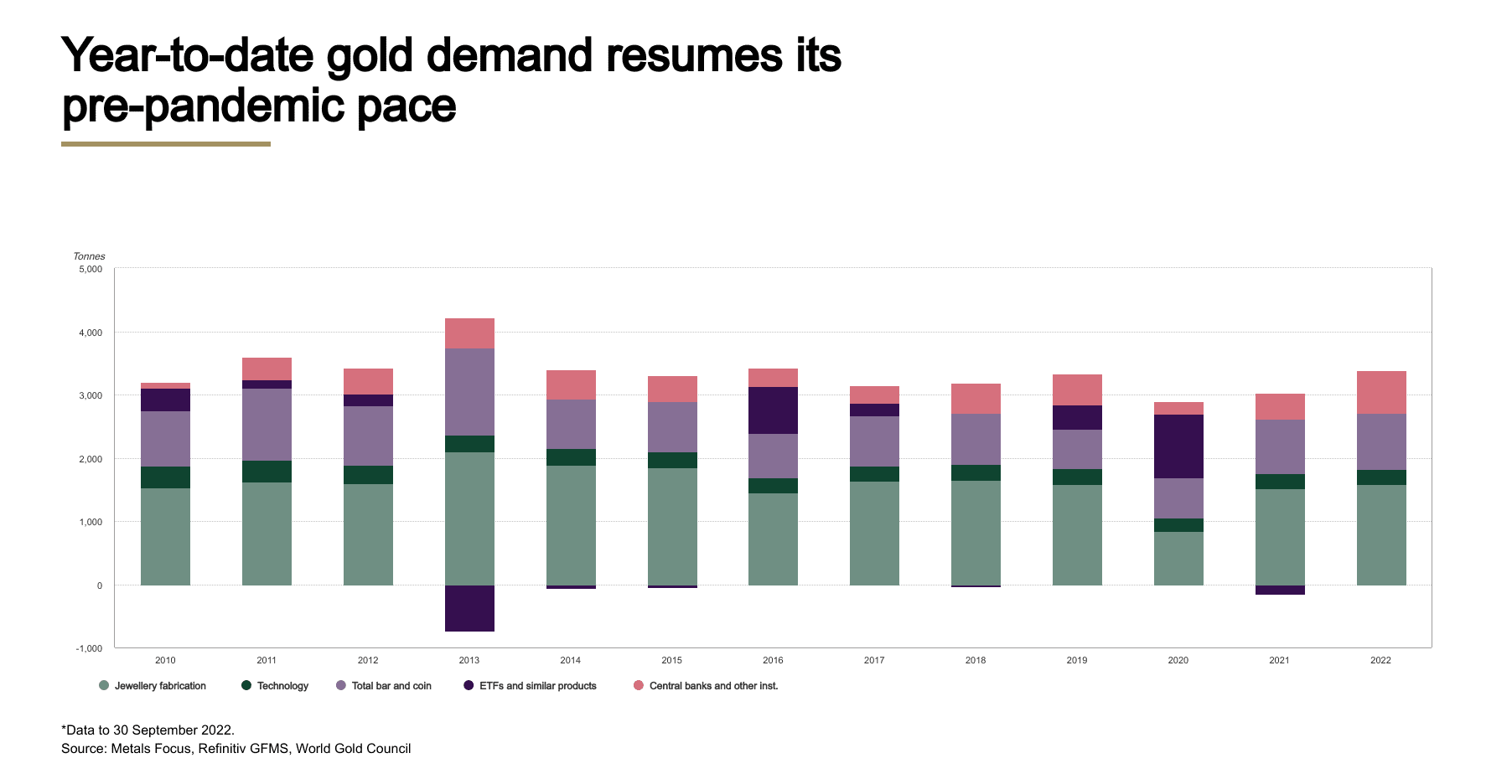
According to the World Gold Council’s quarterly report, demand for gold (excluding OTC) in Q3 increased by 28% year over year (y-o-y) at 1,181t. Demand grew 18% year-to-date (y-t-d) compared to the same period in 2021, reaching pre-pandemic levels.

In the third quarter, the LBMA gold price PM (US$/oz) decreased by 8%. The strength of the US dollar to rise interest rates by the Fed to combat high inflation, is the main reason caused the fall. Although the average gold price fell 3% y-o-y in Q3, it was nevertheless in line with the relative performance of supply and demand (including OTC) during the quarter.

Investment Trends

  • Investment in bars and coins increased, while gold ETFs experienced outflows for a second consecutive quarter.
  • Global gold-backed ETFs saw the largest outflows since Q2 2013, of 227t in Q3 as investors focused on increasing rates and a stronger US dollar.
  • Flows into gold ETFs were virtually flat during the year to the end of September, having almost completely reversed the inflows from January to April.
  • The bar and coin sector experienced its strongest third quarter since 2011, with a very healthy 351t of demand.

Widespread, multi-decade high inflation and its impact on interest rates, dominated the investing environment for gold in Q3. Investors in bars and coins concentrated on the former and sought out gold’s security as an inflation hedge. Investors in gold ETFs, on the other hand, decreased their holdings as they concentrated on gold’s rising opportunity cost in the face of significant rate hikes from central banks globally and a surge in the US dollar. Outflows from ETFs were accompanied by a slowdown in OTC investments, and managed money futures positioning on the Comex temporarily switched to being net short for the first time in three years.

Q3 2022 Gold Demand chart

Jewellery Demand Trend 

Consumption of gold jewelry worldwide returned to pre-COVID levels.

  • Q3 demand benefitted from a decline in the price of gold.
  • India took the lead in the rebound, with 17% y-o-y growth in demand to 146 t, the best third quarter since 2018.
  • China had a slower growth, 5% y-o-y, as intermittent COVID-related restrictions impaired consumer confidence.

Central Banks

In Q3 2022 Central bank buying hits all-time quarterly record.

  • Q3 net demand includes significant estimate for unreported purchases.
  • The biggest reported buyers within the quarter are Turkey, Uzbekistan and Qatar.
  • As a result, y-t-d net purchases have reached 673t, which surpass all annual totals since 1967.

In Q3 (+115% q-o-q), purchases by central banks worldwide increased to approximately 400t. Since 2000, this quarter’s demand from this sector has been at an all-time high, nearly double the previous record of 241t set in Q3 2018. This brings the year-to-date total to 673t, which is more than any other full year total since 1967. It also represents the eighth consecutive quarter of net purchases.

In technology sector, rapidly declining consumer confidence hits demand.

  • Gold used in industrial applications decreased by 8% y-o-y to 77t, the weakest third quarter on the record.
  • The electronics sector, which is the primary industrial demand for gold, fell by 9% y-o-y to 63t. During what is usually the electronics industry’s peak season, consumer demand has decreased dramatically.

In mining, total supply increased by 1% y-o-y in Q3 as decreased recycling offset increased mine production.

  • Following the improvement in Chinese output and fewer technical issues elsewhere, Q3 mine production grew to almost 950t, up 2% y-o-y.
  • Recycled gold supply decline 6% y-o-y, mainly due to lockdowns in China and the lack of obvious indicators of market turmoil elsewhere.
  • The overall gold supply increased 3% y-o-y, on a y-t-d basis.

Regional performance

  • In China demand for bars and coins nearly doubled to 70t from the previous quarter’s COVID lockdown-induced drop.
  • In India retail investors reacted to lower local gold prices and weaker equities markets by increasing demand for Indian bars and coins up to 6% y-o-y increase.
  • The Middle East saw the highest level of quarterly retail investment in four years with a 64% y-o-y increase to 26t. Rising inflation and the opportunity to buy on a dip in the price were the main factors driving investment during the quarter, in line with the broad global themes.
  • In Q3, retail investment in Turkey increased more than fivefold, which was extraordinarily strong. It was the second-highest quarter in the report data series, with a 47t value. Demand soared as a result of record inflation and stable lira prices, and this gained pace on price pullbacks during the quarter.
  • The US bar and coin investment demand remained high, increasing by 3% y-o-y at 25t. The y-t-d sales of US mint coins are the highest since 1999. As consumers express growing pessimism about the state of the US economy amid rising inflation, the importance of gold as an inflation hedge has encouraged investment demand.
  • European retail gold investment increased by 28% y-o-y at 72t. The region’s slowing GDP, the threat of the war, and monetary policy makers managing a delicate balance between rising rates just enough to control inflation without tipping the region into a deep recession, has encouraged continued flows into gold. Germany’s demand increased 25% y-o-y, to a record high of 131t.
 
We do not offer investment advice:
This information is provided solely for general information and educational purposes. It is not, and should not be construed as, an offer to buy or sell, or as a solicitation of an offer to buy or sell, or as investment advice in general.
Portfolio management amid global monetary tightening and slowing economic growth

Over the past few years, the global economy has seen significant and varied shocks, due to the COVID pandemic and the Russia-Ukraine war. Investors are operating in unknown territory as monetary tightening has recently gained significant steam amid unusually high inflation.

A survey that ran by the World Gold Council and Coalition Greenwich, to comprehend how investors are managing this complex environment, reveal that:

  • The two main factors influencing allocation decisions are interest rates and liquidity concerns.

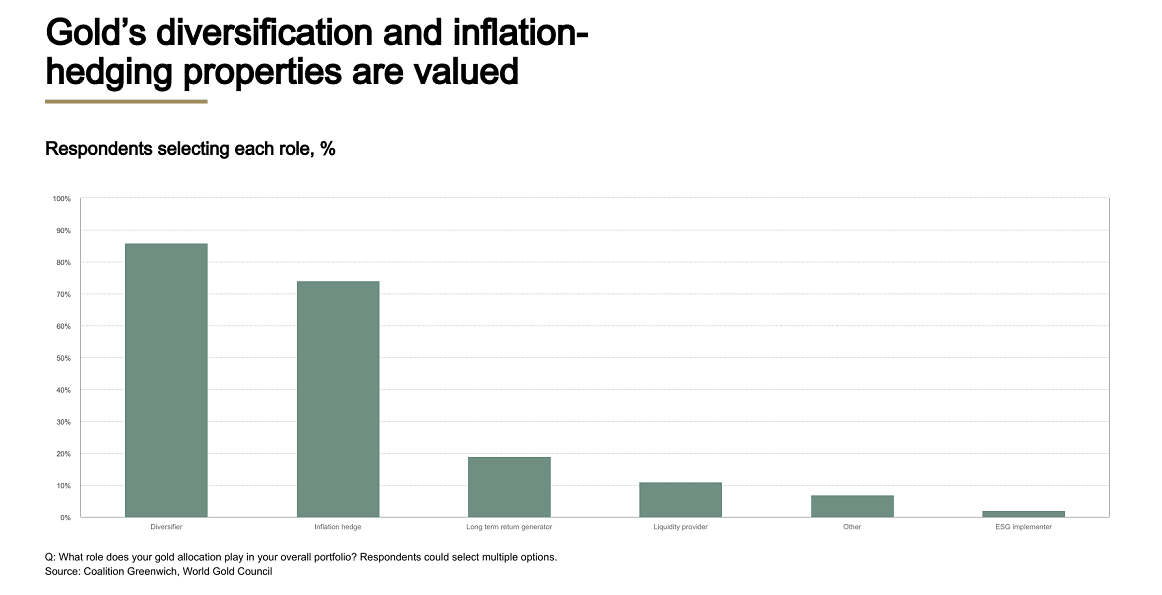
  • Most investors who purchase gold do so to diversify their portfolios and hedge against inflation.

  • Most gold allocations are strategic and are normally held for more than three years.

Investors remain on edge due to the ebb and flow of high current prices, uncertainty about policy responses, and the threat of a recession. Institutions cite liquidity concerns, portfolio rebalancing, and interest rate projections as equally important factors in short-term portfolio allocation decisions.

Drivers of institutional demand for gold
Interactions with institutional investors show that the major reasons for investing outside of fixed income and equities, are protecting against inflation, reducing portfolio volatility, and diversifying return drivers. Similar findings are drawn from a Mercer poll, which finds that asset owners and managers are revisiting their strategic asset allocations to consider the resilience of their portfolios against increased inflationary pressures, volatility, and potential interruptions to economic growth.

Chart 3 Gold’s diversification and inflation-hedging properties are valued

The vast majority of investors who own gold rated diversification and inflation-hedging above all other factors when they were asked to name the primary role that gold plays in their portfolios.

With only around 15% of institutions having explicit gold positions in their portfolios, gold ownership among the investors surveyed continues to be relatively low. Among larger institutions with more than US$10 billion in assets under management (18%) and institutions in EMEA and APAC (18% of respondents in each area), allocations are most common.

The average allocation to gold is a relatively healthy 4%, despite modest general participation by institutional investors. Only a very tiny percentage of investors who have gold allocations expect to lower their allocation over the next three years, the vast majority aim to either retain or increase their present allocation to gold. Additionally, more than half of investors who own gold anticipate retaining it for at least three years, underscoring gold’s importance in their long-term asset allocation strategy.

Institutional allocations to gold will continue to be important, as investors position their portfolios amid this extremely challenging economic environment. These significant allocations to gold reflect institutions’ growing concerns about inflation and their increasing need for efficient portfolio diversifiers during a period of considerable market instability, both in the short and long term.

Moreover, geopolitical risks remain with the ongoing Russia-Ukraine war, and the rising tensions between the US and China. Institutional demand for gold should remain strong going forward due to the requirement for some downside protection in this difficult environment.


We do not offer investment advice:
This information is provided solely for general information and educational purposes. It is not, and should not be construed as, an offer to buy or sell, or as a solicitation of an offer to buy or sell, or as investment advice in general.
2022 Gold Mid-Year Outlook

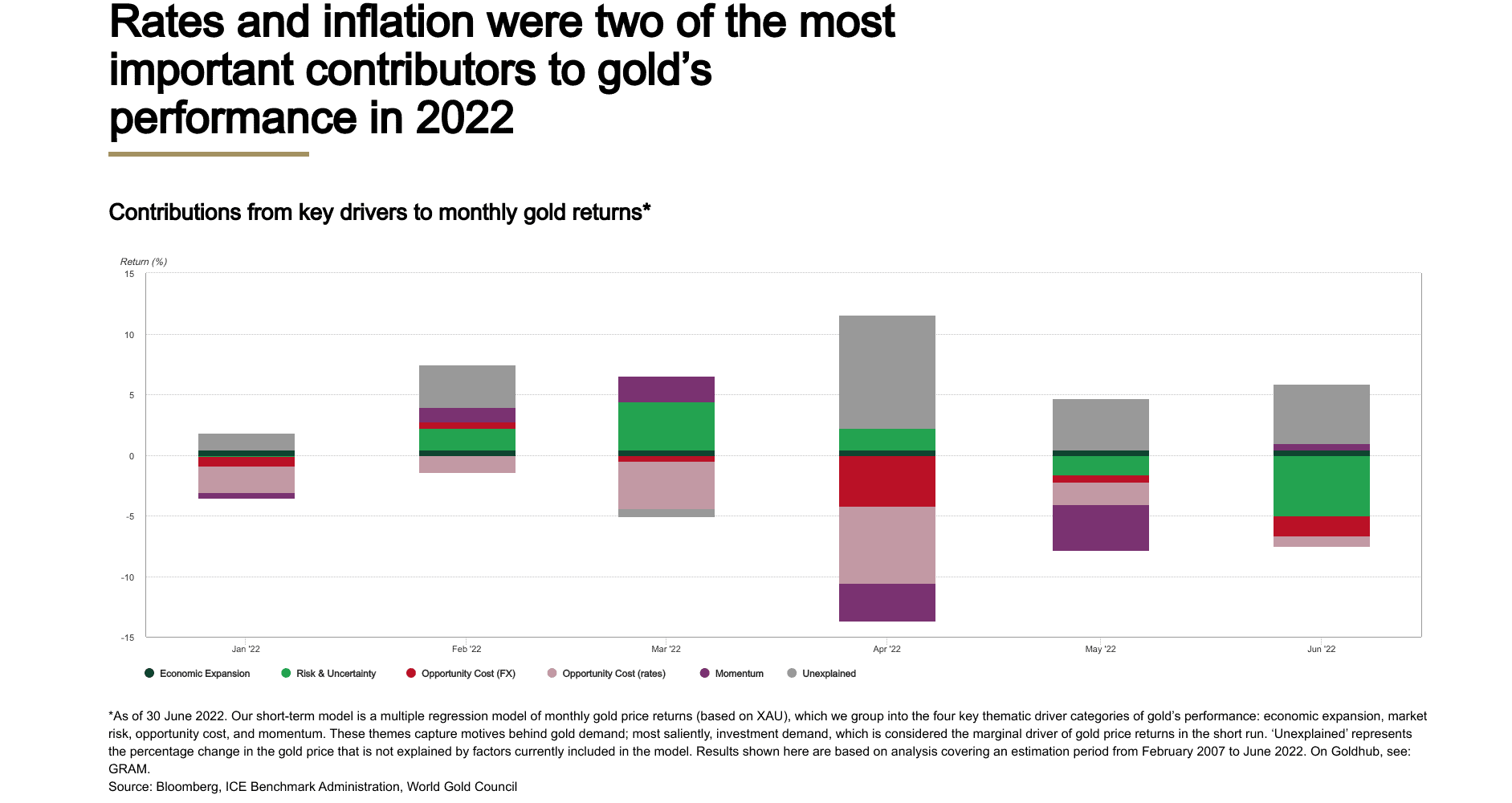
The second half of 2022 will be challenging for investors, needing to navigate rising interest rates, soaring inflation, and resurfacing geopolitical issues. The speed at which central banks around the world tighten monetary policy in an effort to control inflation, will probably continue to influence how responsive gold is to real rates in the near term.

Rate hikes could create headwinds for gold, but many hawkish policy predictions have already been factored in. In addition, ongoing inflation and geopolitical risks will probably sustain demand for gold as a hedge. Gold may benefit from underperformance of stocks and bonds in a potential stagflationary environment.

Higher rates in 2022 outweighed inflation risks
Gold increased 0.6% to close at US$1,817/oz in the first half. As the Ukraine conflict developed and investors sought high-quality, liquid hedges amid rising geopolitical uncertainty, the price of gold initially climbed. But as investors’ focus shifted to monetary policy and increased bond yields, gold lost some of those early gains. Due to the struggle between an environment of high risk and rising interest rates, the price of gold had stabilized by mid-May. The latter was a result of a combination of factors, including persistently high inflation and possibly support from the extended conflict in Ukraine and its potential knock-off effects on global growth. Earlier in the year, the latter witnessed significant investment before reversing some of its gains in May and June. However, year-to-date inflows into gold ETFs reached US$15.3 billion (242 tonnes) at the end of June.

Rising opportunity costs, caused by higher rates and a stronger dollar, were a major headwind to gold’s performance year to date, but rising risks, brought on by inflation and geopolitics, drove gold higher for much of the period.


Gold's behaviour 2022

Notably, while the strengthening of the US dollar against a wide range of currencies has hampered the price of gold (when expressed in US dollars), at the same time it has supported the performance of gold in many other currencies, including the euro, yen, and pound sterling, among others.

Additionally, gold was one of the top performing assets during H1, despite its flat year-to-date performance initially appearing uninteresting. It not only generated positive returns, but it also did it with volatility that was below average. As a result, during this volatile period, gold has actively assisted investors in limiting losses. Especially in light of the fact that both equities and bonds, which typically make up the majority of investors’ portfolios, showed negative returns.

Investors’ behaviour in the second half of 2022
During the second half of the year, it is expected that investors continue to face significant challenges. As a result, they will have to balance a number of competing risks compounded by some degree of uncertainty about their magnitude.

Although the majority of central banks were expected to raise policy rates this year, many have taken more aggressive action in response to persistently high inflation. The Bank of England has raised its base rate five times since November 2021, to 1.25%, the Swiss National Bank raised rates for the first time in 15 years, the Fed hiked its funding rate by 1.5% so far this year, the Royal Bank of India is expected to significantly raise its repo rate before the end of the year among developing economies.

The financial markets, including gold market, have been significantly impacted by these actions. The performance of the gold price has historically been influenced by investor expectations of future monetary policy decisions, according to data. Furthermore, historical research shows that gold has underperformed in the months preceding a Fed tightening cycle, only to considerably outperform in the months following the first-rate hike. In contrast, US equities performed best just before a tightening cycle began, but then delivered softer returns.

Main factors affecting Gold’s behaviour
Two major challenges for gold in the second half of 2022 are higher nominal interest rates and a potentially stronger dollar. However, other, more supportive factors may balance out the negative effect from these two drivers. Such as:

  • persistently high inflation, with gold playing catch-up to other commodities,
  • market turbulence brought on by changes in monetary policy and geopolitics,
  • the need for effective hedges that overcome potentially higher correlations between equities and bonds.

In this situation, gold will probably continue to play a strategic and tactical role for investors, especially as long as uncertainty is high.


We do not offer investment advice:
This information is provided solely for general information and educational purposes. It is not, and should not be construed as, an offer to buy or sell, or as a solicitation of an offer to buy or sell, or as investment advice in general.
Four Key Factors affecting the gold prices in the coming year

Before the Covid-19 pandemic and the Ukraine war, gold was already on the rise, and today, gold shows its actual potential once again, thanks to a number of significant drivers that are currently in play.

The four main trends that point to a potential rise in gold prices in the coming year are as follows:

1- Gold usually performs well during stagflation

Fuel, energy, and commodity prices surged to record levels in the U.S. and Europe after Russia invaded Ukraine, which had an effect on consumer confidence and retail sales. Additionally, the ability of the economy to create goods and services at a given price is also being severely hampered by the Covid pandemic, which is further fueling inflation and stifling growth. Two warning indications that the situation is ripe for stagflation.

According to historical statistics, gold has significantly outperformed other asset classes during periods of stagflation.

In addition, there are a number of market-related elements that indicate gold may benefit from a fresh stagflationary phase. The justification is that, in contrast to riskier investments like stocks and cryptocurrencies, gold has resisted the financial market declines so far in 2022, repeatedly demonstrating its role as a hedge against inflation and market instability.

2- The overall demand for gold is growing

Investors rushed to the safety of gold, after the Covid-19 pandemic and Russia’s invasion of Ukraine, driving its price to new records. This increase in investors’ demand comes after an already strong year for physical gold purchasing.

Central banks have also been increasing their gold holdings as a hedge against growing geopolitical and economic problems, including inflation.

Central banks continued to be net buyers of gold in 2022, purchasing 19.4 tonnes in April, more than double the amount they did in the previous quarter.

Increase in investors’ interest in gold, push the gold price higher, as it happened in early February after Russia’s invasion of Ukraine, when gold prices nearly reached their highest level and gold resellers sold double or triple what they typically do.

Considering the negative economic effects of the Russia-Ukraine conflict and the ongoing high inflation rate, there is a strong likelihood that gold’s current momentum will continue.

3- Gold price and demand are driven by the geopolitical crises

The fear factor in times of war frequently pushes investors move their wealth from risky countries and assets and put it instead in gold as a long-term safe haven investment. The conflict in Ukraine has had a devastating impact on the global market, driving up the cost of commodities and energy, closing markets, and shifting funds, all of which have led investors to seek the protection of assets such as gold and precious metals. This created a boom for bullion dealers, with many of them witnessing a sharp increase in their usual sales levels, and with additional potential geopolitical trouble ahead (Russia-E.U/U.S., E.U-China, China-Taiwan) gold is likely to continue playing an important role.

4- Gold is challenging the traditional paper assets

Most financial assets are having their positions questioned and reassessed in individual and institutional portfolios, as a result of the ongoing crisis (Covid-19, the war in Ukraine, inflation, and recession).

While the majority of portfolios have been focusing on traditional “paper” assets such as stocks, bonds, currencies and new digital ones like cryptocurrencies and ETFs, a rebalancing seems to be in play towards commodities, energy, and tangible and protective assets like gold.

The trend among investors to move away from inflation- threatened currencies and volatile paper assets, towards more tangible ones that could serve as a hedge against inflation and economic turmoil risks, accelerates by rising inflation and the looming risk of stagflation.

These four key trends could mean one thing for the future of gold in the long-term: the precious metal is firmly placed in its rightful position as a tangible portfolio diversifier, inflation hedge, and store of value given the current market situation.

Finally, gold is becoming more popular as a savings alternative to traditional paper assets that have either been hit by market turbulences or have lost their purchasing power due to inflation and reckless money printing.

 
We do not offer investment advice:
This information is provided solely for general information and educational purposes. It is not, and should not be construed as, an offer to buy or sell, or as a solicitation of an offer to buy or sell, or as investment advice in general.
Why central banks buy gold?

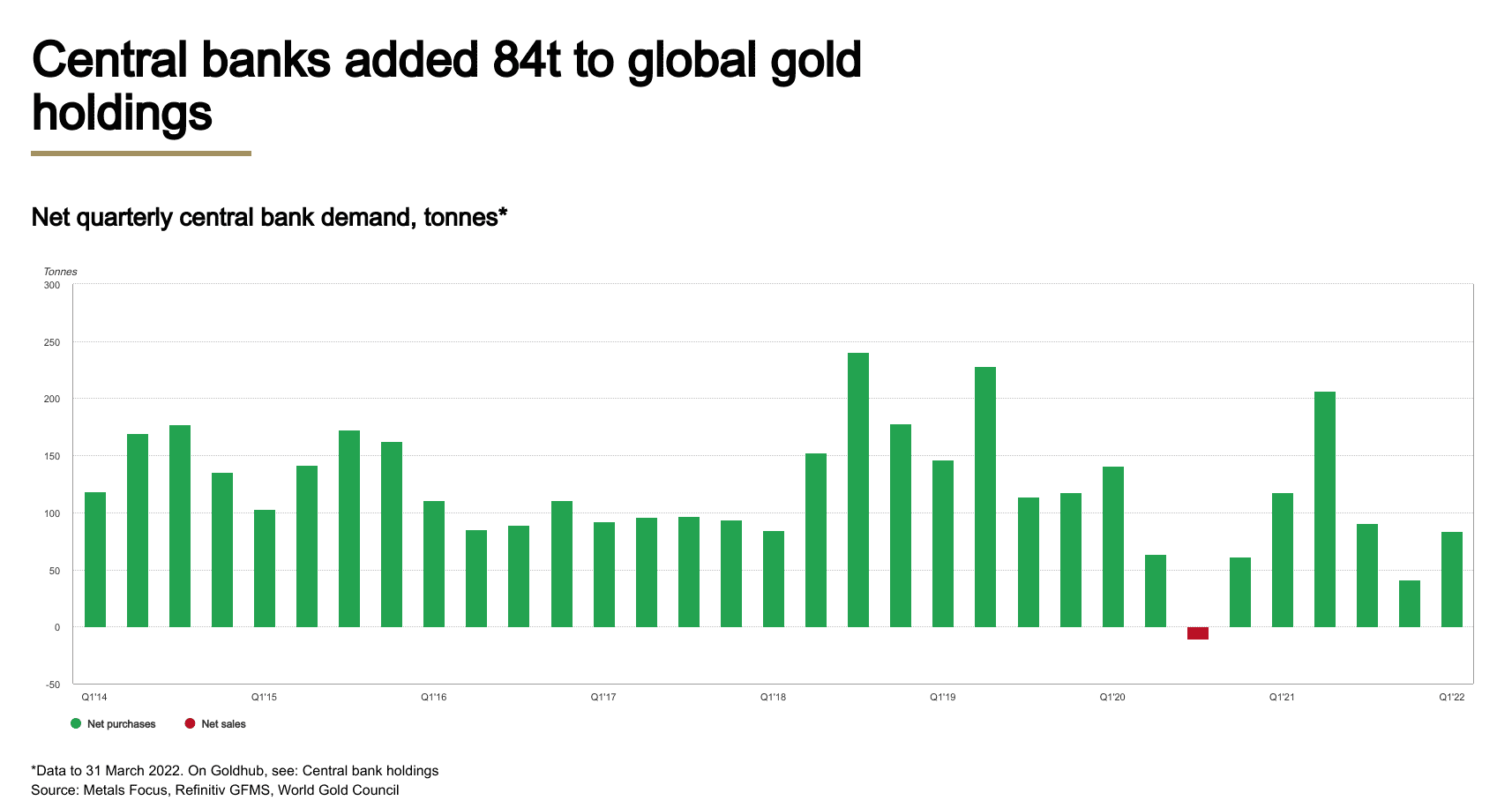
Central banks are major gold holders and gold plays a key role in the management of central banks’ reserves. For decades, gold has been an important component of nations’ financial reserves, and its appeal shows no signs of waning, with central banks set to be net buyers of gold once again this year. Indeed, central banks currently own over 35,000 metric tons of gold, accounting for roughly a fifth of all gold ever mined. What is it in gold, though, that has made it such a valuable asset for so long?

Central banks use gold to diversify their reserves, which is one of gold’s primary roles. The banks are in charge of their countries’ currencies, although these can be subject to swings in value depending on the underlying economy’s perceived strength or weakness.

Banks may be forced to print more money in times of need, since interest rates, the traditional lever of monetary management, have been stuck near zero for over a decade. This boost in money supply may be necessary to avoid economic turmoil, but it will come at the cost of currency depreciation. Gold, by contrast, is a finite physical commodity with a limited supply that cannot be easily replenished. As a result, it acts as a natural inflation hedge.

According to current statistics, global central bank gold reserves climbed by 19.4 tonnes in April, reverting to net purchases after net sales of 9.4 tonnes in March. Uzbekistan was the month’s largest buyer, adding 8.7 tonnes to its gold reserves. Turkey bought another 5.6 tons of gold during April, bringing its total to 5.6 tons for the year, while Kazakhstan bought 5.3 tons. Germany led the way with 0.9 million tons sold in April, followed by Mexico and the Czech Republic with 0.1 million tons each.

The fact that gold has an inverse relationship with the US dollar, another key reserve asset, adds to its attraction. Gold often rises when the dollar falls in value, enabling central banks to secure their reserves during times of market volatility.

The profile of the most active central banks has changed, with traditional economic powerhouses such as the United States, Germany, France, and Italy no longer buying more gold and instead maintaining their existing large holdings. With almost 8,100 tons of gold, the United States has nearly 78 percent of the world’s entire foreign reserves. That’s more than double Germany’s stocks of over 3,300 tons, putting it second on the list and accounting for over 74% of its reserves.

Emerging economies such as Russia, China, Turkey, and India have taken their place as gold buyers. Despite buying large amounts of gold during the previous decade or so, the four countries still lag behind their Western counterparts, with gold accounting for only 22 percent of Russia’s reserves and China’s holdings of just under 2,000 tons accounting for only 3%.

So while the origin of the central banks buying gold may have evolved over the years, the reasons for holding the gold asset have remained relatively constant.

 
We do not offer investment advice:
This information is provided solely for general information and educational purposes. It is not, and should not be construed as, an offer to buy or sell, or as a solicitation of an offer to buy or sell, or as investment advice in general.
Why should gold be included in a portfolio?

Global financial markets were impacted in the first quarter by geopolitical uncertainty, inflationary concerns, and rising interest rates in key markets, and the near future may bring additional challenges for investors, such as increased equity market volatility and a rising bond-equity correlation.

There was no shortage of financial market volatility in the first quarter of 2022. Higher interest rate expectations, rising inflation, and the Russia-Ukraine war all weighed on global equity markets in January.Turbulence persisted through the quarter. Investor confidence was shaken by the war, which was compounded by the US Federal Reserve’s March rate hike, which kept global equity market volatility high.

Other markets were also volatile. In Q1, crude oil and natural gas both increased by 34% and 50%, respectively, alongside similar increases in commodities like wheat (+31%) and nickel (+55%). Meanwhile, bond market losses have been triggered by rising rates and inflationary pressures.

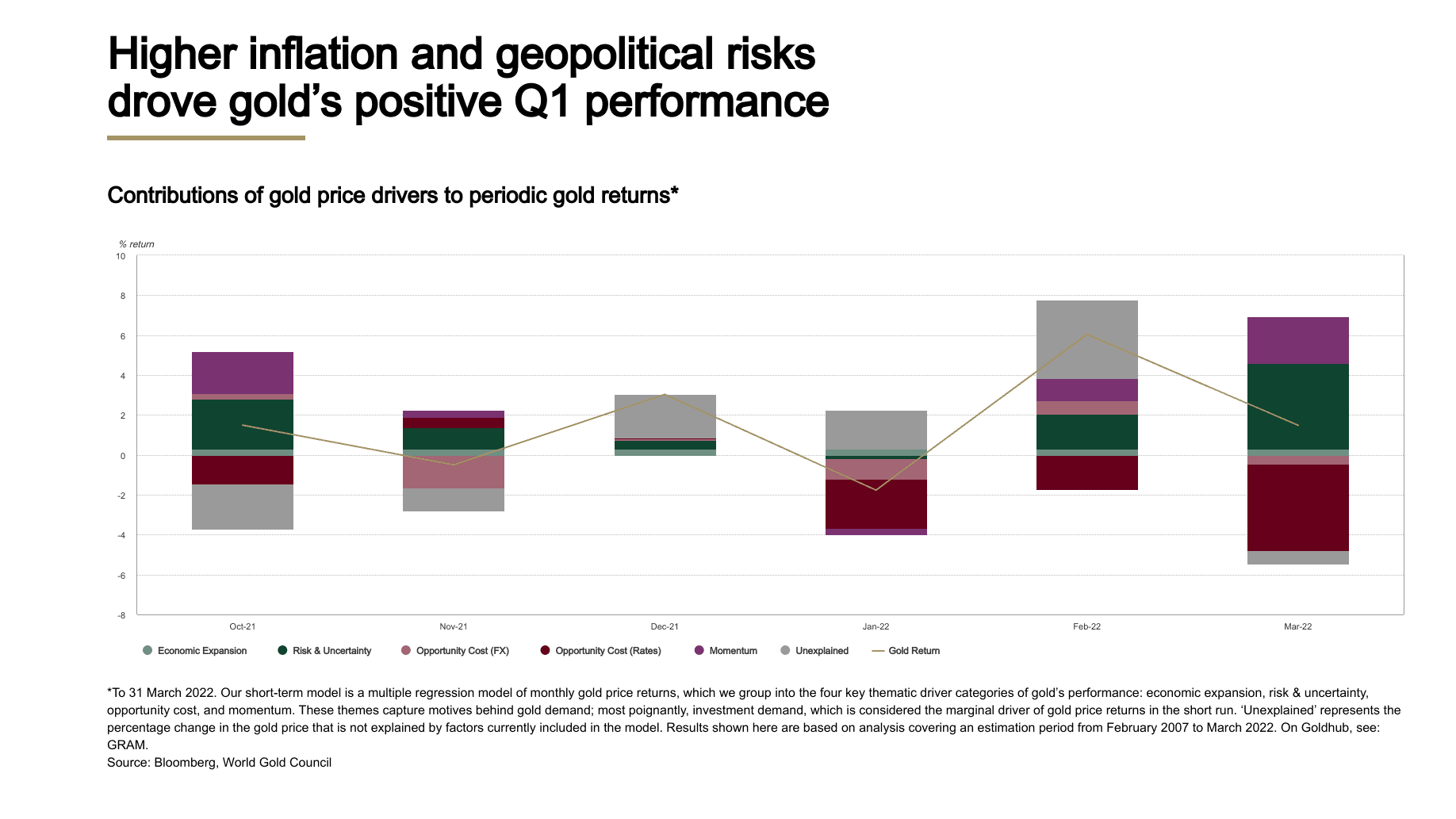
However, gold was fuelled by the turbulence in financial markets. Soaring inflationary pressure and geopolitical risk were the primary drivers of gold’s price increase in Q1. It’s also worth mentioning that gold’s volatility during the quarter was significantly lower than that of most major assets.

gold performance

Since the start of the pandemic, the global money supply has increased at an unprecedented rate, fuelling higher inflationary pressure, and rising commodity prices have added oil on the flame. Just as most countries are emerging from the COVID-19 pandemic saga, high inflationary pressures persist. As we shift from a prolonged period of low rates and range-bound inflation, it appears that the next chapter has already begun.

Furthermore, rising inflationary pressures may not be short-lived. Commodity inventories, such as industrial metals and crude oil, are at multi-decade lows, and jammed ports and increasing freight costs are putting pressure on already-disrupted supply chains. The commodity market is anticipated to remain volatile and tight as a result of these factors. As COVID restrictions are gradually lifted, emerging demand may lead to higher-than-normal inflation lasting longer in some markets.

Gold as a risk diversifier and inflation hedge
Investors often rush to gold, a safe-haven asset, during times of crisis, because gold performs well during equity market pullbacks, as we saw with the Russia-Ukraine war. Gold has a proven record of being an effective tail risk hedge, according to historical statistics.

Gold can also help portfolios outrun inflation. Its effectiveness as an inflation hedge is partially underpinned by its stable and limited supply, as well as the fact that real interest rates (the opportunity cost of holding gold) are typically low when inflation is high.

In comparison to other key assets such as bonds and equities, gold’s performance in Q1 2022 has proven its effectiveness as a risk diversifier.
Recent geopolitical events and financial market volatility have made gold an attractive investment. In a world where there is no shortage of unpredictability, having gold in your portfolio could bring peace of mind.


We do not offer investment advice:
This information is provided solely for general information and educational purposes. It is not, and should not be construed as, an offer to buy or sell, or as a solicitation of an offer to buy or sell, or as investment advice in general.
Gold’s performance amid current global economic environment

Earlier this month, gold surpassed US$2,000 per ounce, nearly to reach the previous high record in 2020. This time, though, it was driven by continued concerns about the war in Ukraine, rising commodity prices, and, more broadly, possible consequences for the global economy. While gold price has fallen from the highs of the first days of the month, it is still about 4% higher month-to-date.

Relation between the price of oil and the price of gold

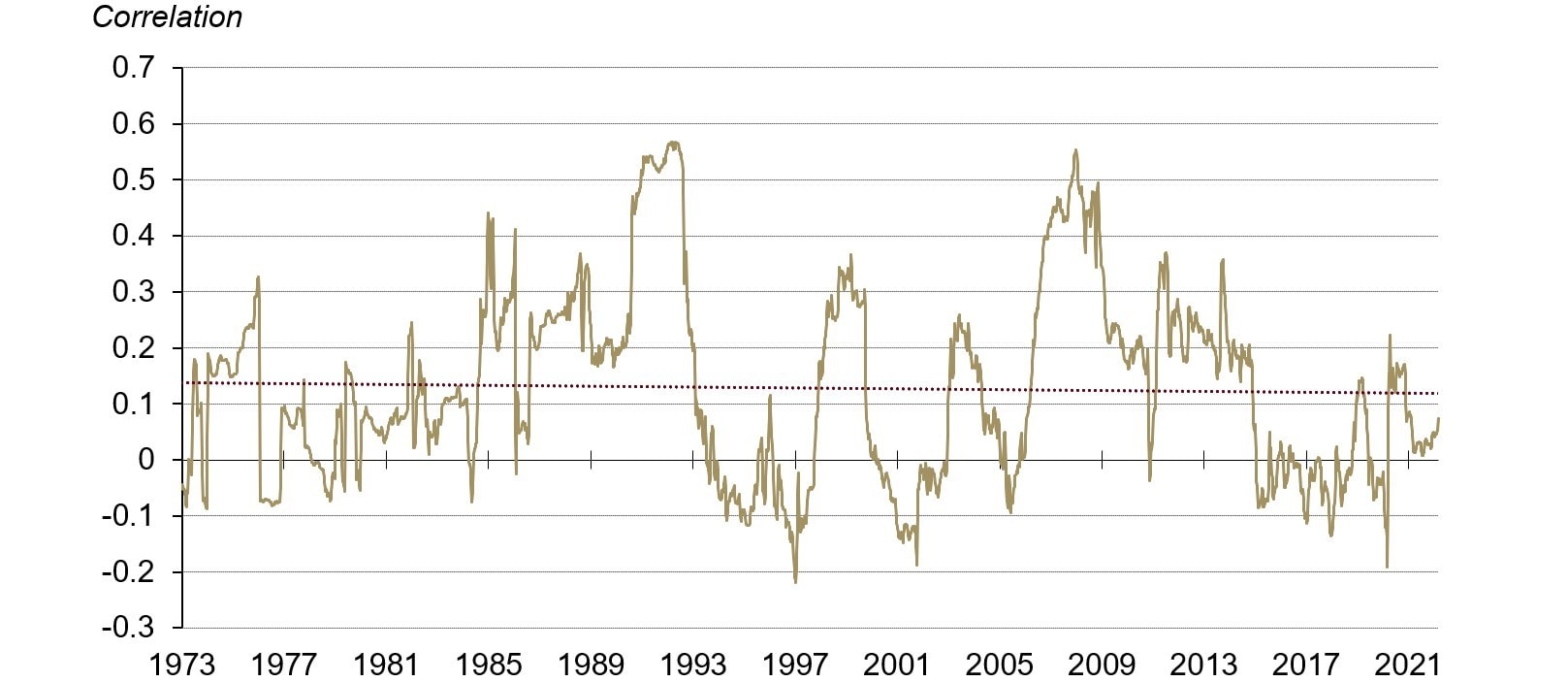
There is no consistent association between gold and oil, in general. The long-term correlation between the two assets is near to zero at any given time, ranging from -0.2 to +0.5.

However, during periods of high inflation, both gold and oil tend to perform well, even though for different reasons. High oil prices can drive up consumer price baskets, resulting in high inflation. When high inflation persists, investors seek hedges, whether it’s due to commodities or other factors, and, gold investment demand as well as gold price rises, consequently. The price of gold tends to lag the price of commodities in this case. However, gold has outperformed in the long run, historically.
Therefore, while oil price does not “cause” the price of gold to rise or fall, the economic environment that leads to an increase in oil price can also lead to higher gold price.

The war in Ukraine is an example of such an environment, as it is the result of a geopolitical event that is likely to have large economic consequences, as well as an impact on energy prices, other commodities, and supply-chain disruptions in general.

In recent weeks, commodities prices have climbed at an exponential rate. While this could continue if the war continues, any possible resolution could cause crashing down the prices. Even if gold experiences a price correction, it wouldn’t see the same level of volatility. Gold supply has not been disrupted to the same extent as other commodities, and in any case, huge above-ground stocks and much higher physical gold trade volumes, reduce the impact of newly mined supplies.


There is no consistent long-term relationship between gold and oil

                        Source: Bloomberg, ICE Benchmark Administration, World Gold Council
 

Gold performance in case of stagflation of the global economy

The possibility of stagflation is increasing all throughout the world. Europe may be the most affected, as a result of skyrocketing commodity prices, energy dependency, and a weaker economic and financial environment, all of which has been intensified by the war in Ukraine.
While stagflation is also a risk in the United States, it may not be as severe as in Europe. The US economy is resilient, according to economic data. On the other hand, if the spread between long and short maturity US Treasury bonds, as a historically reliable economic indication, continues to flatten or reverses, market investors may be anticipating a recession down the line. Stagflation risks may be realized if energy and food prices remain high.

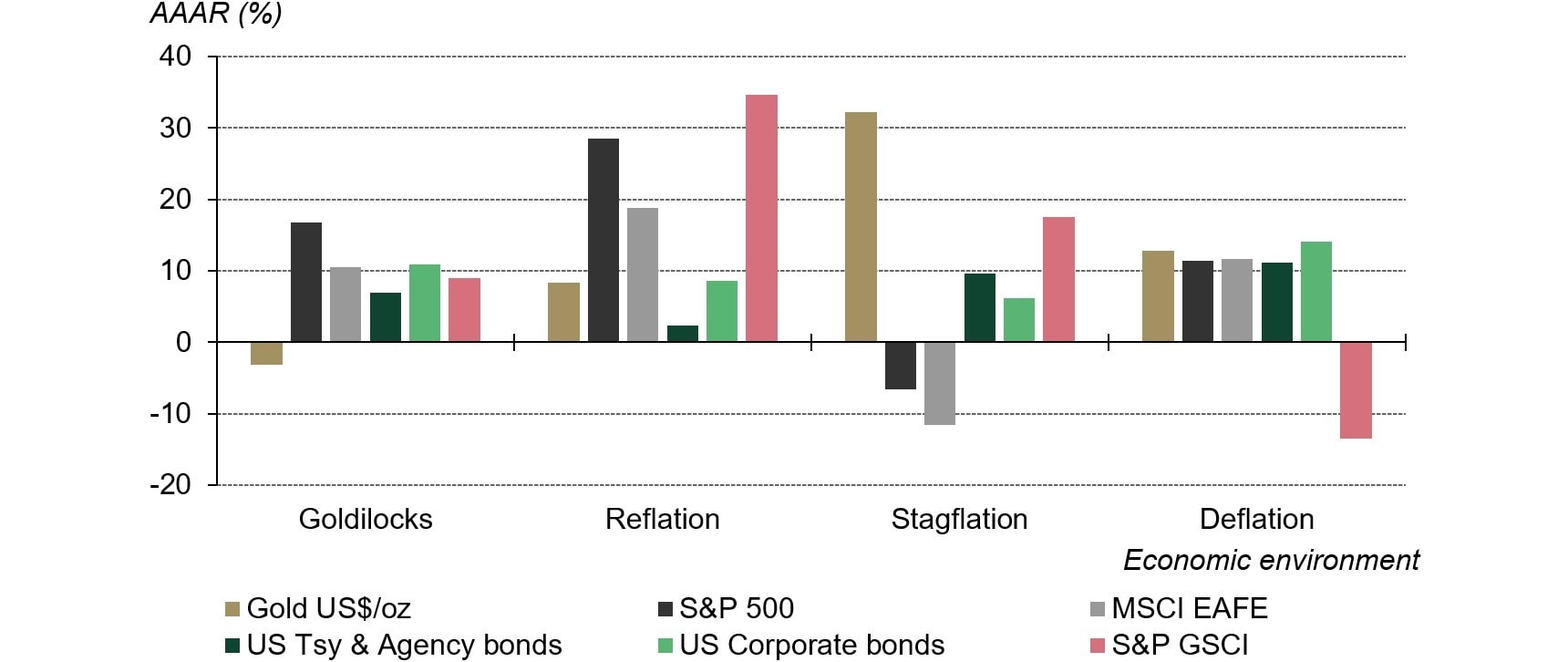
Stagflationary circumstances, of course, are not good for financial markets or the economy. Slowing incomes and rising prices are, to say the least, an unpleasant combination. Historically, stocks are hit hardest, while commodities and gold have done well. In the first half of 2022, we’re already seeing these dynamics play out, and gold appears to be doing exactly what investors predict. When other assets aren’t performing well, gold performs well.


Gold has historically performed well in periods of stagflation

                                    Source: Bloomberg, World Gold Council


Impact of the recent geopolitical developments on the US dollar’s role in foreign reserves

The US dollar’s role in international trade is well established, but the world has been gradually evolving toward a more “multicurrency” system, particularly as China’s importance in international trade has grown. Even though gold isn’t an official currency, it plays an important function in the monetary system, especially as a high-quality and liquid component of foreign reserves.

Furthermore, unlike fiat currencies, gold bullion is no one’s liability. While it is rarely utilized as a form of direct exchange, it is frequently an invaluable source of collateral and a hedge against systemic risk events. This helps to explain why central banks have been increasingly interested in gold over the past decade, particularly those from emerging markets, which have historically held a substantial percentage of US dollar assets in their foreign reserves.


We do not offer investment advice:
This information is provided solely for general information and educational purposes. It is not, and should not be construed as, an offer to buy or sell, or as a solicitation of an offer to buy or sell, or as investment advice in general.
What makes gold a strategic asset?

There are diverse sources of demand for Gold, including as an investment, a reserve asset, jewellery, and a technology component. It’s highly liquid, no one’s liability, there’s no credit risk, and it’s rare, thus its value has historically held up.

Gold does not immediately conform to the majority of the most commonly used equities or bond valuation methodology. Typical models based on anticipated cash flows, expected earnings, or book-to-value ratios struggle to provide an appropriate assessment for gold’s underlying value in the absence of a coupon or dividend.

Gold can boost a portfolio in four key ways:

  • Returns

  • Diversification

  • Liquidity

  • Portfolio Performance


A Source of Returns

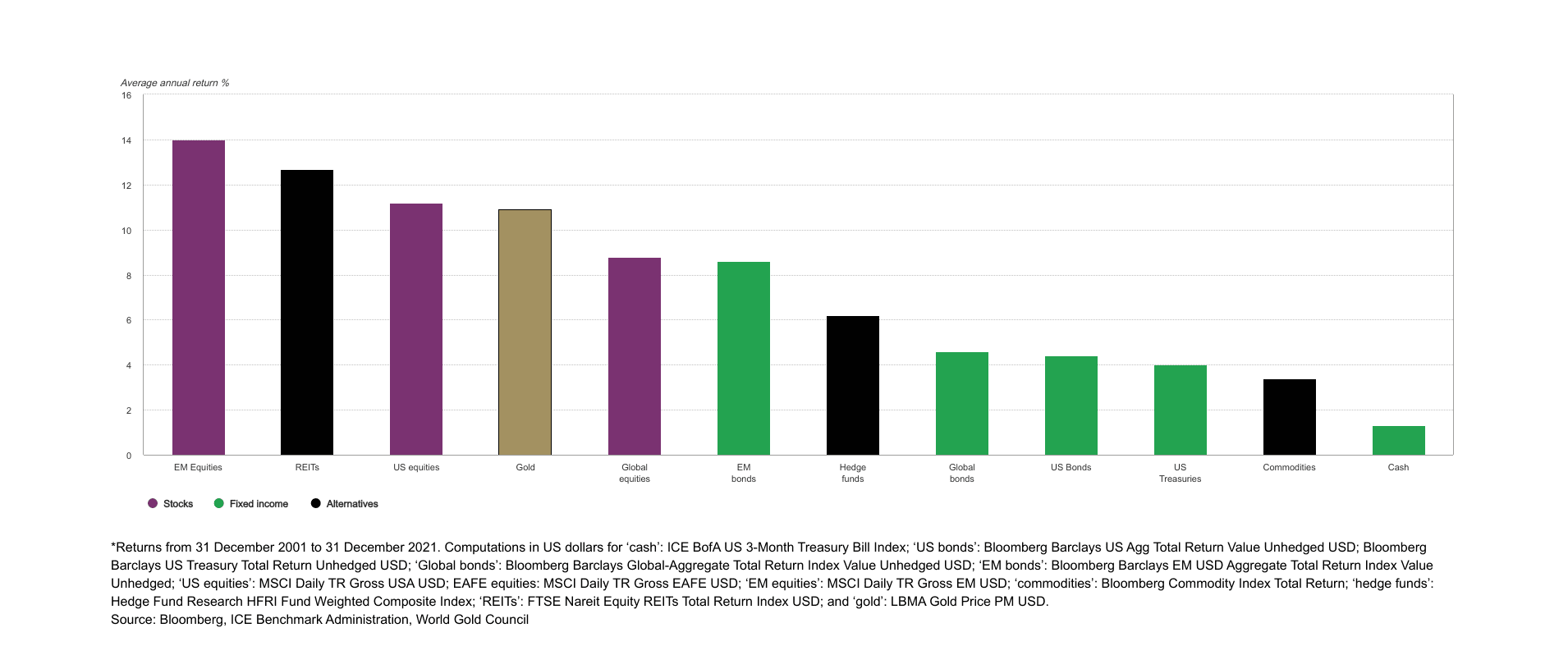
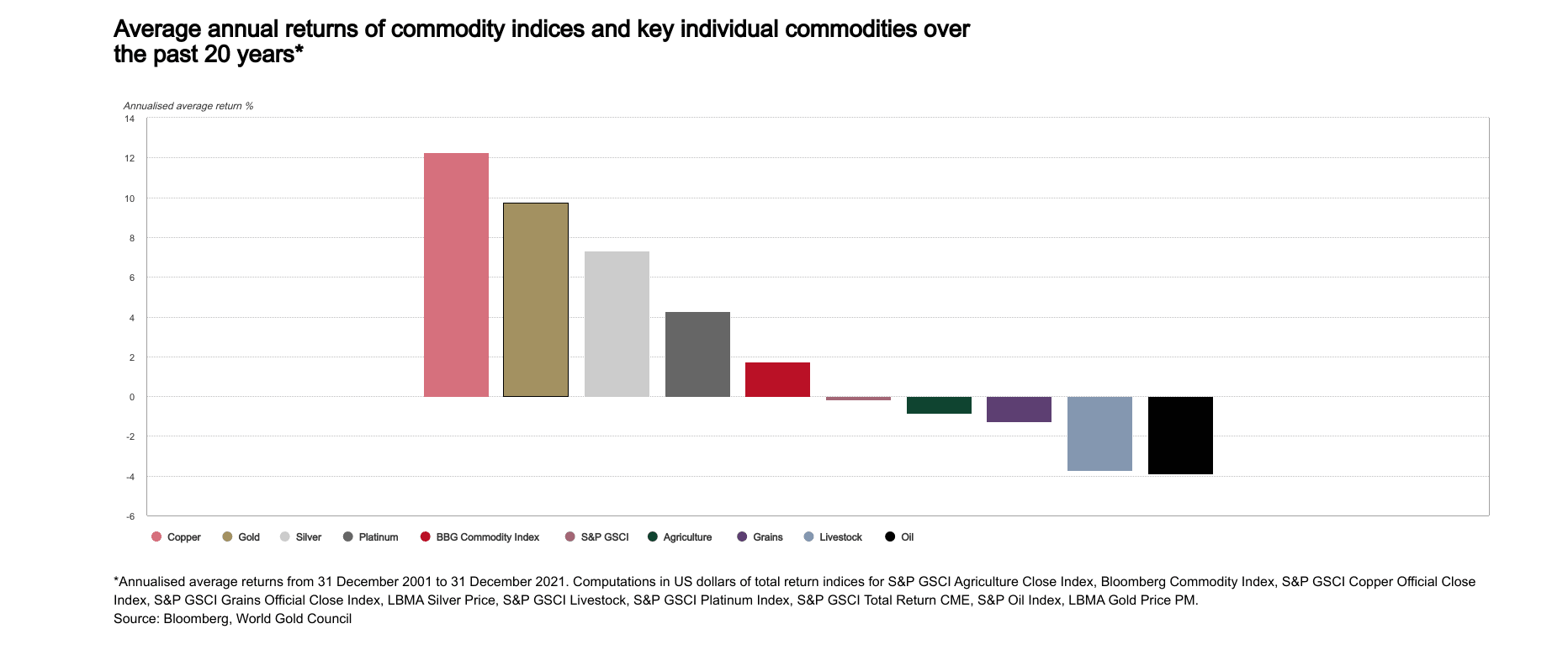
Gold has always been seen as a valuable asset in times of uncertainty by investors. It has historically generated positive long-term returns in both good and poor economic periods. In the nearly half-century after the gold standard collapsed in 1971, the price of gold in US dollars has increased by an average of nearly 11% every year. Gold’s long-term return is equivalent to equities and higher than bonds throughout this time period. Over the past five, ten, and twenty years, gold has outperformed several other key asset classes.

This duality reflects gold’s diverse sources of demand and differentiates it from other investment assets. Due to its global renown, gold is frequently used to protect and enhance wealth through time as it is not a liability, and it can be used as a means of exchange.

Diversification

Diversifiers that work can be difficult to find, sometimes. As market uncertainty grows and volatility increases, many assets become more correlated, driven in part to risk-on/risk-off investing decisions. As a result, many “diversifiers” fail to protect portfolios when they are most needed by investors.

Gold differs from other risk assets in that its negative correlation to equities and other risk assets increases as these assets fall in value. Equities and other risk assets, as well as hedge funds, real estate, and most commodities, which were formerly considered portfolio diversifiers, all tumbled in value. Gold, on the other hand, kept its ground and grew in value, rising 21% in US dollars between December 2007 and February 2009. Gold’s performance remained favourable even during the most recent dramatic equity market pullbacks in 2018 and 2020.

This strong performance is not surprising. Gold has been particularly beneficial during times of systemic risk, providing positive returns and decreasing overall portfolio losses, with few exceptions. Gold also assists investors to meet liabilities when less liquid assets in their portfolio are difficult to sell or are mispriced. Return

Liquidity

Physical gold holdings by investors and central banks are estimated to be worth US$4.9 trillion, with an additional US$1.2 trillion in open interest in derivatives traded on exchanges or in the over-the-counter (OTC) market, based on the World Gold Council’s estimation.

Gold is also more liquid than several major financial markets, such as the euro/yen and the Dow Jones Industrial Average, while trading volumes are like those of US 1 to 3 years treasuries and US T-Bills. In 2021, gold trade volumes averaged around US$131 billion per day. During that time, OTC spot and derivatives transactions totalled US$72 billion, while gold futures traded $56.3 billion per day across various global exchanges. With global gold ETFs trading an average of US$2.4 billion per day, gold-backed ETFs (gold ETFs) provide an added source of liquidity.

Portfolio Performance

Overall portfolio performance is aided by long-term returns, liquidity, and adequate diversification. When taken together, they suggest that adding gold to a portfolio can significantly improve risk-adjusted returns.

Analysis of investment performance over the past 2, 5, 10 and 20 years, highlights Gold’s positive influence on an institutional portfolio. It indicates that if 2.5%, 5%, or 10% of a US portfolio were allocated to gold, would have resulted in higher risk-adjusted returns and lower drawdowns. This good positive impact has been especially noticeable since the global financial crisis (GFC).

A more comprehensive optimisation analysis based on re-sampled efficiency, in addition to standard back-testing, reveals that an allocation to gold may result in a considerable improvement in portfolio performance. Gold allocations of 6% to 10% in well-diversified US dollar-based portfolios with varied levels of risk, for example, could result in higher risk-adjusted returns.

Gold investment

Inflation, supply-chain concerns and COVID uncertainty

Inflation was a major global theme in 2021, and it will continue to influence investor decisions in 2022. While many central banks (CBs) believed the increase in inflation levels due to COVID’s impact was only temporary in the first half of 2021, this consensus altered in the second half of the year. Some central banks are now recognizing that inflation is here to stay and are planning to boost rates in 2022. Other countries, like China, India, and the European Central Bank, are expected to continue accommodative policies.

Meanwhile, pandemic-related supply chain bottlenecks have not completely dispersed. It is true that governments have been hesitant to respond to the recent spike in COVID cases with formal shutdown measures similar to those that disrupted economic growth in the previous two years, but new variants could change this behaviour, and a resurgence of supply chain disruption – across multiple sectors from technology to shipping – could harm economic growth and add to inflationary pressure.

While the market anticipates rate hikes and a stronger US dollar, both of which are negatives for gold prices, real and nominal rates are expected to remain at historically low levels.

Conclusion

Over the last two decades, perceptions of gold have shifted dramatically, reflecting increased wealth in the East and a growing global recognition of gold’s importance in institutional investment portfolios.

Gold’s unique characteristics as a scarce, highly liquid, and uncorrelated asset show that it can be used as a long-term diversifier. Gold’s position as an investment and a luxury good has allowed it to generate average returns of 11% over the last 50 years, which is comparable to equities but higher than bonds and commodities.

Gold’s traditional function as a safe-haven asset means it shines in high-risk situations. However, because gold is both an investment and a consumer commodity, it may yield positive returns in both good and bad times. This trend is likely to persist, reflecting ongoing political and economic instability, low interest rates, and economic concerns about equity and bond markets.

According to analysis from WGC, adding between 4% and 15% of gold to average hypothetical portfolios, depending on the composition and area, can improve performance and boost risk-adjusted returns on a long-term basis.


We do not offer investment advice:
This information is provided solely for general information and educational purposes. It is not, and should not be construed as, an offer to buy or sell, or as a solicitation of an offer to buy or sell, or as investment advice in general.
Gold Market outlook 2022

Gold completed the year at US$1,806/oz, down around 4% from the previous year’s close. On the heels of the fast-spreading Omicron variant, the gold price rebounded through the end of the year, possibly prompting flight-to-quality flows, but it was not enough to balance H1 weakness.

Investor optimism likely fuelled a drop in portfolio hedges in early 2021, as newly developed vaccines were rolled out. This had a negative influence on gold’s performance and resulted in withdrawals from gold ETFs. The remainder of the year was spent in a tug-of-war between opposing factions. Uncertainty about new variants, combined with rising fears of high inflation and a rebound in gold consumer demand, pushed gold forward. Rising interest rates and a stronger US dollar, on the other hand, continued to be headwinds. In other local currency terms, such as the euro and the yen, however, dollar strength resulted in positive gold returns.

Rising opportunity costs were a major factor in gold’s negative performance in Q1 and occasionally in H2, but rising risks – particularly those associated with rising inflation – pushed gold higher toward the end of the year.

Gold outlook 2022

The US Federal Reserve is signalling a more hawkish stance as we enter 2022. According to its predictions, the Fed will hike three times this year, faster than previously projected, while aiming to shrink the size of its balance sheet. However, a study of previous tightening cycles reveals that the Fed is tended not to tighten monetary policy as aggressively as members of the committee had anticipated.

Dot-plot forecasts show that Fed expectations for the 2022 have notably outperformed actual target rates. However, financial market expectations of future monetary policy measures – as indicated in bond yields – have traditionally had a significant impact on gold price performance. As a result, gold has historically underperformed in the months leading up to a Fed rate hike, only to gain strongly in the months following the first-rate hike.

The US dollar, which displayed the opposite pattern, may have supported gold to some extent. Finally, ahead of a tightening cycle, US equities had their best performance, but subsequent returns were lower.

Finally, while the relationship with US interest rates receives a lot of attention, gold is a global market. And not all central banks are as swift as the Federal Reserve.

For example, despite recent record inflation figures, the European Central Bank has warned that raising interest rates in 2022 is “very unlikely”. While the Bank of England raised interest rates in December, the Policy Committee appeared to indicate only modest future rises.

The Reserve Bank of India has also indicated that it will retain its supportive monetary policy stance in order to boost and sustain economic recovery and limit COVID’s impact. In December, the People’s Bank of China cut one of its policy rates by 5 basis points, just a few months after decreasing the required commercial banks reserve ratio to cushion the country’s economic decline.

While diverging monetary policies may result in a stronger dollar, regional gold investment demand should be supported by steady or lowering rates.

Gold outlook 2022

Gold and Inflation Rate

When inflation is high, gold has historically performed well. Gold’s price increased 14% on average in years when inflation was higher than 3%. Furthermore, throughout time, gold has outpaced US inflation and has moved closer to the money supply, which has expanded dramatically in recent years.

There are several reasons that cause inflation to remain high, for instance:

  • Supply-chain disruptions from the initial COVID wave, as well as subsequent dislocations as new variants arise;
  • Tight labour markets, which, in combination with COVID fatigue, have boosted the number of workers looking for new, better-paying jobs;
  • Higher average savings starting in 2020, which has contributed to soaring financial market valuations;
  • Soaring commodity prices.

Despite the possibility of rate hikes by some central banks, nominal rates will remain historically low. Even more so, rising inflation is likely to keep real rates low. This is significant for gold because real rates, which combine two fundamental determinants of gold performance: “opportunity cost” and “risk and uncertainty,” frequently respond to gold’s short- and medium-term performance.

Low interest rates, both nominal and real, are also pushing investment portfolios toward riskier assets. As per one of the recent studies, this, in turn, increases the demand for a high-quality liquid asset like gold.

Factors Linked to Gold’s Price Behaviour

Gold’s price behaviour is frequently considered to be linked to investment demand, particularly from financial instruments like gold ETFs, over-the-counter contracts, and exchange-traded derivatives. That, is just partially correct. Variables connected with these forms of gold investments, such as interest rates, inflation, currency rates, and, more broadly, flight-to-quality flows, tend to respond to shorter-term and more significant price swings.

However, analysis shows that gold’s performance is also influenced by other factors such as jewellery, technology, and central banks. While these do not usually result in the big price swings associated with investment, they do contribute to support or create headwinds for gold price performance.

During 2022, gold is expected to confront two major headwinds:

  • Higher nominal interest rates;
  • Possible strengthening of the dollar

However, other supporting variables may offset the negative impact of these two drives, such as:

  • High, persistent inflation;
  • Market instability caused by COVID, geopolitics, etc;
  • Strong demand from other sectors such as central banks and jewellery.

In light of this, gold’s performance in 2022 will be determined by the factors that tip the scale. Gold’s value as a risk hedge, on the other hand, will be particularly relevant for investors this year.


We do not offer investment advice:
This information is provided solely for general information and educational purposes. It is not, and should not be construed as, an offer to buy or sell, or as a solicitation of an offer to buy or sell, or as investment advice in general.
Gold market analysis on November 2021

Based on the LBMA reference price, gold increased 2% in November, gaining early in the month before giving up most of its gains in the following weeks. Gold’s performance was influenced by weaker equities and commodities, lower rates, and the strength of the US dollar.

Several important moves highlighted the trend of the gold price in November:

  • Gold rose from an intra-month low of US$1,763/oz on November 3 after the US Federal Reserve revealed its intention to taper its bond-buying program while delaying rate rises. The surge in gold was accelerated when the BoE surprised markets by keeping interest rates unchanged.

  • A few days later, the October US CPI reading of 6.2% y-o-y — the highest level since 1990 – fuelled fears that inflation might be more persistent than initially expected. This increased the gold price by $30/oz, bringing it close to $1,860/oz.

  • Gold’s escape from a 15-month downtrend proved short-lived, as positive US retail sales prompted the US dollar to gain more, generating headwinds for gold. This was compounded by rising yields in the aftermath of Fed Chair Powell’s re-election.

Gold found support at its 50- and 200-day moving averages near the end of the month at $1,780/oz. In the closing days of November, fears over the new Omicron COVID variant provided some further safe-haven support for gold, but it wasn’t enough to drive gold beyond US$1,800/oz.

Price performance was mirrored by changes in net long positioning on the COMEX. Net long positions increased to 882t (US$52bn) in the first half of the month, the biggest tonnage level since early August 2020 – around the time the US$ gold price touched a new high of US$2,067/oz. Managed Money traders, on the other hand, reacted to Powell’s re-nomination by reducing their positions to 731 t (US$42 bn) at the end of the month, in line with the price fall.

The return attribution model shows that the rising US 10-year breakeven inflation rate was the dominant positive factor for gold, pushing real yields lower for much of the month, which is consistent with qualitative evidence. Intra-month, breakeven inflation climbed to 2.7%, its highest level since 2005, before falling back to 2.5%. Investors’ persistent concern on the course of inflation (in the US, but also globally) and the Fed’s and other central banks’ potential responses continues to impact gold prices. Dollar strength, on the other hand, was a headwind in November, dragging gold’s performance down, but not enough to outweigh inflation concerns.

Inflation expectations and US dollar influenced gold performance in November


For the rest of the year, investors are likely to be obsessed with inflation and the probable monetary policy reaction. Chairman Powell has remarked that the term “transitory” should no longer be utilized and hinted that the Fed may begin tapering sooner than previously thought. As new economic statistics are presented, market participants will likely continue to try to predict the Fed’s intentions. Both the ECB and the BoE have policy meetings in December, but market expectations differ: the ECB appears committed to its accommodative position, whereas the latter may tighten sooner. These decisions will almost certainly continue to drive gold prices.

COVID is also a constant source of ambiguity. Increased cases have led to the reimposing of restrictions in many regions of Europe. And the new Omicron variant adds to the strain. While there are more concerns than answers, it’s worth noting that many of the recent 2022 prognosis studies haven’t identified new COVID-19 variants as a threat in the coming year. Omicron also emphasizes that the pandemic’s risks have not yet disappeared. And it may cause institutional investors to think again about their downside protection.

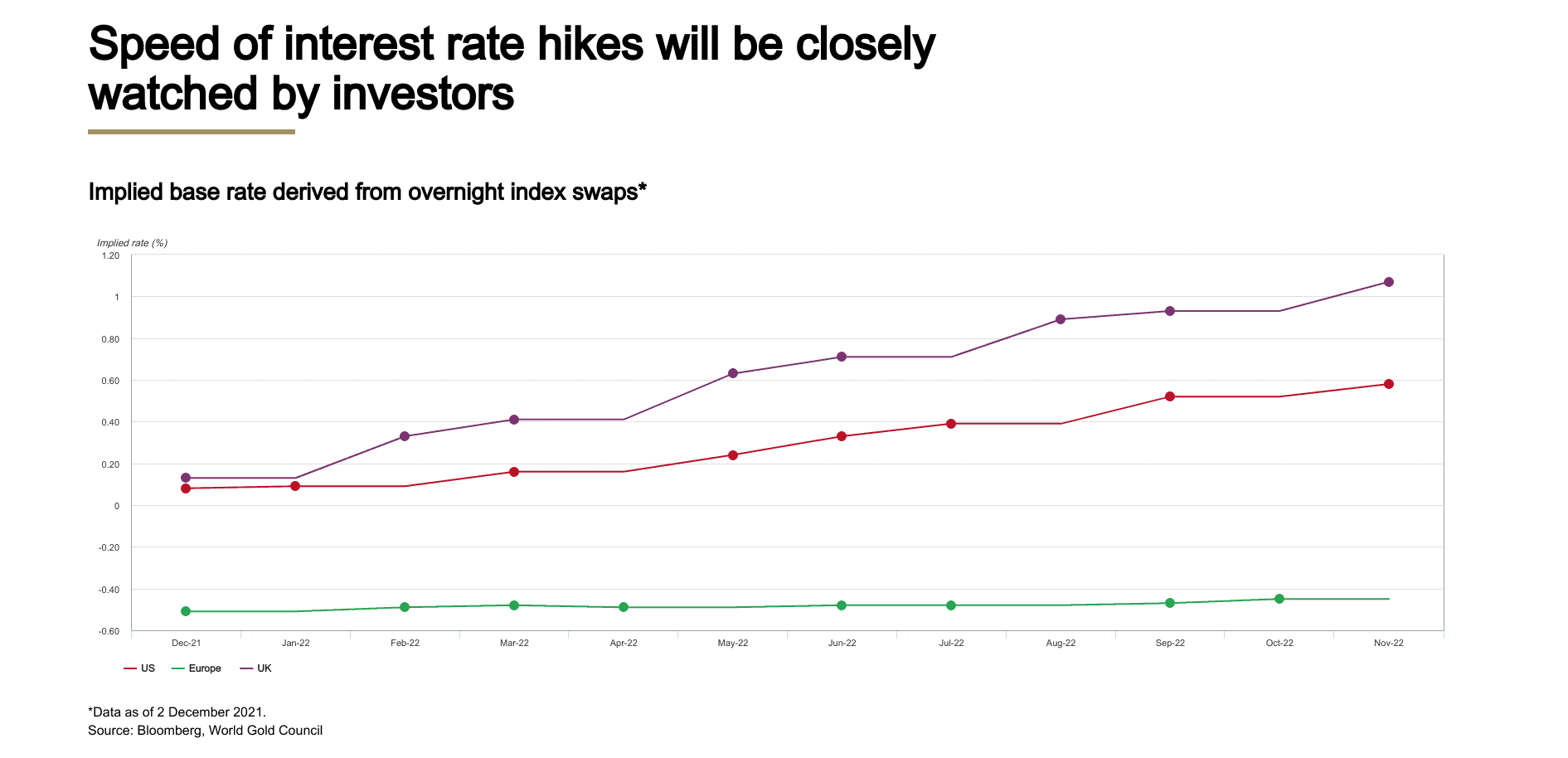
Speed of interest rate hikes will be closely watched by investors

Many of the factors that have drove gold this year, including as the pace and direction of inflation and rates, COVID, and the resilience of global economic growth, we believe will continue to be relevant in 2022. Uncertainty will almost certainly continue to encourage gold investing as a hedge. Likewise, the strength of consumer demand recovery will be determined by the strength of economic recovery in key markets, as well as the direction and volatility of the gold price. Finally, because gold is a crucial component of central bank reserves, we predict continuing support from central banks.

 
We do not offer investment advice:
This information is provided solely for general information and educational purposes. It is not, and should not be construed as, an offer to buy or sell, or as a solicitation of an offer to buy or sell, or as investment advice in general.
Which factors influence Indian gold market?

According to econometric study, rising income is the most powerful long-term driver of Indian gold demand. This is good news for gold demand, since the economy is expected to benefit from a demographic dividend, with per capita GDP growing at a rate of 23% between 2022 and 2026, according to the IMF.

However, despite being the world’s second largest gold consumer, India’s per capita consumption remains low. In the short term, demand will be hampered by falling household savings rates and agricultural earnings. Although income is the most important long-term driver of demand, it is influenced by a range of other factors, including policy decisions. Support from such measures is currently lacking as policymakers only consider gold demand through the lens of imports.

Meanwhile, initiatives to promote transparency in the sector are fragmented. Building consumer trust and increasing consumer knowledge, combined with innovation, can help improve India’s gold industry’s image, stimulate domestic demand, and allow it to play a key part in reconstructing household finances in the post-COVID era.

The factors that influence gold demand in India are numerous and diverse. Cultural affinities, long-standing traditions, and festive gifts all play a part. These qualitative characteristics, however, are supplemented by quantitative factors, which provide extra and crucial insights.

Quantitative factors in India gold demand
Researchers used econometric model to analyse three decades of annual data, from 1990 to 2020, to determine some of the key factors driving gold demand in India.

Long-term drivers
Research shows that, all else being equal, three major factors determine long-term consumer demand for gold.

  • Income: Gold demand rises by 0.9% for every 1% growth in gross national income per capita.
  • Gold price level: Demand reduces by 0.4% for every 1% increase in the rupee-based price of gold.
  • Government levies: Long-term demand is influenced by import fees and other levies, although the magnitude varies depending on whether gold is purchased as jewellery, bars, or coins.

While the impact of income and price on demand is well known, their relative importance is probably more surprising. Simply said, demand is more responsive to income than to price. This was clearly illustrated between 2000 and 2010, when demand surged by more than 40%, from roughly 700 tonnes to 1000 tonnes per year, despite a 137% increase in the rupee gold price. Meanwhile, per capita income increased by 77%, more than compensating price increases.

Short-term drivers
Analysis also identifies the important econometric elements that drive gold demand in the short run.

  • Inflation: Indian savers, like investors around the world, look to gold as a form of inflation protection. Gold demand rises by 2.6 percent for every one percentage point increase in inflation.
  • Changes in the gold price: Long-term demand is affected by continuous price rises or drops, but short-term demand is affected by sudden price swings. Demand rises by 1.2% for every 1% decrease in the price of gold in any given year.
  • Tax regime: Since 2012, an increase in import tariffs has decreased gold demand by 1.2% per year.
  • Excess rainfall: While the monsoon has a smaller impact on demand now than in the past, it still has an impact on consumer behaviour. When compared to the long-run average, a 1% increase in rainfall boosts gold demand by 0.2%.

Qualitative factors in India gold demand

India’s demographic dividend
With 1.3 billion people, India is the world’s second most populous country. The population is not just large, but its demographic pattern is also projected to provide major economic benefits. Unlike many other countries, India’s population is young and is likely to stay that way for many years. The median age across the country is currently 27 years old, and it is expected to remain below 35 for the next decade.

Simultaneously, the dependency ratio has been quickly decreasing as the working-age population (aged 15 to 64) has grown faster than the dependent population (aged below 15 and above 64). This trend, which began more than half a century ago, has become particularly marked in the last 20 years and is predicted to continue in a similar vein until 2040. As a result, between 2021 and 2041, the working-age population is predicted to expand by nearly 7 million people every year.

Regional preferences, demographic shifts, and gold demand
While India is recognized for its widespread affinity for gold, this is especially true in rural areas, where jewellery ownership is far higher than in urban areas. Consumption patterns are likewise different in the city and in the rural. In rural communities, jewellery is seen as both an investment and adornment. Bars and coins are the most popular investment options for city inhabitants. As Indian cities and rural regions grow and evolve, these differences become increasingly important for gold demand.

Gold jewellery is quite popular among Indians, and it accounted for more than 75% of overall gold demand in India between 1990 and 2020. Demand for gold jewellery is more driven by long-term variables, but demand for gold bars and coins is more influenced by short-term factors, such as inflation or taxation.


We do not offer investment advice:
This information is provided solely for general information and educational purposes. It is not, and should not be construed as, an offer to buy or sell, or as a solicitation of an offer to buy or sell, or as investment advice in general.
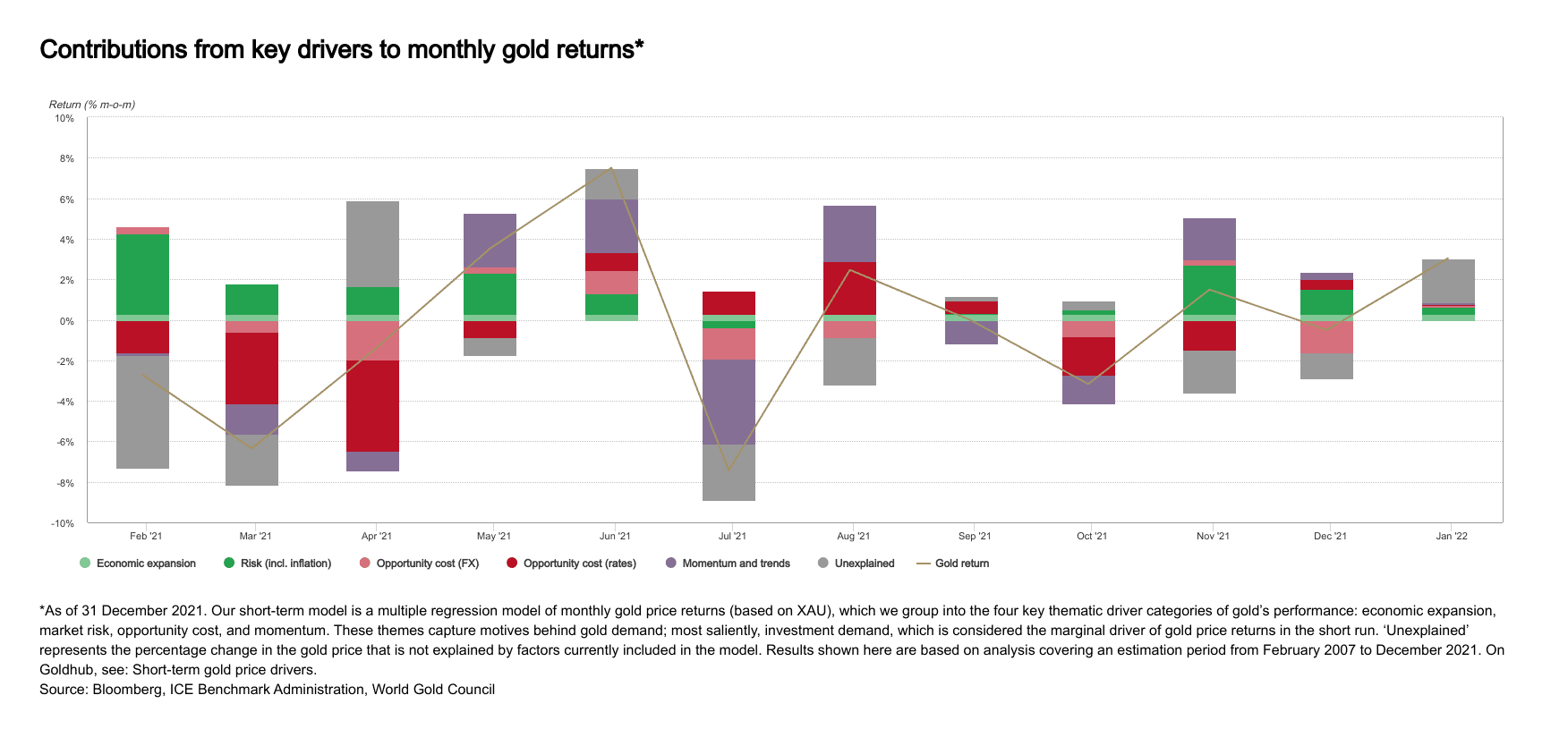
Summer 2021 Gold market analysis

A new analysis from the World Gold Council, identified September as one of the best months for gold. The analysis shows that gold has delivered positive returns during the month of September “with a confidence level” of nearly 90%.

“September has been one of the strongest months historically for the price of gold, and this could present an opportunity for investors as we head into the fourth quarter of the year,” according to the World Gold Council’s report.

Strong physical demand and rising investment activity are the two key drivers of this upward trend. In October and early November 2020, there was a surge in demand due to the Indian wedding season and other celebrations, as well as increased global investment activity after the traditionally slow summer months. As a result, September is a popular season for investors to add gold to their portfolios.


            September gold market

In early August, real government bond yields as measured by the US-10-year TIPS yield reached all-time lows, which is usually a positive for gold as its opportunity cost improves. Despite the close link in recent years, the gold price has tended to lag this trend at times, as was the case in August. This was likely because of a stronger US dollar. We wouldn’t be shocked if gold price rises should real rates remains below -1%, especially since the month-end jobs report was poor.

Despite all the volatility, the precious metal ended August down 0.6% on the month and 4% down on the year.

According to the report, Global financial markets were rather quiet during the month, as is typical for August, with most stock markets drifting higher on lighter volumes. Momentum considerations, led by ETF outflows and a reversal from the strong July gold return, as well as moderately higher rates, drove the minor drop in gold prices in August. Follow-through from July’s interest rate cuts helped to mitigate their negative impact. Despite the flash crash on August 9th, gold ended an otherwise uneventful month resiliently flat.

As noted in the report, the key factors behind the flash crash, are low liquidity and technical positioning. This occurred at a time when global markets were experiencing less liquidity across all asset classes. Also, there were a number of technical factors that could have caused this quick sell-off. First technical reason is the recent ‘death cross,’ in which the 50-day moving average dipped below the 200-day moving average, signalling a negative trend. The second technical factor is the early sell-off certainly initiated some stop-loss orders around the US$1,700 level, generating a snowball effect that resulted in increased selling.

August - EFT

Among all of this, one of the primary messages for investing in gold is the principle of gold as a store of value and the fact that the purchasing power of fiat currencies decline significantly in recent years, a trend that has continued from the last century, said the World Gold Council.

Impact of inflation on consumers

The US Federal Reserve (Fed), the European Central Bank (ECB) and other central banks have classified the recent increase in inflation as temporary. However, some of strategists from different financial institutions such as Invesco, JP Morgan, and Morgan Stanley, have argued that inflation may be here to stay.

“There are some clear less-talked about examples of inflation. ‘Shrinkflation,’ or the idea that you receive less of something for the same price (a nifty way around price increases) has become more common. So-called ‘hedonic adjustments,’ often in the context of electronics where the price of goods is adjusted down to reflect innovation – such as increased functionality or processing capacity – create a deflationary effect, despite the fact that the total amount spent by consumers may remain the same or potentially increase,” stated in the report.

Inflation is the reason why gold is on the radar of big institutional investors, according to the World Gold Council, which said that higher price pressures are already hurting consumers.

While central banks may see inflation as temporary, consumers – and investors – may have a different opinion. This could lead to increasing allocations of real assets, such as real estate and TIPS, as well as commodities, such as gold, which have performed well in higher inflationary circumstances.


We do not offer investment advice:
This information is provided solely for general information and educational purposes. It is not, and should not be construed as, an offer to buy or sell, or as a solicitation of an offer to buy or sell, or as investment advice in general.
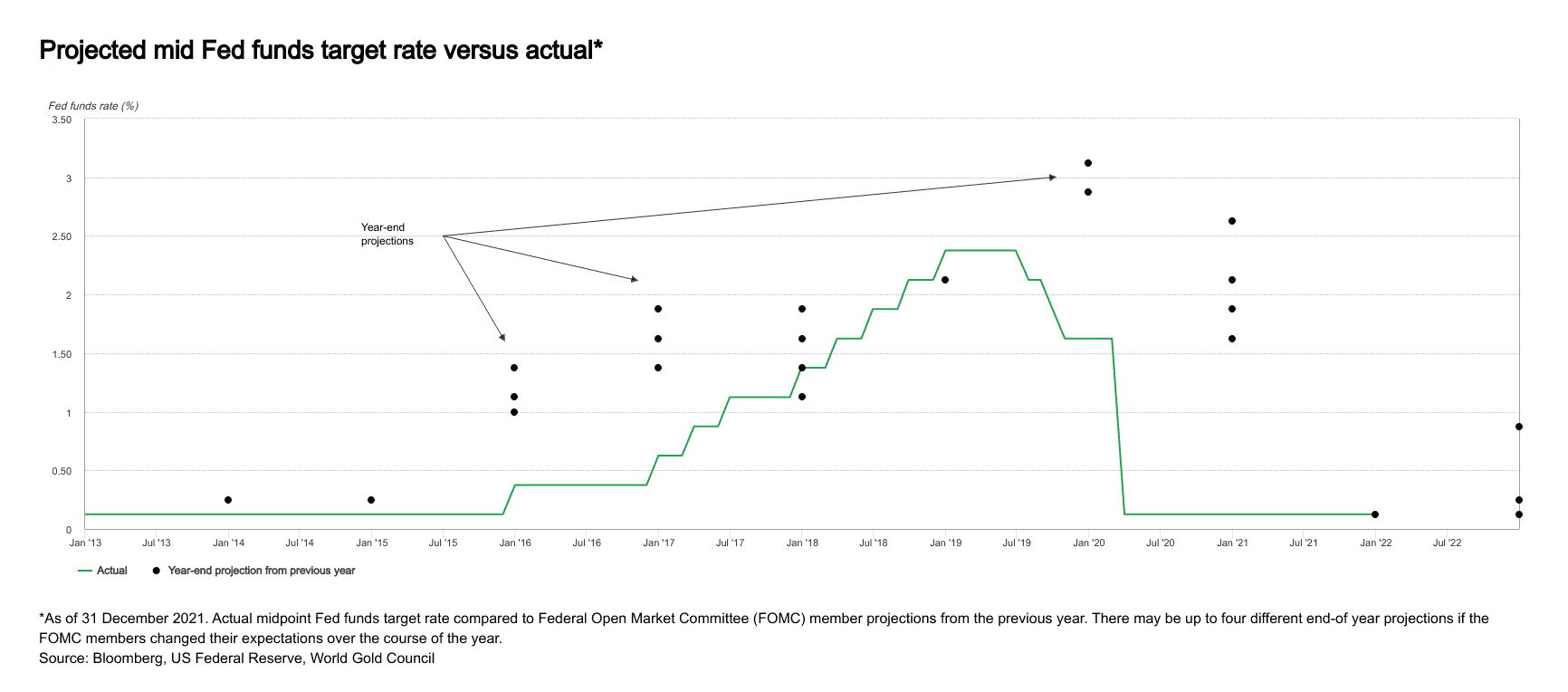
German investors who are concerned about inflation are still interested in gold

Acceleration of the local coronavirus vaccine programme and concomitant slowdown of the third wave of coronavirus in the country, boosted Investors’ confidence in Germany. However, while hope for an economic recovery is high, German investors who are concerned about inflation, have an increasing fear about rising prices.

According to Google search results in Germany, the word inflation which had an upward trend since October 2020, increased in February after the Eurozone annual headline CPI was reported to have jumped to an 11-month high of 0.9 percent. Also, based on the statements from both local and European central bankers fanning the flames of inflation forecasts, gold has become a hot topic among investors.

Germans purchased significantly more gold bars and coins in 2020 than in any prior year, according to the World Gold Council’s Gold Demand Trends data. And, so far in 2021, they have continued to invest at a rate that well above the historical average, even when compared to the level reached during and after the Global Financial Crisis.

German investors

             Source: Bloomberg, ZEW

Similarly, investment in gold ETPs held up well in Q1. In comparison to the large withdrawals from funds listed in the United States or elsewhere in Europe, German funds registered only moderate losses and have had consistent – albeit small – inflows since early April. German ETPs presently have €18.4 billion in AUM, second only to the United Kingdom in Europe, and are near to their peak of €21.8 billion in July 2020.

German investors regard gold as a form of inflation protection. According to a comprehensive 2019 consumer research survey, 64 percent of German retail investors believe gold is a suitable hedge against inflation/currency fluctuations, and 61 percent believe it will never lose its value in the long run.

Almost half of gold bar or coin owners stated that the main purpose of their investment was to protect their wealth. Similarly, real estate/property was linked to wealth protection. Savings accounts, on the other hand, were even more likely to be perceived as serving this purpose, as three out of five investors stated this was the main purpose of their savings. While negative interest rates continue to affect German savings, investors may continue to invest in gold and real estate rather than see their savings deteriorate.

German investors
                 Source: Hall & Partners, World Gold Council

Addition to these findings, the results of a study commissioned by Reisebank, indicated that “value preservation” and “inflation protection” were two of the main reasons German investors mentioned for willing to keep their gold investments from the previous two years.

According to a recent German study, conducted in November 2020, 40% of retail investors who had bought gold in the past stated they were likely to purchase more in the coming 12 months as a direct result of the coronavirus outbreak. Remarkably, the intention to invest was strongest among Gen Z and Millennial investors, correlating with above mentioned Reisebank’s findings, that more young adults (18-26 years old) purchased gold during the pandemic than older respondents (23 percent v 16 percent).

It is undeniable that Germany’s increasing inflation is preying on investors’ minds, whether or not it is a temporary phenomenon. And that tends to go hand in hand with keeping gold appealing. While 2020 set a high standard that will be difficult to match, German investment is expected to remain high for at least the rest of this year.

 
We do not offer investment advice:
This information is provided solely for general information and educational purposes. It is not, and should not be construed as, an offer to buy or sell, or as a solicitation of an offer to buy or sell, or as investment advice in general.
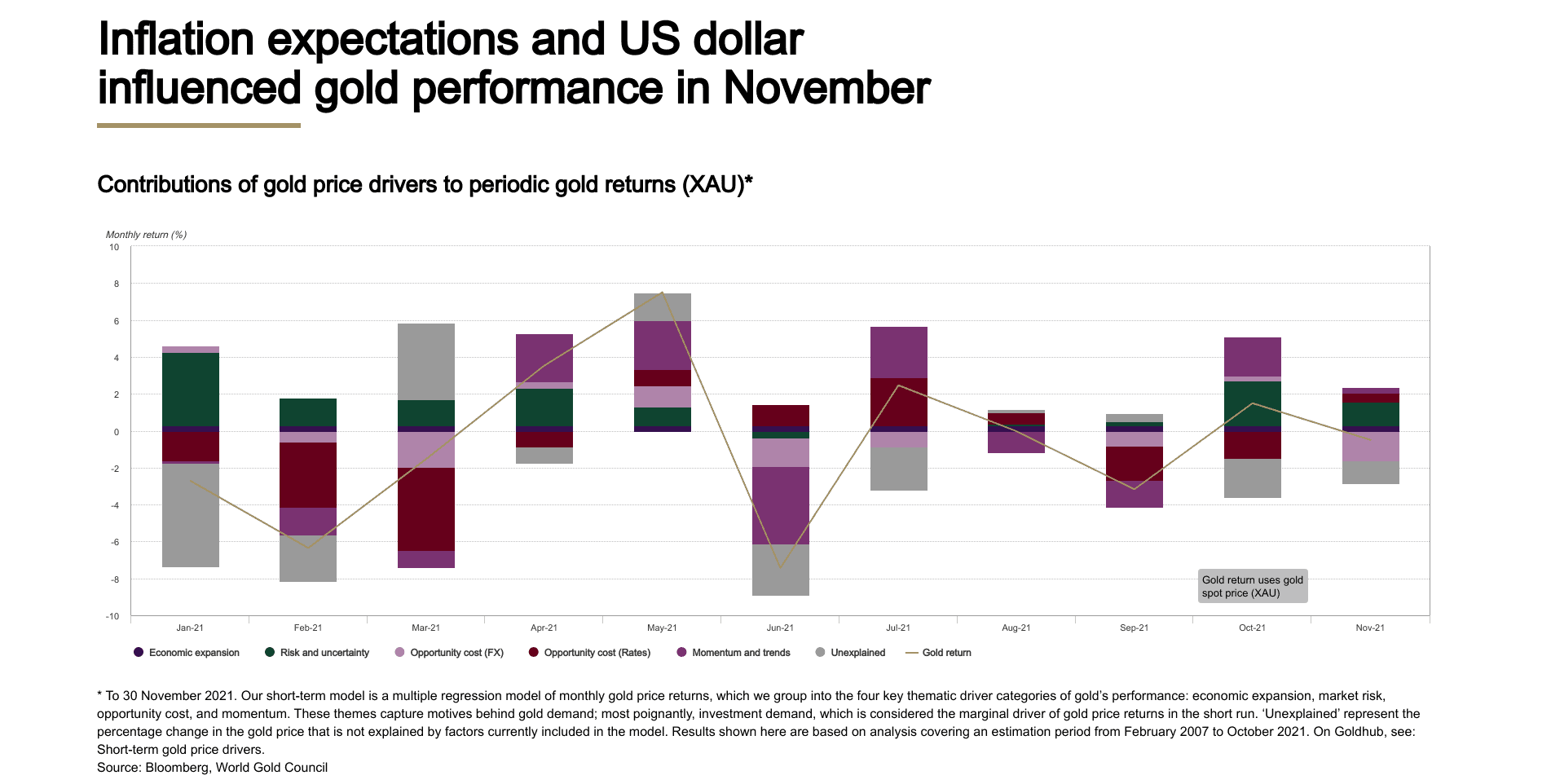
Physical Gold Demand Up in Q1 2021 as Investors Look for Inflation Hedge

Q1 saw boosted demand for physical gold as investors looked for alternative assets and gold caught a safe haven bid as a hedge against the rising inflation. The current geopolitical climate including the fallout from COVID-19 has been driving fiat currency lower against hard assets.

Individuals and companies are looking for ways to escape from the fiat currency trap that is reflat-ing economies, but also causing inflation to catch on in the real economy.

As global economies continued to recover in financial terms, gold ETF outflows were mitigated by higher consumer demand. On Q1 this demand (excluding OTC) was 815.7t, almost unchanged if compared to Q4 2020, but decreased 23% if compared with Q1 2020.

In Q1 the average gold price was 13% higher y-o-y but it declined by 4% on a q-o-q basis.

The current gold price has lagged many other investment assets, which may be why Q1 was seen as an opportunity to buy at lower levels. This opportunity likely triggered consumer demand, and may continue to drive physical gold buying in 2021.

Central banks continued to buy gold reserves in Q1 2021 on a net basis, making the official gold reserves grow by 95.5t. Although net gold buying by central banks was 23% lower y-o-y in Q1, it was 20% higher q-o-q.

Gold usage in the tech industry grew by 11% y-o-y in Q1, 2021, and consumer demand hit 81.2t, slightly up on the five-year quarterly average of 80.9t.

2021 Sees Inflation Hit Economy – Global Investors Look to Physical Gold

After years of pseudo stability, inflation on the rise this year. As COVID lockdowns ease in many nations and people are free to circulate, the high demand will overheat the market and degrade the buying power of most fiat currencies.

Mainstream news is beginning to talk about inflation, raising the concern and subsequent interest in hedges, the most popular of which historically has been gold.

According to Jerome Powell, the current Federal Reserve Chief, the outlook for inflation isn’t that bad. The inflation rate growth is projected at a modest 2 percent this summer. In the real economy, however, inflation in many markets, such as lumber, is already at 100% or more on a y-o-y basis.

Economists around the world are noting that the massive stimulus deployed by governments is trig-gering inflation, and productive economic activities are still lagging. Many markets are being hit with shortages, and this leads to more money chasing fewer goods and services.

Governments around the world implemented stimulus programs to address the negative impact of shutdowns, but these easy money programs may be the beginning of an inflationary firestorm that central banks simply can’t control.

Morgan Stanley Sees Gold as Effective Inflation Hedge

Katerina Simonetti, senior vice president at Morgan Stanley Private Wealth Management, told the media that gold is a good way to hedge a portfolio in an inflationary environment.

“The main story is that the economy is improving. We are benefiting from historically unprecedented stimulus…But this good news also brings certain pressures. Specifically, we are concerned about bal-ance sheets and the overall budget deficit. There are a number of things that could potentially lead to higher inflation and also put pressure on the U.S. dollar. And these pressures can create opportunities for commodity, specifically gold.”, She said.

Investing in gold ensures positive long-term performance at low risk, and an effective way to hedge against hyperinflationary tail risks. Gold always grants two advantages to investors over the long term – risk protection and asset appreciation due to inflationary central bank monetary policy.

The falling interest in gold ETF may have more to do with hot money chasing returns in other assets, like stocks, than any fundamental fall in demand from investors. In fact, the move to buy physical gold may be the beginning away from the paper gold markets, and into hard metal.

Experts See Gold Rising Close to 2020 Highs

The policy response to the COVID-19 lockdowns was a big diver of gold prices in 2020, but in Q1, 2021, market current seems to have been muted.

However, the stimulus that governments and central banks pumped into the economy has experts predicting a rise back to near the all-time highs that markets saw in 2020.

Wallet Investor, an algorithm-based investment advisory firm, predicts that gold will rise to at least $2,090 by the final months of 2022, and to higher levels as the inflation that is an almost certain re-sult of policy actions penetrates deep into the global economy.

This may be one of the reasons why many nations are turning to Central Bank Digital Currency (CBDC) development programs. In fact, China is already testing its CBDC in select areas of the country, and may roll it out nationwide in the next year.

China is Importing Gold at Much Higher Rate in 2021

China is the world’s largest producer of physical gold, and despite this, in Q1, 2021, its central bank, the PBoC, decided to open up the border to as much as 150 tons of gold at present market rates. This represents a large driver of physical gold buying, and may be a sign of things to come in 2021 and beyond.

During 2020 the PBoC allowed the import of around 10 tons of gold per month when averaged out over the year, so this move to allow the import of 150 tones could boost China’s yearly average in 2021, especially if it isn’t a one-off event.

China, like most nations, has seen a strong rise in the price of many everyday goods, and is being hit especially hard hit by higher prices in the agricultural sector. The Middle Kingdom also has a cultural tradition of gold buying, which may add to strength in the physical market as 2021 unfolds.


We do not offer investment advice:
This information is provided solely for general information and educational purposes. It is not, and should not be construed as, an offer to buy or sell, or as a solicitation of an offer to buy or sell, or as investment advice in general.