Santa Brought Gold Holders a Present as the Commodity Rallied Over Christmas

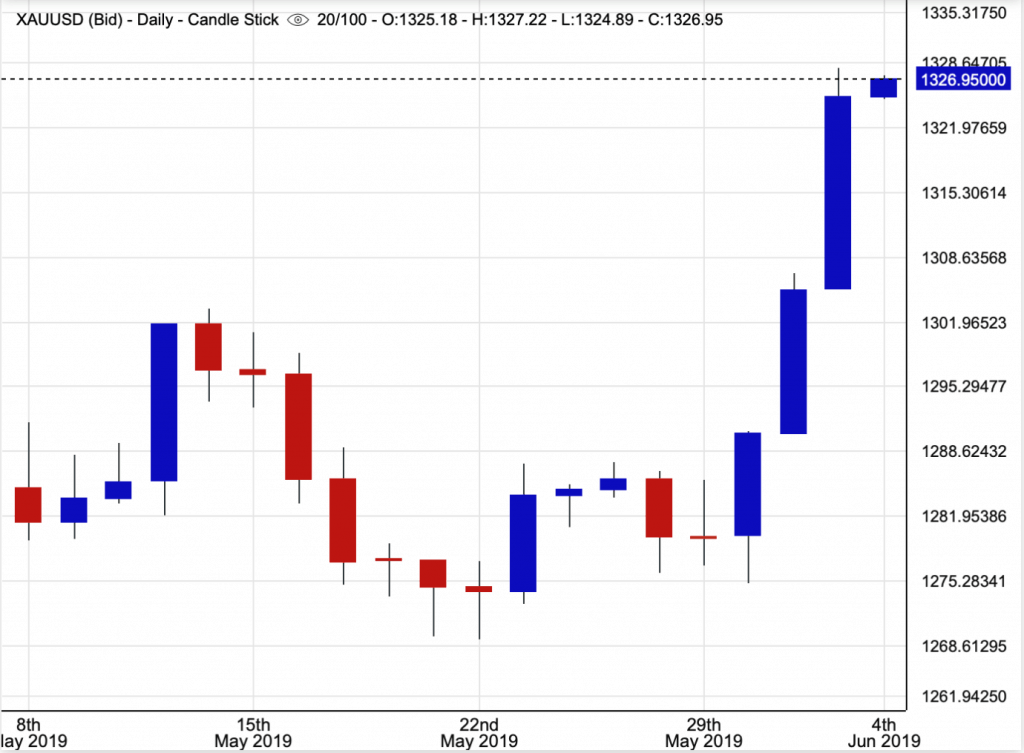
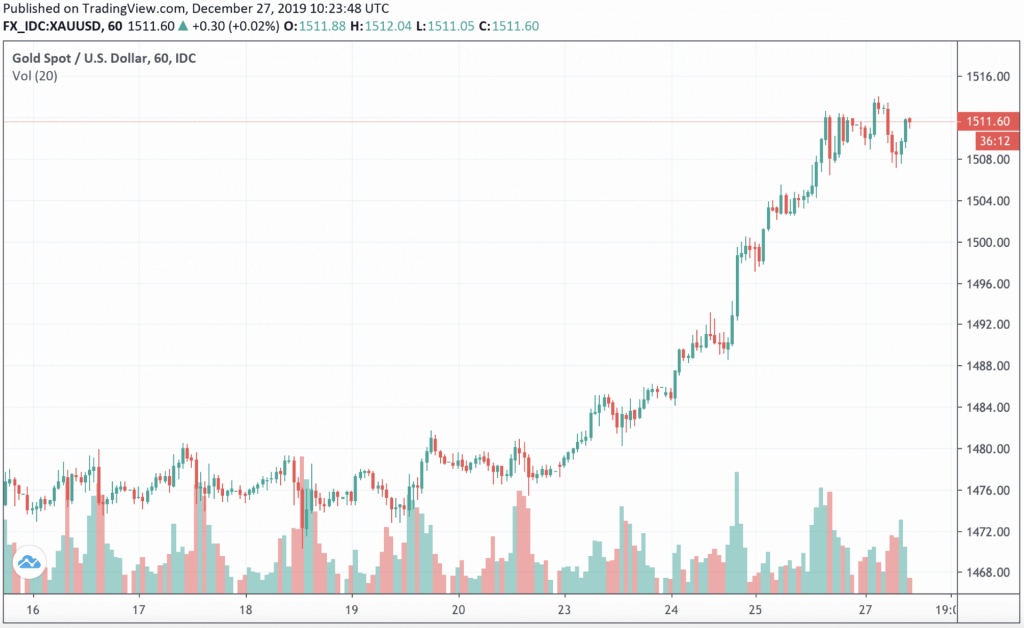
The gold price increased around US$ 25 this week breaking through US$ 1.500 per ounce over the Christmas holiday, trading at around US$ 1.510. The highest level since September this year. 2019 has been a remarkable year for gold with the best returns since 2010, soaring around 15% year-to-date. While there have been many reasons that have contributed to the rise in the price of gold, it looks like there is still a lot of momentum left going forward into 2020.


Chart 1: Current Trading Range

US-China Trade Deal

The trade war tensions between the USA and China have been the primary driver of the gold price this year. Should it ever come to an amicable solution, this would most likely send the gold price to tumble. Since the announcement of the alleged phase one deal, the price of gold stayed fairly flat and subdued. Most likely attributable to general market scepticism that a trade deal may not actually be signed. There are continued growing tensions between both countries regarding the Hong Kong protests and China’s treatment of the Uighur Muslims. In 2020 the US presidential elections will also take place. A potential reason for China to sit it out in aspiration of President Trump not being re-elected.

Gold shines in an uncertain environment and will thrive if the trade deal officially falls through.

The Weakening US Economy

The US economy is standing on shaky grounds. They are facing a weakening manufacturing sector, consumer spending being driven by debt and the Federal Reserve continuously making credit cheaper.

Eventually this will have a detrimental effect on the economy with a hard felt recession. This will result in a tailwind for gold.

Key Islamic Nations Looking for a Golden Alternative to the Dollar

Iran, Malaysia, Turkey and Qatar are exploring trading in gold as well as through a barter system amongst each other as a hedge against any future economic sanctions. This is provoked through the hefty sanctions by the US on Iran. Fearing future penalties, the Malaysian PM said,

“I have suggested that we re-visit the idea of trading using the gold dinar and barter trade among us. We are seriously looking into this and we hope that we will be able to find a mechanism to put it into effect.”

The Dollar has been world’s reserve currency since 1944 with an increasing number of countries, these days, looking for alternatives.

Gold has however been the de factor reserve currency for thousands of years. The more countries looking for an alternative to the dollar, will doubtlessly have a positive effect on the demand for gold.

The Hoarding Spree

Russia is leading the way in their increasing accumulation of gold over the last year. Not only through the continued bullion purchases of the Central Bank but mining has also increased by approximately 18%, year-on-year. Russian’s total gold reserve is up to US$ 548 billion.

It is visible that Russia is moving away from the dollar. They are not alone though. China is on a similar path as are many more countries. In fact, everyone from the super-rich to central banks seem to be on the gold-buying- and gold-hoarding-spree. 

Considering all the fundamental and technical reasons, the price of gold is set to go through the roof in the coming years.  


Why LIEMETA ME Ltd?

LIEMETA ME Ltd, Nicosia, Cyprus, provides physical storage of precious metals at its prime location in Liechtenstein as well as trade services of precious metals, mainly gold, silver, platinum and palladium. 

Your precious metals are safely and securely stored “segregated and allocated” and we are one of the few physical storage houses for precious metals that provide full-cover insurance, including embezzlement.

Stored assets are fully legally owned by the client, client assets are of course not on our companies’ balance sheets.

LIEMETA is a privately owned, independent and non-bank company, meaning that its services do not fall within the scope of CRS or AEOI.

LIEMETA provides 100% discretion, 24/7 access to clients’ stored assets at its sophisticated unit and high-security building.

LIEMETA is proud to be chosen by high net-worth individuals as their trustworthy custodian, in Liechtenstein.

You are welcome to contact us through the below contact form.


We do not offer investment advice:

This information is provided solely for general information and educational purposes. It is not, and should not be construed as, an offer to buy or sell, or as a solicitation of an offer to buy or sell.


Gold In The Changing International Monetary System


By Dr Tatiana Fic, Director, Central Banks and Public Policy, World Gold Council for the Eurasian Financial & Economic Herald.


The changing international monetary system

Economic power is shifting from West to East. China is now the world’s largest economy on a purchasing-power parity basis. It is the largest trading nation in the world and has the third largest sovereign debt market. Over the last decades China has become a key driver of global growth and it will continue to propel the world economy over the years to come.

The reconfiguration of the structure of the global economy and China’s rising global footprint is likely to have an impact on the international monetary system, with the greater use of the Chinese currency as one of the forces shaping the global financial system. The international monetary system is likely to move away from the unipolar, US dollar – based system towards a multipolar system, with not only the US dollar, but also the euro and potentially the renminbi playing the role of the main reserve currencies.

Since 2009 the Chinese authorities have introduced a number of measures aimed at promoting renminbi cross border settlements, including building an offshore renminbi market and facilitating access of foreign investors to the Chinese bond market. Since the inclusion of the renminbi into the SDR basket, the share of the renminbi in international reserves has surpassed those of the Australian dollar and the Canadian dollar and currently it stands at 1.95% (as of Q1 2019). The inclusion of Chinese bonds into the global bond indices earlier this year will provide a further impulse for investment into Chinese bonds and will further expose foreign investors to the Chinese sovereign bond market.

The renminbi’s use in international trade will most likely increase further once certain conditions are fulfilled, most notably those regarding the currency convertibility and the continued opening of China’s capital account. The real question is not whether this will happen, but when and what regions are likely to adopt the renminbi as one of their main reserve currencies. While it will be difficult for the renminbi to rival the US dollar as the global currency, Asia seems to be the natural habitat for the renminbi (Eichengreen, Lombardi, 2017).

As the international monetary system transitions from the unipolar, towards a multicurrency system, gold, as a safe haven asset and a hedge against financial shocks and currency crises, has remained and will continue to remain an important element of central bank portfolios.

Recent trends in central bank gold buying

Over the past decade, central banks have purchased more than 4,300 tonnes of gold, bringing their total holdings to nearly 34,000 t. Following the USD and EUR, gold makes the third largest reserve asset in the world, constituting about 11% of world’s international reserves (chart 1).

Foreign currency reserves and gold

Chart 1 | Source: IMF, World Gold Council

Since the global financial crisis central banks have remained firmly on the gold purchasing pedal, with central bank gold demand fluctuating at about 500-600 tonnes per year (chart 2).

Annual central bank demand

Chart 2 | Source: Metals Focus, Refinitiv GFMS, World Gold Council

Last year central bank purchases of gold totalled 651 tonnes – more than at any time since the end of Bretton Woods and the suspension of US dollar convertibility into gold nearly 50 years ago.

The vast majority of buying has come from developing country central banks. Russia, China, Turkey and Kazakhstan have been the largest purchasers. The share of gold in developing country central banks remains relatively low. The overall allocation is 5% as compared to 16% for advanced economies which may suggest there is scope for further growth. At the same time, over the past decade the advanced economy central banks stopped selling gold under central bank gold agreements. Earlier this year, they decided not to renew the agreement upon its expiry in September 2019. In the press release issued by the ECB in July, 22 signatory central banks confirmed that none of them currently has any plans to sell gold. The signatories stated that gold remains an important element of global monetary reserves.

While the developing country central banks have been active purchasers, the pattern of demand has changed in recent years. In 2016, demand was highly concentrated in Russia, China and Kazakhstan (chart 3a).

Central bank purchases in 2016

Chart 3a

By 2018, the demand had become far more diverse, with nineteen individual central banks buying over one tonne of gold last year, according to IMF data. Countries that had been absent from the gold market for many years became notable buyers of gold. The European Union re-emerged as a net buyer, after substantial purchases from Poland and Hungary (Chart 3b).

Central bank purchases in 2018

Chart 3b | Source: IMF, World Gold Council 

Factors driving central bank gold demand

Central banks hold gold for various reasons – as a strategic asset, to satisfy their objectives of ensuring international reserves liquidity and security, and to diversify their reserve portfolios. Gold is especially well suited to central bank reserve portfolios whose principal function is to protect the country against external shocks. The negative correlation of gold with other assets allows central banks to maximise the return on their portfolios, at the same time minimising the risks.

The recent increase in central bank gold demand has been driven by a combination of macroeconomic and geopolitical factors, as well as structural changes in the global economy.

Macroeconomic uncertainty resulting from deteriorating budget positions, and rising debt of some of the reserve currency countries, an increased threat of currency wars, and protectionist policies have prompted central banks to diversify their portfolios.

Some of the central banks buy gold at the same time reducing their US Treasury holdings. The dedollarisation of reserves is a response to sanctions and increased political tensions.

Some central bank purchases reflect a desire to hedge against future changes in the international monetary system. It is noteworthy that most of the recent gold purchases have been coming from countries with strong trade and investment links with China in Southeast and Central Asia (chart 4).

Central bank gold purchases over recent years (2014–2018)

Chart 4 | Source: Metals Focus, World Gold Council

The rising exposure of the Belt and Road countries to China will likely result in higher holdings of the Chinese currency in their central bank reserves in the future. As the process of full regionalisation of the renminbi will take time, these countries have been purchasing gold instead. As the shift to a new international monetary system could be both destabilising, due to hot money flows and changing expectations, and possibly weigh on the US dollar, gold can serve as a hedge against both.

GOLDHUB

Enhancing trust in gold through data

Credible data is critical to the informed investor, so we take pride in seeking to source the highest standards in the data we provide. Building on our existing data series, using data from public and commercial third parties, we have created a comprehensive information resource for gold as an asset class.

Alongside data, our new website brings together our expert research and interactive tools in one accessible and easy-to-use location. The Goldhub research library gives you access to a wealth of material on the role, drivers and performance of gold as an asset class from industry experts. Whether looking for data analysis and context, the latest updates or a deeper understanding of the gold market, Goldhub is a rich resource to support strategic asset management. Visual analytics and data downloads also allow you to engage with gold market data, helping you to verify and develop your own insights.

Usability, breadth of data and depth of knowledge make Goldhub equally relevant to asset owners with existing positions in gold and those who are new to the asset class. For the former, relevant data is readily available; for the latter, Goldhub provides information and guidance on gold’s value as a strategic asset.

As the site develops, more data and insight will be added to provide even greater levels of transparency and understanding around the value of gold as an asset class. In March, we launched the Goldhub blog, which features market insights from our teams across the world, as well as external commentators who provide a unique perspective on aspects of the market.

This article is republished on our website with the kind permission of the World Gold Council. Details about the author of this article: 

Dr Tatiana Fic, PhD
Director, Central Banks and Public Policy,  
World Gold Council

Tatiana was formerly a Research Fellow at the UK National Institute of Economic and Social Research, working on projects related to the work of the United Nations and the European Commission. Prior to that, she held various positions at the National Bank of Poland, including as Head of the Macroeconomic Projections Division. Tatiana holds an MSc in Quantitative Methods and Information Systems, an MSc in Finance and Banking, and a PhD in Economics from the Warsaw School of Economics.

View the September issue of the Eurasian Financial & Economic Herald here


___

LIEMETA ME Ltd

LIEMETA ME Ltd, Nicosia, Cyprus, provides physical storage of precious metals at its prime location in Liechtenstein as well as trade services of precious metals, mainly gold, silver, platinum and palladium. 

Your precious metals are safely and securely stored “segregated and allocated” and we are one of the few physical storage houses for precious metals that provide full-cover insurance, including embezzlement.

Stored assets are fully legally owned by the client, client assets are of course not on our companies’ balance sheets.

LIEMETA is a privately owned, independent and non-bank company, meaning that its services do not fall within the scope of CRS or AEOI.

LIEMETA provides 100% discretion, 24/7 access to clients’ stored assets at its sophisticated unit and high-security building.

LIEMETA is proud to be chosen by high net-worth individuals as their trustworthy custodian, in Liechtenstein.

You are welcome to contact us through the below contact form.


We do not offer investment advice:

This information is provided solely for general information and educational purposes. It is not, and should not be construed as, an offer to buy or sell, or as a solicitation of an offer to buy or sell.T


Don’t Forget to Add Palladium to Your Precious Metals Portfolio

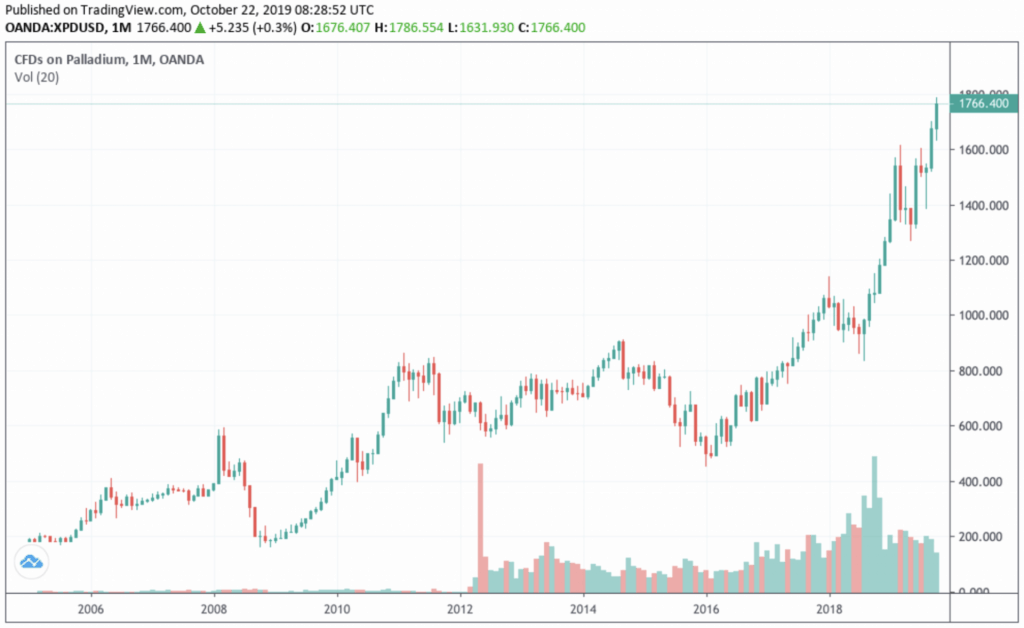
Gold gets the shine, but are we forgetting Palladium? “While many investors are focused on gold, palladium has been far and away the best performing precious metal of the past several years.” ~ according to Ivanhoe Mines’ co-chairman Robert Friedland. A strong upward appreciation in price has been witnessed since 2016. Palladium prices have doubled since August last year and even 8-fold increased since 2008. Since beginning of this year palladium increased by 39.07% (US$ 493.90 an ounce). An all-time high was reached last week on 17th October when palladium hit US$ 1.783,21. Since then the price has remained in the range of US$ 1.750.

Chart 1: Current trading range. 

Chart 2: Price development since 2006

Palladium has surpassed the psychological resistance levels of US$ 1.700 and US$ 1.750. If the price remains around this level, then accordingly we may well be looking at prices nearing or going above US$1.900. This is also in accordance with the unofficial average price predictions of the four major precious metals for the year ahead, 2020, following the LBMA/LLPM meeting held in Shenzhen, China ending 13th October:

GOLD US$ 1.658
SILVER US$ 23
PLATINUM US$ 1.182
PALLADIUM US$ 1.924

Delegates were certainly bullish on gold but even more so on silver and platinum which are both forecast to rise over 30%. Palladium and gold are forecasted to go up around 10% and 11% respectively.

For a diverse precious metals portfolio, it is recommended to add the key precious metals, namely gold and silver, according to industry experts and then palladium and/or platinum. It is advisable to not only concentrate on one precious metal in one’s investment / precious metals portfolio. 

Robert Kiyosaki, author of “Rich Dad Poor Dad” discusses his strategy on making money and the importance of gold and silver for him.


The safest way to invest in precious metals is ultimately to go physical and outside the banking system, as is the case with Liemeta ME Ltd:

Why LIEMETA ME Ltd?

LIEMETA ME Ltd, Nicosia, Cyprus, provides physical storage of precious metals at its prime location in Liechtenstein as well as trade services of precious metals, mainly gold, silver, platinum and palladium. 

Your precious metals are safely and securely stored “segregated and allocated” and we are one of the few physical storage houses for precious metals that provide full-cover insurance, including embezzlement.

Stored assets are fully legally owned by the client, client assets are of course not on our companies’ balance sheets.

LIEMETA is a privately owned, independent and non-bank company, meaning that its services do not fall within the scope of CRS or AEOI.

LIEMETA provides 100% discretion, 24/7 access to clients’ stored assets at its sophisticated unit and high-security building.

LIEMETA is proud to be chosen by high net-worth individuals as their trustworthy custodian, in Liechtenstein.

You are welcome to contact us through the below contact form.


We do not offer investment advice:

This information is provided solely for general information and educational purposes. It is not, and should not be construed as, an offer to buy or sell, or as a solicitation of an offer to buy or sell.


China’s Golden Week and its Effect on the Gold Price

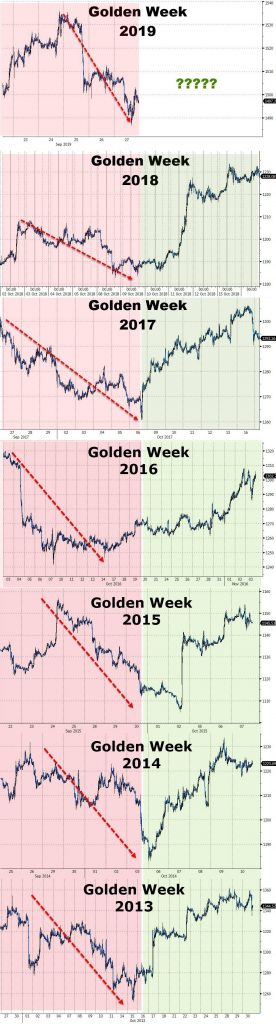
Year after year, China’s Golden Week National Holiday causes the gold price to tumble. In fact, it is one of those two weeks in the year when pretty much the whole of China is closed including factories and offices. The first week is in January or February, the Spring Festival, over Chinese New Year and is subject to the lunar calendar. The other is now, the Golden Week, that starts around the 1st October, a National Holiday. During these weeks migrant workers are seen traveling to their homes within China and the more affluent heading for holidays abroad. With China being such as vast and important global market, these holidays have a knock-on effect on the global economy and thus our markets.

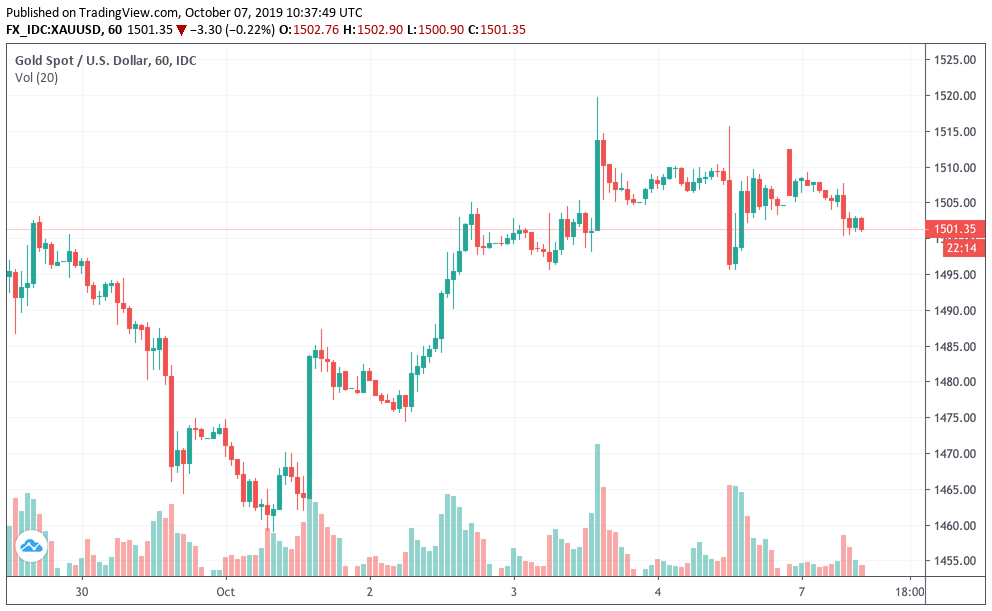
The price of gold plummeted below US$ 1.500 per ounce, reaching nearly US$ 1.460, on 30th September which was the start of China’s Golden Week. During the week the price has remained steady around the US$ 1.500 level.

The Shanghai Gold Exchange also remains closed during this week and will reopen on 9th October, as with the rest of China. It is anticipated that the price will re-balance itself, as has been the case over the last decade. At the beginning of September the price of gold reached US$ 1.555 per ounce.

Here is a glance on the last few years that explains the above price movement and the potential upward swing of gold to levels prior 1st October. 

Source: Bloomberg

Source: Bloomberg

Cautiously, industry experts are predicting for gold to close the year at the US$ 1.600 per ounce and a price of USD$ 2.000 per ounce in the next year, 2020. 

Why LIEMETA ME Ltd?

LIEMETA ME Ltd, Nicosia, Cyprus, provides physical storage of precious metals at its prime location in Liechtenstein as well as trade services of precious metals, mainly gold, silver, platinum and palladium. 

Your precious metals are safely and securely stored “segregated and allocated” and we are one of the few physical storage houses for precious metals that provide full-cover insurance, including embezzlement.

Stored assets are fully legally owned by the client, client assets are of course not on our companies’ balance sheets.

LIEMETA is a privately owned, independent and non-bank company, meaning that its services do not fall within the scope of CRS or AEOI.

LIEMETA provides 100% discretion, 24/7 access to clients’ stored assets at its sophisticated unit and high-security building.

LIEMETA is proud to be chosen by high net-worth individuals as their trustworthy custodian, in Liechtenstein.

You are welcome to contact us through the below contact form.


We do not offer investment advice:

This information is provided solely for general information and educational purposes. It is not, and should not be construed as, an offer to buy or sell, or as a solicitation of an offer to buy or sell.


World Gold Council Releases The 10 Responsible Gold Mining Principles


The World Gold Council (WGC), as the market development organization for the gold industry, recently launched its Responsible Gold Mining Principles (RGMP). These lay out the framework through which the gold mining companies can provide confidence to investors, supply chain participants and consumers that their gold has been produced responsibly. Backed on the 17 Sustainable Development Goals by the United Nations and increased awareness of sustainable financing they complement the initiatives like the International Council of Mining and Metals (ICMM) Performance Expectations and the London Bullion Market Association’s (LBMA) Responsible Gold Guidance, which applies specifically to refiners.

“It is our aim that the Responsible Gold Mining Principles reinforce trust in gold and the gold mining industry. Consumers, investors and the downstream gold supply chain will be able to know, with confidence, that their gold has been responsibly sourced,” said World Gold Council CFO Terry Heymann.

The 10 golden rules that emerged from this initiative are:

Governance:

  1. Ethical conduct: conduct business with integrity including absolute opposition to corruption.
  2. Understanding impacts: engage with stakeholders and implement management systems to ensure that impacts are understood and managed; and realize opportunities and provide redress where needed.
  3. Supply chain: require that suppliers conduct their businesses ethically and responsibly as a condition of doing business.

Social:

  1. Safety and health: protect and promote the safety and occupational health of workforce (employees and contractors) above all other priorities; and empower them to speak up if they encounter unsafe working conditions.
  2. Human rights and conflict: respect the human rights of the workforce, affected communities and all people being interacted with.
  3. Labor rights: ensure that operations are places where employees and contractors are treated with respect and are free from discrimination or abusive labor practices.
  4. Working with communities: aim to contribute to the socio-economic advancement of communities associated with operations and treat them with dignity and respect.

Environment

  1. Environmental stewardship: ensure that environmental responsibility is at the core of your work.
  2. Biodiversity, land use and mine closure: work to ensure that fragile ecosystems, critical habitats and endangered species are protected from damage and plan for responsible mine closure.
  3. Water, energy and climate change: improve the efficiency of use of water and energy; recognizing that the impacts of climate change and water constraints may increasingly become a threat to the locations where one works and a risk to a license to operate.

“Adherence to strong environmental, social and governance principles should be a key part of any responsible gold mining business and, as such, the members of the World Gold Council have collaborated, along with key industry stakeholders, to develop the Responsible Gold Mining Principles,” said Newmont Goldcorp CEO Gary Goldberg, who oversaw this initiative on behalf of the World Gold Council board.

Companies that adopt the RGMP will be required to obtain external assurance from an independent, third-party provider. This will further provide enhanced confidence to purchasers that the gold they buy is mined and sourced responsibly.


Why LIEMETA ME Ltd?

LIEMETA ME Ltd, Nicosia, Cyprus, provides physical storage of precious metals at its prime location in Liechtenstein as well as trade services of precious metals, mainly gold, silver, platinum and palladium. 

Your precious metals are safely and securely stored “segregated and allocated” and we are one of the few physical storage houses for precious metals that provide full-cover insurance, including embezzlement.

Stored assets are fully legally owned by the client, client assets are of course not on our companies’ balance sheets.

LIEMETA is a privately owned, independent and non-bank company, meaning that its services do not fall within the scope of CRS or AEOI.

LIEMETA provides 100% discretion, 24/7 access to clients’ stored assets at its sophisticated unit and high-security building.

LIEMETA is proud to be chosen by high net-worth individuals as their trustworthy custodian, in Liechtenstein.

You are welcome to contact us through the below contact form.


We do not offer investment advice:

This information is provided solely for general information and educational purposes. It is not, and should not be construed as, an offer to buy or sell, or as a solicitation of an offer to buy or sell.


Liemeta – Fully Shariah Compliant Certified Gold and Silver 

Liemeta is certified Shariah compliant by the Scholars of the Shariah Supervisory Board of Amanie Advisors, all our operations and procedures regarding the sale and custody storage of physical gold and silver are in line with the AAOIFI Shariah Standard No 57 on Gold.

Amanie Supervisors’ Shariah Supervisory Board during its meeting, presided by Scholar Dr Mohamed Ali Elgari, evaluating the Shariah compliance of Liemeta’s gold and silver sales and storage procedures, September 2019.

The certification, in form of a fatwa issued by the Shariah Supervisory Board, covers our sales operations carried out in Liechtenstein as well as our segregated and allocated high-security custody storage services in our facilities in Liechtenstein.

Although the majority of our sales procedures were already fit for Shariah compliance as per the AAOIFI Shariah Standard No 57 on Gold, we had to fine-tune them in order to be fully Shariah compliant. Amanie Advisors supported us professionally and very efficiently.

Our typical sales procedures are now fully compliant with the OTC (Over the Counter) spirit of the AAOIFI Shariah Standard.

Our storage services were already Shariah-compliant, as we are always storing gold and silver in segregated form, allocated to our clients, who are the legal owners of their gold and silver stored with us in custody.

Both our sales and storage services for physical gold and silver are subject to annual compliance, which will be carried out by Amanie Advisors and approved by the Scholars of our Shariah Supervisory Board.

We will be happy to provide further details regarding the Shariah compliance of our gold and silver sales and custody storage procedures to potential buyers.

Liemeta Shariah Compliance Certification, in the form of a Fatwa, in English and Arabic:


Interested?

If you are interested in Shariah compliant wealth preservation with gold or silver, Liemeta ME will be happy to provide you with complementary advice and consulting. Just contact us now through below form.

The Shariah Advisory Board of Liemeta:

Dr. Mohamed Ali Elgari

Chairman

Dr. Mohamed Ali Elgari is a Professor of Islamic Economics and the former Director of the Centre for Research in Islamic Economics at King Abdul Aziz University in Saudi Arabia. Dr Elgari is the recipient of the Islamic Development Bank Prize in Islamic Banking and Finance and holds the KLIFF Islamic Finance Award for Most Outstanding Contribution to Islamic Finance (Individual).

He is a member on the editorial board of several academic publications in the field of Islamic Finance and Jurisprudence, among them Journal of the Jurisprudence Academy (of the IWL), Journal of Islamic Economic Studies (IDB), Journal of Islamic Economic (IAIE, London), and the advisory board of Harvard Series in Islamic Law, Harvard Law School.

Dr. Elgari is also an advisor to numerous Islamic financial institutions throughout the world and is notably on the Shariah board of the Dow Jones Islamic index as well as a member of the Islamic Fiqh Academy and the Islamic Accounting & Auditing Organisation for Islamic Financial Institution (AAIOFI).

Education

Ph.D. Economics, University of California, USA


Dr. Mohd Daud Bakar

Executive Member

Dr. Bakar is the Chairman of the Amanie Group and was previously the Deputy Vice-Chancellor at the International Islamic University Malaysia. He is currently the Chairman of the Shariah Advisory Council at the Central Bank of Malaysia, the Securities Commission of Malaysia and the Shariah Supervisory Board of The International Islamic Liquidity Management Corporation (IILM).

Dr Bakar has published a number of articles in various academic journals and made many presentations in various conferences around the globe. Dr. Mohd Daud Bakar is a Shariah board member of the Dow Jones Islamic Market Index (New York), Muzn Islamic Banking (The National Bank of Oman), BNP Paribas (Bahrain), Morgan Stanley (Dubai), Bank of London and Middle East (London), amongst other financial institutions.

Education

Ph.D., University of St. Andrews, Scotland
Bachelor of Shariah (Fiqh wa Usuluhu), Kuwait University, Kuwait
Bachelor of Jurisprudence (external), University of Malaya, Malaysia


Dr. Muhammad Amin Ali Qattan

Member

Dr. Qattan is a highly regarded Shariah Scholar and is currently the Director of Islamic Economics Unit, Centre of Excellence in Management at Kuwait University.

Not only is he an accredited trainer in Islamic Economics, he is also a lecturer as well as a prolific author of texts and articles on Islamic economics and finance.

He also serves as the Shariah adviser to many reputable institutions such as Ratings Intelligence, Standard & Poors Shariah Indices, Al Fajer Retakaful among others.

Education

Ph.D. Islamic Banking, Birmingham University, UK
B.A. Islamic Economics, Al-Imam University, Riyadh, Saudi Arabia


Dr. Osama Al Dereai

Member

Dr. Osama Al Dereai is a Shariah scholar who has extensive experience in teaching, consulting and research in the field of Islamic finance.

Dr. Al Dereai is a Shariah board member of various financial institutions which include the First Leasing Company, Barwa Bank, First Investment Company and Ghanim Al Saad Group of Companies among others.

Education

Ph.D. Islamic Transactions, University of Malaya (Malaysia)
MA, International Islamic University Malaysia
B.Sc. Hadith Al Sharif, International Islamic University of Medina


We do not offer investment advice:

This information is provided solely for general information and educational purposes. It is not, and should not be construed as, an offer to buy or sell, or as a solicitation of an offer to buy or sell.

Platinum Demand Forecasted to Increase 9% in 2019


The World Platinum Investment Council (WPIC) has published its Platinum Quarterly for the second quarter of 2019 giving insights on current market trends and an update on the full year 2019 forecast and 2018 actual. The WPIC forecasts a substantial 9% increase in total platinum demand in 2019. Increased and solid investment demand has led and will continue to lead this higher demand as opposed to an expected decrease in the automotive and jewellery segments of 4% and 5% respectively.


The remarkable 855 koz of investment demand in the first half of 2019 is driven by a surge in ETF holdings, which gained 720 koz whilst the remainder was attributable to a modest increase in bar and coin demand at 135 koz.

It is expected that total platinum supply is to rise by about 4% this year. Growth is however mostly due to the refining of metal built up in the processing pipeline in South Africa in 2018. South African mining supply may be dampened by the continued potential of power disruptions and industrial action during the second half of 2019.

We are expecting to see a stronger demand over supply. The annual 2019 market balance will narrow to a surplus of 345 koz as opposed to the forecasted 375 koz surplus, according to WPIC.

In the second quarter of 2019 refining of some of the built-up pipeline stocks and higher autocatalyst recycling led to a surplus of 220 koz.

Despite the softer year-on-year automotive demand by 50 koz, the rate of decline is easing as new evidence is emerging on the positive application of platinum in reducing NOx emissions from new diesel cars and their lower CO2 emissions. Diesel vehicles will have a vital role to play in the lower EU CO2 emissions required for car manufacturers to avoid heavy fines. News continue to spread on a more widespread application  of fuel cell electric cars and truck as well as in non-road means of transportation such as trains. This highlights the increased trend of fuel cell electric vehicles being part of a multi-drivetrain to achieve zero on-road emissions

Quarterly jewellery dropped even further year-on-year by 30koz which is mainly attributable to a continued decline in Chinese demand.

Industrial demand was slightly higher year-on-year compared to 2Q 2018 as a result from the increased requirement for platinum in chemical catalysts and glass manufacturing. This marginally outweighed a decline in other industrial end-uses.


Comments by Paul Wilson, CEO of WPIC:


“In 2019 we expect platinum to benefit further from the growing pool of investors considering precious metals. The growth in global debt attracting negative interest rates has added to the long-standing attraction of precious metals to diversify equity investments.”

“Our partnerships have increased the availability of retail platinum investment products with new products and partners enhancing likelihood of higher retail investment demand.”

“To avoid massive fleet CO2 fines automakers are expected to promote diesel cars, something they have avoided since 2015, and is likely to increase diesel sales and platinum demand.”

“Platinum’s demand growth from fuel cells will be driven in the near term by heavy duty applications.”

“The heightened global prominence of addressing climate change has elevated the importance of reducing CO2 emissions from vehicles; making clean diesel and fuel cell electric vehicles more likely to provide short- and medium-term solutions in this regard. The surge in global debt with negative yields has increased the attractiveness of precious metals, including platinum, and has built on platinum’s demand growth potential to significantly enhance platinum’s investment case.”


Why LIEMETA ME Ltd?

LIEMETA ME Ltd, Nicosia, Cyprus, provides physical storage of precious metals at its prime location in Liechtenstein as well as trade services of precious metals, mainly gold, silver, platinum and palladium. 

Your precious metals are safely and securely stored “segregated and allocated” and we are one of the few physical storage houses for precious metals that provide full-cover insurance, including embezzlement.

Stored assets are fully legally owned by the client, client assets are of course not on our companies’ balance sheets.

LIEMETA is a privately owned, independent and non-bank company, meaning that its services do not fall within the scope of CRS or AEOI.

LIEMETA provides 100% discretion, 24/7 access to clients’ stored assets at its sophisticated unit and high-security building.

LIEMETA is proud to be chosen by high net-worth individuals as their trustworthy custodian, in Liechtenstein.

You are welcome to contact us through the below contact form.


We do not offer investment advice:

This information is provided solely for general information and educational purposes. It is not, and should not be construed as, an offer to buy or sell, or as a solicitation of an offer to buy or sell.


What are Bank Gold Accounts, and how do they work?

Since a very few years, banks all over the world reacted on the increasing demand in physical gold by small and medium sized bank customers. The banks’ answer is offering so-called Gold Current Accounts or Gold Saving Accounts, which became very popular in many countries.

Gold Accounts with banks offer clients the opportunity to invest in gold by the gram.

The increasing demand in gold as an alternative to keeping cash on account is mainly based on fading confidence and trust of people in the major currencies Euro and US Dollar, and on very low or even negative interest rates in the Eurozone and interest rates below the inflation rate in other countries.

Wealth advisors and managers advise their well-off clients to keep 5 to 20% of their asset portfolio in physical gold for hedging risks and to balance the overall performance of a portfolio.

Not so well-off people who wish to keep a part of their savings in form of physical gold either do not have any access to physical gold, or they take some cash from their bank account and buy small amounts of physical gold from coin shops. Many of them do that frequently, whenever there is some leftover from their salaries or other income.

Banks have manifold motivations to offer their clients Gold Accounts

Many banks did notice this development and were and are keen to participate in the trend of gold savings. The banks’ answer is to offer their clients so-called Gold Current Accounts or Gold Saving Accounts, the latter offering interest as well.

There are several reasons triggering banks to offer Gold Accounts, such as:

  • Diversifying their product range;
  • Offering existing bank clients an interesting alternative saving product, at times when banks are not able to offer interesting interest rates on saving deposits or even fixed time deposits;
  • Keeping those client funds in the bank that would otherwise leave the bank for the purchase of gold from other sources;
  • Attracting new clients to the bank, in competition with other banks that do not offer Gold Accounts,
  • Hedging a part of the bank’s assets against currency risks and impairment.

Banks that decided to set up the infrastructure necessary for Gold Accounts were always surprised about the overwhelming interest of their customers in this new product.

An example: A “Sparkasse” in a smaller town in Germany (“Sparkasse”s are individual saving banks that are organised as a cooperation under the DS Bank in Berlin) uses to promote each new product with a public event to which they invite both their existing clients and the public. Participation in these events requires registering prior to the event. Those promotion events of this Sparkasse were typically attended by around 400 interested clients and members of the public. When they promoted their new Gold Accounts, they had to stop registrations when the crowd reached 1.000 persons, because the local event venue can take only 1.000 persons.

Statistical data about savings on Gold Accounts from banks’ short financial statements typically published are unfortunately not available. The reason is that the BIS (the Bank for International Settlements in Basel, being a kind of Central Banks of national Central Banks) published a decision in 2014 that allows banks to enter physical gold at a purity of minimum 995,0 (= 99,50%) in their books as cash position, thus forming a part of Liquid Assets in their balance sheets.

How do Gold Accounts work?

Gold Accounts are like normal currency accounts, with the difference that the currency of Gold Accounts is physical gold, which is kept by the bank. Instead of having a currency balance, Gold Accounts have a gold balance, expressed in the weight of gold that a bank client bought. The weight is typically expressed in grams. The monetary value of the gold balance on accounts is calculated based on the daily gold price, either linked to the global spot market price or to the morning or afternoon price fixing of the London Metal Exchange (LME).

The code for Gold Accounts is typically XAU, where 1 XAU is equal to 1 gram of physical gold.

Bank clients typically buy gold by transferring funds from their current account to their Gold Account with their bank. The funds transferred are automatically recalculated as a weight of gold, based on the daily gold price and a small mark-up (premium) that is typical for the gold market. The calculated weight of gold is then credited, as grams, to the client’s Gold Account.

Most banks require an initial minimum gold amount to be bought, varying from EUR 100 to EUR 5.000, depending on the bank’s strategy and the segment of clients they want to attract for this product.

The gold bought by bank clients is of course not virtual. Gold credited to clients’ Gold Accounts is physically in the possession of the bank. Banks store this gold physically either in their own vaults or in high-security storage facilities of accredited companies which are specialised on storage and custody of physical precious metals. The vaults of such high-security storage facilities are often safer and more sophisticated than a bank’s own vaults. Whether stored at a bank’s own vaults or at the high-security storage facilities of a specialised third party, the gold of the bank is in the bank’s legal possession, it is not leased from a third party.

Gold Accounts are typically current accounts, also named Gold Current Accounts, that do not offer any interest on their balance. Some banks do also offer Gold Saving Accounts, where an interest is paid by the bank in form of gold.

Additionally, some banks offer Fixed Gold Time Deposits, offering a higher interest rate than on the Gold Saving Accounts. As most Gold Account Holders aim to protect their wealth on the long term, Fixed Gold Time Deposits are in high demand. Depending on a bank’s strategy and policy, Fixed Gold Time Deposits require a minimum investment of typically 200 to 500 grams (approx. EUR 8.231,50 to EUR 20.578,75, based on the gold price of today, 01/08/2019 at 18:40 EET, being EUR 41,1575 per gram. Fixed Gold Time Deposits do also require a minimum maturity, and they do have a maximum maturity.

Before a bank’s gold stock is entirely sold to clients, the bank buys additional gold in order to meeting serving their clients’ demands.

Clients may transfer gold amounts from their own Gold Account to the Gold Account of another client of the same bank.

Withdrawals from a Gold Account can be made by transfer to a client’s current currency account, at the counter at a bank’s branch or even through ATMs.

Some banks do also offer the right of physical gold withdrawal from the Gold Account, charging an additional service fee for the required logistics. Should clients wish to withdraw physical gold, they need to notify their bank a few days in advance.

Unallocated and allocated gold

The above text describes the operation of Gold Accounts where the bank stores the gold in unallocated form. That means that no specific gold bars are allocated to a specific client and the clients have the advantage of buying gold for any amount of money, which means clients can buy any amount of gold. Physical gold bars are typically available at the weight of 1 g, 10 g, 50 g, 10 g, 250 g, 500 g and 1.000 g. However, to avoid unnecessary logistics and handling many different bar sizes, banks do typically hold only a few gold bars sizes.

Allocated gold means that specific gold bars stored by the bank are allocated to a specific client, providing the client with the producer name and the serial numbers of his/her gold bars. In case a client wishes to buy allocated gold bars, payment at specific amounts are required, in contrast to the purchase of gold for any amount. The reason is simple; the purchase price is determined by the size of the gold bar, purchasing gold by the gram is generally not possible. Additional fees apply for the allocation service.

Interested?

If you are interested to further discuss details of Gold Accounts specifically for your bank, Liemeta ME will be happy to provide you with complementary advice and consulting. Just contact us now through below form.

We do not offer investment advice:

This information is provided solely for general information and educational purposes. It is not, and should not be construed as, an offer to buy or sell, or as a solicitation of an offer to buy or sell.

The Krugerrand Gold Coin

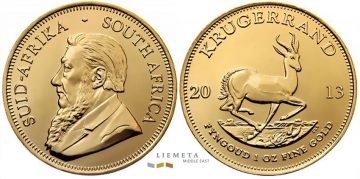
A springbok (a medium-sized antelope found mainly in southern and southwestern Africa), gracefully prancing through the sparse steppe, emerged to the embodiment of the bullion gold coin since 1967: The Krugerrand is the first modern bullion gold coin, celebrating its 50th birthday two years ago in 2017.

Krugerrand gold coins are sold since 1967 with an unchanged design

The standard version of one ounce remains the most popular gold product from South Africa. Krugerrand coins are nowadays the epitome of precious metal investments for millions of smaller and bigger investors. Its reddish gold colour is world-famous, distinguishing the Krugerrand coin from other bullion gold coins. The colour stems from the coin’s copper gold composition, which increases its hardness and makes it more scratch-resistant than other gold coins. Krugerrand coins have a gold purity of 22 carat, equalling to 91,667 %. Due to its relatively high copper content, the weight of the coin is above one ounce; the pure gold content of a one-ounce Krugerrand coin is always one troy ounce. Collectors and investors from all over the world are preferring the coin’s properties and its high production quality. In many countries, the Krugerrand coin is the most sought-after bullion gold coin.

One of the reasons for the popularity of the Krugerrand gold coins is the fact that its design did not change since 1967. On its backside, the coin shows the African springbok, while a portrait of the former president of the South African Republic, Paul Kruger (1825 – 1904) is depicted, from which the coin took its name, “Krugerrand”. “Rand” is the currency of the Republic of South Africa. Since its jubilee in 2017, the Krugerrand gold coin bears a small jubilee stamp (“Privy Mark”) next to the springbok.

Krugerrand gold coins are the best-established symbol for modern precious metal investments

When gold bullion fans but also people without any particular ties to numismatics or precious metals investments are imagining a gold coin, they mostly have the picture of the Krugerrand gold coin in front of their eyes. Krugerrand gold coins are a popular present on weddings in many countries. Many people who start investing in precious metals on a smaller scale typically buy Krugerrand gold coins.

After a difficult start, Krugerrand gold coins became a bestseller

When the Krugerrand gold coin was initially launched in 1967, it was not obvious at all that it would become so famous in the world. Back in those days, only few people invested in gold, because the Bretton-Woods-System standardised the currency rates for the world’s most important trade currencies worldwide – and thus the price of gold was fixed as well. Back in 1967, the price for one ounce of gold was 35 US Dollar. As investment in precious metals did not make much sense in those days, gold coins did not exist like today. People who wanted to invest in gold coins either had to buy re-productions of historical gold coins, or to buy gold bars.

At that time, the laws of the USA prohibited its citizens to own gold, except for gold coins, provided they are a legal tender. The government of the Republic of South Africa wanted to encourage people to invest in gold. It found its way around the prohibition for US citizens by printing a gold coin and declaring it legal tender. The Krugerrand gold coin was born!

The precious metals market back in 1967 was yet on its infant stage, and thus the Rand Refinery in Germiston/Johannesburg produced only very small amounts of Krugerrand gold coins. Those Krugerrand gold coins are rare collection items today with values well above the gold market price. After the termination of the Bretton-Woods-System in 1971, prices for precious metals formed on the free markets. Consequently, demand increased and thus did the number of Krugerrand gold coins printed each year, reaching the millions.

In 1986, after huge sales, when most countries boycotted South Africa because of its apartheid regime, Krugerrand gold coins disappeared from the markets. The Krugerrand coin only recovered at the beginning of this millennium and reached again an annual production in the six-digit range only in 2007. But since then, investors and collectors show an ever-increasing demand in Krugerrand gold coins.

Krugerrand gold coins are produced by two companies in South Africa. Since 1920, the Rand Refinery, owned by the Chamber of Mines, is the central place for the refining of raw gold (doré bars or cast bars) in South Africa. Since its foundation, the Rand Refinery produced more than 50.000 tons of fine gold, which is equal to almost a third of all gold existing in the world. The other important place of gold refining is Switzerland, producing well over half of the world’s fine gold. Other than raw gold from South Africa, the Rand Refinery is also refining raw gold from other states in Africa. The Rand Refinery also produces the round blanks, being the unprinted or unstamped raw coin rounds of the later Krugerrand gold coin.

Those round blanks are then transported from the Rand Refinery in Johannesburg to the state-owned South African Mint in Pretoria, about 50 km distance. The South African Mint then mints (stamps or prints) the final Krugerrand gold coins from the round blanks.

Krugerrand gold coins are also available in denominations smaller than one ounce, namely in the sizes of 1/2-, 1/4- and 1/10-ounce gold coins.

Krugerrand gold coins are not only sought-after by smaller precious metals investors, but by larger investors as well. Some investors prefer investing in large amount of Krugerrand gold coins, or other gold coins, up to the range of over a million Euros or Dollars. Those investors main motivation is the better flexibility when selling small amounts, especially under scenarios of the collapse of banking systems. Krugerrand gold coins are still an official currency of South Africa, with a value based on the global gold market price of gold.

Krugerrand gold coins are sold with a premium that is higher than the premium on gold bars, depending on the availability in the market, especially when buyers are requiring Krugerrand gold coins of an older production date.

Liemeta is providing Krugerrand gold coins of various denominations and production dates, which can be safely stored in Liechtenstein, in the name of the client.

We do not offer investment advice:

This information is provided solely for general information and educational purposes. It is not, and should not be construed as, an offer to buy or sell, or as a solicitation of an offer to buy or sell.

A Paradigm Shift to Gold in 2019


In June, gold finally broke through the technical US$ 1.360 barrier and has been moving steadily around the US$ 1.400 level since, reaching its highest level at US$ 1.453,09 on 19thJuly, since May 2013. The headlines are signaling a gold bull market developing from news reporters, to banks and central banks, to gold miners. Naturally, there are always reasons why a certain asset class develops in any specific way. For gold at the current moment there are at least 6 strong catalysts that are all converging at the same time which are analyzed here under.


1. Basel III – 0% Realization Risk Weight on Gold

Basel III went into effect worldwide on 1stApril, 2019. Non-liquid assets are evaluated in the bank statements of banks under the consideration of the difficulty to liquidize an asset. The specific difficulty to liquidize a non-liquid asset is entered in the books in form of a value deduction. The value deduction may be a few percent (10,20,25%) depending on the asset. For gold the BIS decided that the banks are allowed to enter physical gold held without any value deduction and thus gold is now considered in balance sheets as 100% equal to cash on account, i.e. a 0% realization risk weight. This is applicable for gold with a minimum purity of 995.0, i.e. fine gold.

This signifies a reversal in attitude and policy and giving a gold an official recognition in the international financial system; a step towards re-monetarization of gold. It is also a reason why there is no VAT on fine gold in the EU.


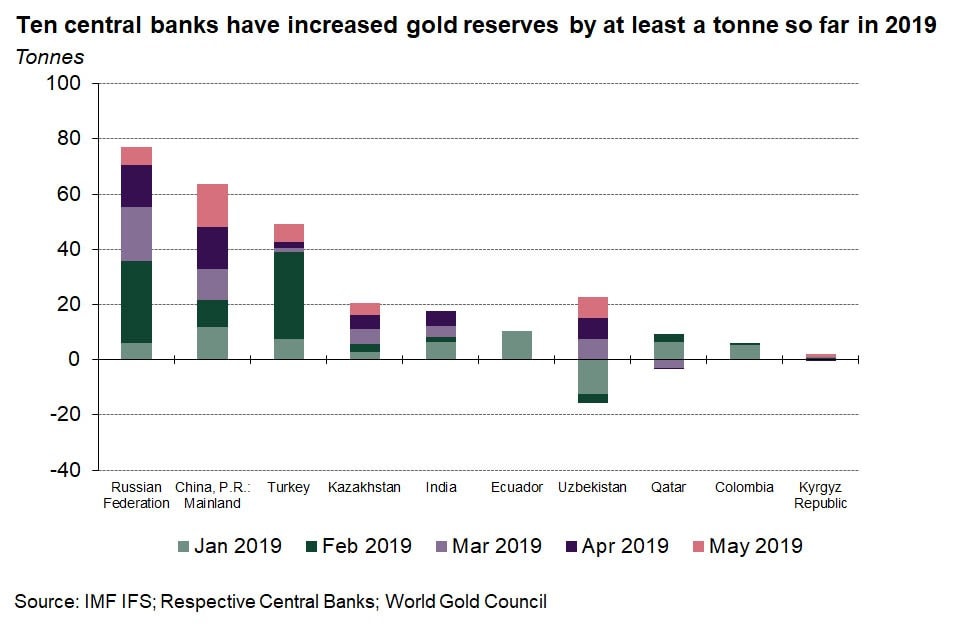
2. Central Banks are on a Gold-Buying-Spree

For the first time in generations, central banks are treating gold like money. In 2010, we saw a reversal in the attitude of Central banks that changed from being net sellers of gold to net buyers. Since then this trend has been ongoing, peaking in 2018 in which Central Banks bought a record amount of 651 tonnes of gold. The highest level since 1971 following the Nixon era, when the USD was de-linked from the Gold Standard. 2018 also marked a 75% increase on 2017.
 

Russia – the Top Net Buyer

Russia has become the 5thlargest net holder of gold. In 2018 Russia got rid of nearly US$ 100 billion of US Treasuries and according to the World Gold Council replaced much of this with gold.

A major reason for this is to reduce its dependence on the US Dollar by using gold as money.

In 2016, for example, Turkey and Iran were engaged in a “gas for gold” plan. With Iran under US Sanctions through this plan Turkey could import gas from Iran and pay in gold.

Gold will aid in conducting business and settling trade independent of the US Government in the near future.


3. China’s Golden Alternative

With the growing tensions in North Korea in 2017, the US threatened to kick China out of the US dollar system if it didn’t coerce on North Korea. This would have left China struggling to import oil and engage in international trade bringing its economy to a halt.

In order for this not to happen, last year the Shanghai International Energy Exchange launched a crude oil futures contract denominated in Chinese Yuan. This would be the first time that large oil transactions are allowed to be made outside the US dollar system since World War II.

Large reserves of Yuan are however also a problem which most oil producers do not wish to maintain. As such, China has linked the crude futures contract with the ability to convert the yuan into physical gold, without touching the Chinese government’s official reserves, through gold exchanges in Shanghai and Hong Kong.  

This will allow gold producers to sell oil for gold completely bypassing any restrictions, regulations or sanctions of the US financial system. Additionally, a lot of money will flow into yuan and gold as opposed to us dollars and treasuries.

Doing the math:

China is the world’s largest importer of oil.

To date, China has imported an average of 9.8 million barrels of oil per day which is expected to grow at least 1% per year.

With the oil price currently hovering at US$ 60 per barrel, China is spending around US$ 588 million per day on oil import.

Current gold price is US$ 1.411 an ounce, and thus this equates to an oil import worth over 416.726 ounces of gold per day.

Looking at this from a conservative aspect and assuming only half of the Chinese oil imports will be purchased in gold soon, this would translate into an increased demand of more than 80 million ounces per year, or more than 70% of gold’s annual production.

This increased demand will doubtlessly shock the gold market when and if this shift takes place and this is a big step towards gold’s re-monetarization.


4. The FED

Following the 2008 crash, the Federal Reserve implemented several emergency measures which were promised to be temporary at the time. Through Quantitative Easing (QE), i.e. money-printing, the Fed created US$ 3.7 trillion out of nothing which was used to buy mainly government bonds bloating the Fed’s balance sheet. The Fed also brought the interest levels down artificially to 0% which is the lowest in US history, and kept them there for the following 6 years.

In 2016 the Fed began its attempt to normalize its monetary policy by a. raising interest rates and b. reducing the size of its balance sheet to more “normal” levels. Interest rates rose from 0% to 2.5% and the Fed drained over US$ 500 billion from its balance sheet (11% from its peak).

The S&P 500 eventually peaked in September 2018 only to crash 19% by late December marking the worst December in stock market history since December 1931 during the Great Depression.

This spooked the Fed and instead of normalizing its monetary policy it announced that it would not raise interest rates in 2019 earlier this year. The Fed further announced it would phase out its balance sheet reduction program in Autumn.

This just shows how dependent the US economy is on artificially low interest rates and easy money and it is impossible for the US government to normalize interest rates with an abnormal amount of debt.

Following the nearly 6 years of 0% interest rates it has shown how the US economy is hooked on “easy money” and that it cannot even tolerate a modest decrease in the Fed’s balance sheet and a 2.5% interest rate which is still far below historical averages.

It seems the monetary tightening cycle is over and the next move is a return to QE and 0%, or even negative, interest rates. This would weaken the dollar but would no doubt be good for gold.

With the Feds move from tightening to signaling future easing, the Fed has turned a major headwind for the gold market into a tailwind. ​


5. Mergers & Acquisitions in the Gold Mining Industry

We have seen a number of mega deals since beginning of 2019 which is a signal that the largest gold mining companies believe gold and gold stocks are currently cheap with a positive increase on the horizon. It shows that the preference is yet to buying out other companies to grow rather than discovering and developing new resources. A major tailwind for gold and 2019 may well go down as a record-breaking year for gold M&As should this trend continue.

Some notable M&As this year:

  • Newmont Mining completed a $10 billion takeover of Goldcorp on April 18.
  • Barrick Gold acquired Randgold Resources in a $6 billion transaction that closed on January 1.
  • Barrick Gold has also announced a joint venture with Newmont after a hostile bid from Barrick failed. Barrick and Newmont, being the top two gold-producing companies in the world, will create the largest gold-producing operation in the world.


6. Gold-Backed Cryptocurrencies

Peter Grosskopf, the CEO of Sprott, recently called gold-backed cryptocurrencies “the most important thing to happen to the gold market in the last several decades.”

Gold-backed cryptos are currently shooting out of the ground as they combine the best of both allowing anyone anywhere in the world to send small or large amounts of gold reliably and without interference, even just with a tap on your smart phone. They are revolutionizing the monetary system and making the use of gold as money ever more convenient for the average person or business.


In a Nutshell we have the Following Big Picture:

  • Basel III puts gold into the money category again.
  • Record amounts of gold are being bought by Central Banks.
  • US sanctions have pushed countries to using gold in a creative manner.
  • The Fed’s reversal has worked well for the strength of gold against the dollar.
  • The increased number of M&As in the gold mining industry is a bullish sign for the gold price.
  • Gold-back cryptos are making the use of gold easier than ever.

Either of these catalysts would have a positive development on the gold price. With all the above converging at the same time, we could well be looking at a strong bull market.


Industry Experts Predict:

Mark Mobius says that gold’s set to push higher, potentially topping US$ 1.500 an ounce. He also added that [physical] gold should always form part of a portfolio, with a holding of at least 10%.

Paul Tudor Jones states: “If it hits $1,400, it will quickly move to $1,700, he said.”

Gold prices are set to “reach $2,000 by the end of the year,” predicts David Roche, president and global strategist at London-based Independent Strategy.

Credit Suisse and Morgan Stanley see gold having strong gains in the second half of 2019. Credit Suisse analysts see gold returning to its record nominal high of US$ 1.921 an ounce:

“Bigger picture though, given the magnitude of the base, which has taken six years to form, we suspect we could even see a retest of the $1,921 record high,” according to David Sneddon, global head of technical analysis at Credit Suisse.

Gold has established a multiyear base that could provide the platform for a “significant and long-lasting rally” for gold, he said. We concur with this view and indeed are more bullish as we see gold going to well over $3,000/oz in the long term.


Why LIEMETA ME Ltd?

LIEMETA ME Ltd, Nicosia, Cyprus, provides physical storage of precious metals at its prime location in Liechtenstein as well as trade services of precious metals, mainly gold, silver, platinum and palladium. 

Your precious metals are safely and securely stored “segregated and allocated” and we are one of the few physical storage houses for precious metals that provide full-cover insurance, including embezzlement.

Stored assets are fully legally owned by the client, client assets are of course not on our companies’ balance sheets.

LIEMETA is a privately owned, independent and non-bank company, meaning that its services do not fall within the scope of CRS or AEOI.

LIEMETA provides 100% discretion, 24/7 access to clients’ stored assets at its sophisticated unit and high-security building.

LIEMETA is proud to be chosen by high net-worth individuals as their trustworthy custodian, in Liechtenstein.

You are welcome to contact us through the below contact form.


We do not offer investment advice:

This information is provided solely for general information and educational purposes. It is not, and should not be construed as, an offer to buy or sell, or as a solicitation of an offer to buy or sell.



Κύπρος: Μετρητά σε θυρίδες ασφαλείας – Τί θα συμβεί μετά?

Σύμφωνα με την Financial Mirror, η Τράπεζα Κύπρου και η Ελληνική Τράπεζα έχουν μισθώσει 17.000 θυρίδες ασφαλείας. Θεωρείται ότι αυτό είναι μια ασφαλής επιλογή? Είναι η αποταμίευση μετρητών σε τράπεζες στο εξωτερικό μια ασφαλής επιλογή? Ή θα ήταν πιο ασφαλής επιλογή, η αποθήκευση των φυσικών ράβδων χρυσού εκτός του τραπεζικού συστήματος?

Ως γνωστόν, το 2013, κατά τη διάρκεια της κρίσης στην Κύπρο, αρκετός κόσμος έχασε τις αποταμιεύσεις του άνω των €100.000 λόγω χρεωκοπίας της πρώην Λαϊκής Τράπεζας. Ως εκ τούτου, η Τράπεζα Κύπρου έπρεπε να ανακεφαλαιοποιηθεί. Δεν εκπλήσσει το γεγονός ότι τα θέματα εμπιστοσύνης στις τράπεζες παραμένουν στο επίκεντρο μέχρι και σήμερα, γράφει η Financial Mirror.


Έλλειψη εμπιστοσύνης στις Κυπριακές Τράπεζες

Η έλλειψη εμπιστοσύνης στις Κυπριακές Τράπεζες στρέφει πολλούς πελάτες των τραπεζών σε εναλλακτικές λύσεις και γι ‘αυτό οι Κύπριοι αποθηκεύουν μετρητά, ράβδους χρυσού, κοσμήματα, έργα τέχνης και άλλα τιμαλφή σε 17.000 θυρίδες ασφαλείας σε τράπεζες. Κάποιοι αλλοι έχουν επιλέξει να ανοίξουν τραπεζικούς λογαριασμούς στο Ηνωμένο Βασίλειο ή και σε άλλες χώρες και στέλνουν τα χρήματα τους σε λογαριασμούς στο εξωτερικό.

Μετά την κρίση του 2013, η κυβέρνηση σκόπευε να κατασχέσει επίσης το περιεχόμενο όλων των θυρίδων ασφαλείας που υπήρχε στις τράπεζες. Η πρόθεση αυτή δημιούργησε τεράστια  προβλήματα και έντονη διαμαρτυρία και, κατά συνέπεια, η κυβέρνηση παραιτήθηκε από την πρόθεση αυτή.

Ο πρόεδρος της Τράπεζας Κύπρου, Josef Ackermann, δήλωσε στο Οικονομικό Φόρουμ Λεμεσού τον περασμένο Οκτώβριο, ότι “οι τράπεζες έχουν ρυθμιστεί, έχουν αναβαθμιστεί πολύ, αλλά δεν είναι αρκετά ασφαλείς”.

Οι τράπεζες επαναλαμβάνουν συνεχώς ότι πάνω από το 50% όλων των τραπεζικών λογαριασμών στην Κύπρο είναι υπό την κάλυψη του προγράμματος “Εγγύηση Καταθέσεων και Επίλυση Πιστωτικών και Άλλων Ιδρυμάτων”, ασφαλίζοντας τα υπόλοιπα στους τραπεζικούς λογαριασμούς μέχρι € 100.000. Ωστόσο, το Ταμείο Εγγύησης Καταθέσεων και Επενδύσεων (Τ.Ε.Κ.Ε), το οποίο αποτελεί την πηγή των αντισταθμιστικών πληρωμών, σε περίπτωση αδυναμίας των τραπεζών, διαθέτει λιγότερο από 80 εκατ. ευρώ, πράγμα αδύνατον, ακόμη και σε περίπτωση πτώχευσης μιας μικρής τράπεζας.

Τα μη εξυπηρετούμενα δάνεια (non-performing loans), παραμένουν ως σοβαρός κίνδυνος στον τραπεζικό τομέα, παρόλο που οι τράπεζες ήταν σε θέση να μειώσουν την έκθεσή τους μέσω της πώλησης ορισμένων.


Πόσο ασφαλής είναι οι θυρίδες ασφαλείας στις τράπεζες?

Η πλειοψηφία των καταθετών δεν γνωρίζει τα πιο κάτω:

  • Το περιεχόμενο των θυρίδων θεωρείται ιδιοκτησία της τράπεζας σε περίπτωση πτώχευσης μιας τράπεζας

    Όταν μια τράπεζα κηρύξει πτώχευση, ότιδήποτε βρίσκεται μέσα σε μια τράπεζα, ανήκει στην τράπεζα και αυτομάτως θεωρείται μέρος των περιουσιακών στοιχείων της τράπεζας, εκτός εάν ο ιδιοκτήτης των περιουσιακών στοιχείων αποδείξει στον εκκαθαριστή ότι είναι αυτός ο ιδιοκτήτης και όχι η τράπεζα.

    Ο μισθωτός μιας θυρίδας σε μια τράπεζα δεν σημαίνει απαραίτητα ότι είναι ο ιδιοκτήτης του περιεχομένου του. Η νομική ιδιοκτησία πρέπει να αποδεικνύεται με έγγραφα.
    Είναι πολύ σημαντικό να υπάρχουν αποδείξεις για την νομική ιδιοκτήσια του περιεχομένου μιας θυρίδας. Είναι πολύ δύσκολο για όσους δεν μπορούν να το αποδείξουν για οποιονδήποτε λόγο.

  • Αναφορά θυρίδων ασφαλείας

    Σύμφωνα με την ισχύουσα 5η οδηγία της Ε.Ε. (5TH EU AML Directive), ‘’εξασφαλίζεται η ταυτότητα των κατόχων τραπεζικών λογαριασμών και θυρίδων ασφαλείας, οι πληρεξούσιοι και οι πραγματικοί δικαιούχοι’’.

    Επιπλέον, τα κράτη μέλη της ΕΕ υποχρεούνται να “καθιερώσουν κεντρικούς αυτοματοποιημένους μηχανισμούς, όπως για παράδειγμα, μητρώο ή σύστημα ανάκτησης δεδομένων για να διασφαλιστεί η έγκαιρη πρόσβαση στα δεδομένα.

    Καθώς η πραγματική ιδιοκτησία των θυρίδων ασφαλείας μπορεί να σχετίζεται μόνο με το περιεχόμενο και όχι με τα ίδια τα κιβώτια, τα οποία αποτελούν ιδιοκτησία των τραπεζών, οι τράπεζες αναμένεται να εφαρμόσουν διαδικασίες δέουσας επιμέλειας και συμμόρφωσης (due diligence and compliance procedures) στο περιεχόμενο των θυρίδων ασφαλείας.

    Η εφαρμογή της πιο πάνω υποχρέωσης, αναμένεται να καθυστερήσει λίγο στην Κύπρο, όπως άλλωστε γίνεται συνήθως, και αναμένουμε να δούμε πώς θα το χειριστούν οι τράπεζες. Το αδήλωτο περιεχόμενο των θυρίδων θα δημιουργήσει πιθανώς πονοκέφαλο όταν οι πληροφορίες αυτές φτάσουν στις φορολογικές αρχές.

Tα μετρητά σε τρεχούμενους λογαριασμούς δημιουργούν ζημιές

Ο πιο συνηθισμένος τρόπος με τον οποίο οι άνθρωποι κρατούν τα χρήματα τους και τις οικονομίες τους είναι σε τρεχούμενους λογαριασμούς, είτε στην Κύπρο είτε στο εξωτερικό. Αυτό όμως, θεωρείται γενικά ο ασφαλέστερος τρόπος να χάσουν τα χρήματα τους.  

Κατά μέσο όρο το ποσοστό πληθωρισμού στην Ε.Ε. κατά την περίοδο 1999-2019 ήταν 1,71% ετησίως, δηλαδή, € 100.000 σε τραπεζικό λογαριασμό το 1999 έχει αγοραστική αξία μόλις €70.825 το 2019. Με λίγα λόγια, απώλεια μεγαλύτερη του 30%.

Αυτό, θα μπορούσε να αντισταθμιστεί με πάγιες καταθέσεις (fixed deposits) παρέχοντας έσοδα από τόκους. Προκειμένου να εξασφαλιστεί η ίδια αγοραστική αξία ύψους € 100.000 από το 1999 έως το 2019, ένας πελάτης μιας τράπεζας χρειαζόταν μέσο ετήσιο επιτόκιο 1,7396%, βάση των μέσων όρων της ΕΕ.

Ωστόσο, οι τράπεζες προσφέρουν σήμερα 0 έως 0,3% τόκους από τις πάγιες καταθέσεις.

Οι καταθέσεις σε τραπεζικούς λογαριασμούς δεν προστατεύονται από τους κινδύνους του τραπεζικού τομέα και από τον κίνδυνο πτώχευσης μιας Τράπεζας, όπως γνωρίζουν πολύ καλά και οι πρώην πελάτες της Λαϊκής Τράπεζας.


Φυσικός χρυσός ως εναλλακτική

Ιδανικά, ο πλούτος πρέπει να διαφοροποιείται και να επενδύεται σε διαφορετικές κατηγορίες περιουσιακών στοιχείων. Υπάρχει μια πολύ γνωστή σε όλους μας φράση “δεν μπαίνουν όλα τα αυγά στο ίδιο καλάθι”.

Πολλοί άνθρωποι επενδύουν σε ακίνητα, το οποίο δεν είναι κακή ιδέα. Ωστόσο, το γεγονός ότι υπήρξε η μεγάλη πτώση των ακινήτων το κάνει αυτόματα μη ρευστό περιουσιακό στοιχείο και ένας ιδιοκτήτης ακινήτου μπορεί να χρειαστεί μήνες ή ακόμη και χρόνια για να πωλήσει το ακίνητο όταν χρειάζεται χρήματα άμεσα.

Τα κρατικά ομόλογα μπορεί να ελλοχεύουν κινδύνους, ανάλογα με τη χώρα έκδοσης ή να παρέχουν πολύ μικρή απόδοση ή ακόμα και αρνητική απόδοση, όπως συμβαίνει με τα κρατικά ομόλογα της Γερμανίας. Τα αμερικάνικα T-Bonds (Treasury bonds) ανέρχονται σε ποσοστό περίπου 2,6 – 2,8%, αλλά φέρουν ένα απρόβλεπτο κίνδυνο του ίδιου του δολαρίου. Το ίδιο ισχύει για όλα τα προϊόντα αυτού του είδους, σε δολάρια.

Η επένδυση σε μετοχές μιας εταιρείας συνιστάται συνήθως βραχυπρόθεσμα, καθώς η αξία των μετοχών της εταιρείας εξαρτάται σε μεγάλο βαθμό από την διοίκηση μιας εταιρείας καθώς επίσης και από τους επενδυτές.

Η επένδυση σε χρηματοοικονομικά προϊόντα οποιασδήποτε φύσης συνεπάγεται ως επένδυση στην ευθύνη των άλλων.

Οι πιο συντηρητικοί άνθρωποι, οι οποίοι στοχεύουν να διατηρήσουν μακροπρόθεσμα την περιουσία τους, προτιμούν τα βασικά περιουσιακά στοιχεία στο χαρτοφυλάκιο τους. Δεν υπάρχει σχεδόν καμία εταιρεία διαχείρισης περιουσίας στην Ελβετία και κανένα ιδιωτικό τμήμα στις Ελβετικές τράπεζες που δεν συστήνει στους πελάτες τους να κατέχουν ένα σημαντικό μέρος των περιουσιακών τους στοιχείων σε χρυσό.

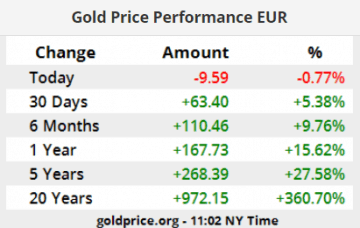
Συγκρίνοντας με τα στοιχεία στην πιο πάνω παράγραφο με τίτλο “Τα μετρητά σε τρεχούμενους λογαριασμούς δημιουργούν ζημίες’’, οι άνθρωποι που κρατούσαν φυσικό χρυσό στο χαρτοφυλάκιό τους, κατά προτίμηση εκτός τραπεζικού συστήματος, βρίσκονταν και βρίσκονται στην φωτεινή πλευρά της ζωής. Ακολουθεί ένας πίνακας αποδόσεων του φυσικού χρυσού τα τελευταία 20 χρόνια:


Λόγοι επένδυσης σε χρυσό:

Υπάρχουν πολλοί καλοί λόγοι για να διατηρήσετε τον πλούτο και την περιουσία σας σε μορφή φυσικού χρυσού:

  • Ο χρυσός δεν εκτίθεται σε κίνδυνο αντισυμβαλλόμενου και έχει εγγενή αξία.
  • Ο χρυσός δεν μπορεί να υποτιμηθεί όπως το χρήμα, το οποίο ενδέχεται να υποστεί υποτίμηση.
  • Ο χρυσός δεν μπορεί να δημιουργηθεί/παραχθεί από τις κυβερνήσεις, όπως για παράδειγμα όταν εκτυπώνουν χρήματα όταν χρειάζεται. Η έλλειψη χρυσού προστατεύει την αξία του.
  • Ο χρυσός δεν έχει κίνδυνο αθέτησης (default risk)
  • Ο χρυσός δεν εκτίθεται σε τραπεζικούς κινδύνους εάν αποθηκεύεται εκτός του τραπεζικού συστήματος.
  • Ο κάτοχος χρυσού είναι ο νόμιμος ιδιοκτήτης του χρυσού, εάν αποθηκεύεται με τον σωστό τρόπο και με τους κατάλληλους συνεργάτες. Αντίθετα, όταν κάποιος επενδύει σε χρηματοοικονομικά προϊόντα, ο επενδυτής δεν είναι ο νόμιμος ιδιοκτήτης, αλλά ο ιδιοκτήτης των υποσχέσεων που του έχουν δοθεί.
  • Ο χρυσός είναι ένα ρευστό περιουσιακό στοιχείο, τόσο ρευστό όσο το χρήμα.
  • Ο χρυσός είναι παγκοσμίως αποδεκτός και δεν ισχύουν συναλλαγματικές ισοτιμίες.
  • Ο χρυσός μπορεί να χρησιμοποιηθεί ως εγγύηση δανείων (λεγόμενα Lombard loans).
  • Δεν υπάρχει φόρος επί των κερδών από χρυσό εάν κρατηθεί για τουλάχιστον ένα έτος. Αυτό τουλάχιστον συμβαίνει στην Κύπρο, στις περισσότερες χώρες της ΕΕ και σε πολλές άλλες χώρες.


Εάν ενδιαφέρεστε να αγοράσετε φυσικό χρυσό και να αποθηκεύσετε με ασφάλεια εκτός του τραπεζικού συστήματος στο όνομα σας, σε εξελιγμένες εγκαταστάσεις αποθήκευσης υψηλής ασφάλειας στο Λίχτενσταϊν (Liechtenstein), παρακαλούμε επικοινωνήστε μαζί μας για περισσότερες πληροφορίες.


Cyprus: Cash in Deposit Boxes – What will happen later?

As per the Financial Mirror, Bank of Cyprus and Hellenic Bank have leased 17.000 security deposit boxes. Is this really a safe option? Is hoarding cash balances with banks abroad a safe option? Or would physical gold bars stored outside the banking system be safer?

During the crises in Cyprus in 2013, overnight people lost savings above a €100,000 as the casino bankers at Laiki Bank went under and Bank of Cyprus had to recapitalize itself. Unsurprisingly, trust issues in the banks remain front and centre to this day, the Financial Mirror wrote. 

Lack of trust in Cyprus Banks

The lack of trust in Cyprus Banks directed many bank customers to alternative solutions, and that’s why people of Cyprus store cash money, gold bars, jewellery and other valuables in 17.000 deposit boxes at banks. Others opened bank accounts in the UK and other countries and sent funds out there.

After the crises in 2013, the government considered to confiscate the contents of all deposit boxes at banks. This intention created a huge public protest and consequently, the government dropped its intention.

Bank of Cyprus (BoC) chairman Josef Ackermann said on the Limassol Economic Forum last year in October that “banks are better regulated now, they have come a long way, but they are not safe enough.”

Banks and officials don’t get tired of repeating that more than 50% of all bank accounts in Cyprus are under the cover of the “Deposit Guarantee and Resolution of Credit and Other Institutions Scheme”, insuring bank account balances up to €100.000. That’s right as far as the coverage is concerned. But the Cyprus Deposit Guarantee Fund for Banks, which is the source for those compensation payments in case of defaulting banks, has only less than €80 million funds available, which is nothing even in case of a small bank defaulting.

Non-performing loans, shortly NPLs, remain as a serious risk in the banking sector, although banks were able to lower their NPL exposure by selling off some of their NPLs to buyers of distressed loans.

How safe are deposit boxes with banks?

The majority of deposit is not aware of these two facts:

  • Content of deposit boxes is considered bank property in case of a bank’s bankruptcy
    When a bank goes bankrupt, everything within a bank belongs to the bank and becomes a part of the bank’s assets, unless the owner of belongings proofs to the liquidator that not the bank is the owner of a specific belonging but s/he her/himself.

    The pure fact that one is the lessee of a deposit box in a bank does not necessarily mean that s/he is the owner of its content. The legal ownership must be proven with documents.
    Hard days to come for those who can’t, for whatever reasons.

  • Reporting of deposit boxes with banks
    As per the current 5th EU AML Directive (Directive on the prevention of the use of the financial system for the purposes of money laundering or terrorist financing), “the identity of holders of bank or payment accounts and safe-deposit boxes, their proxy holders, and the beneficial owners is ensured.” Furthermore, EU member states are required to “establish centralised automated mechanisms, e.g. a register or data retrieval system, (to ensure) timely access to information (mentioned above).

    As beneficial ownership of safe-deposit boxes can only be related to the content of boxes, and not the boxes itself, which are property of the banks, banks are expected to apply due diligence and compliance procedures to the content of deposit boxes.

    As per the current 5th EU AML Directive (Directive on the prevention of the use of the financial system for the purposes of money laundering or terrorist financing), “the identity of holders of bank or payment accounts and safe-deposit boxes, their proxy holders, and the beneficial owners is ensured.” Furthermore, EU member states are required to “establish centralised automated mechanisms, e.g. a register or data retrieval system, (to ensure) timely access to information (mentioned above).

    As beneficial ownership of safe-deposit boxes can only be related to the content of boxes, and not the boxes itself, which are property of the banks, banks are expected to apply due diligence and compliance procedures to the content of deposit boxes.

    The application of this obligation will surely delay a bit in Cyprus, as usually, and it remains to be seen how banks will be handling this.
    Undeclared content of deposit boxes will probably create headache when this information arrives the tax authorities.

Cash on current account creates losses

Holding cash balances on bank current accounts, be it in Cyprus or abroad, is generally the surest way to lose money. However, this is the most common way that people keep their money.

With an EU-wide average Euro inflation rate of 1,71% annually during the period 1999 – 2019, €100.000 on a bank account in 1999 has a purchase power of only €70.825 in 2019, a loss of more than 30%.

This could be compensated with time deposits (fixed deposits) granting an interest income. To safe the same purchase power of €100.000 from 1999 to 2019, a bank customer needed an average annual interest rate of 1,7396%, based on the EU average figures.

However, banks currently offer 0 to 0,3% interest of fixed deposits.

And: Keeping little or bigger wealth on bank accounts only, does not shield money from risks of the banking sector in general and from the risk of bank defaults (bankruptcy), as ex-customers of Laiki Bank know well. It does also not protect against defaulting countries and later possible hair-cuts, like it happened in Greece, unfortunately.


Physical gold as an alternative

Ideally, wealth should be diversified and invested into different asset classes. Everybody knows the famous word, “don’t put all eggs in one basket”.

Many people invest in real estate property, which is not a bad idea in general. However, the big downturn of property is the fact that it is not a liquid asset and a property owner may need months or even years to sell the property when s/he needs money.

Government bonds may be risky, depending on the issuing country, or provide only a very small yield, or even a negative yield, as it is the case with German government bonds. American T-Bonds (Treasury Bonds) are at a rate of approx. 2,6 – 2,8%, but they bear the totally unpredictable risk of the currency itself, the US Dollar. The same goes for all USD-based financial products.

Investing in company shares is recommended rather for the short term, as the value of company shares highly depends on the skills and luck of the management of companies, and on the sentiments of the market, of investors.

Shares, as all other financial products, do bear a counter liability, the liability of fulfilment by the issuer. Investing in financial products of any kind always also means investing in the liability of others.

More conservative people, who aim to preserve their wealth on the long term, prefer fundamental assets in their portfolio. There is almost no wealth management firm in Switzerland and no private banking department of Swiss banks that does not recommend their clients to have a hold a substantial part of their assets in physical gold.

Comparing with the loss and interest figures in above paragraph headed “Cash on current account creates losses”, people who did hold physical gold in their portfolio, preferably held outside the banking system, were and are on the sunny side of life. Here is a table of physical gold yields during the last 20 years (as per 01/ß7/2019):


Many good reasons for gold:

There are many good reasons to keep wealth in form of physical gold:

  • Gold is not exposed to counterpart risk. Gold has an inherent value. What one holds in his/her hand is the value itself.
  • Gold cannot be debased like money, which may be subject to depreciation.
  • Gold cannot be produced by governments as they print money when they need it. The scarcity of gold is protecting its value.
  • Gold has no default risk.
  • Gold is not exposed to banking risks if stored outside of the banking system.
  • The holder of gold is the legal owner of his/her gold, if stored in the right way and with the right custody partners. In contrast, when investing in financial products, the investor is not the legal owner of anything, but the owner of promises made to him/her.
  • Gold is a liquid asset, as liquid as money is.
  • Gold is globally accepted, and no exchange rates apply as they apply for different currencies.
  • Gold can well be used as a collateral for loans (so-called Lombard loans).
  • There is no tax on gains from gold, if held for at least one year. This is the case in Cyprus, in most EU countries and in many other countries.


Should you be interested in purchasing physical gold and storing it safely outside the banking system in your own name, in sophisticated high-security storage facilities in Liechtenstein, please contact us for further information.


We do not offer investment advice:

This information is provided solely for general information and educational purposes. It is not, and should not be construed as, an offer to buy or sell, or as a solicitation of an offer to buy or sell.
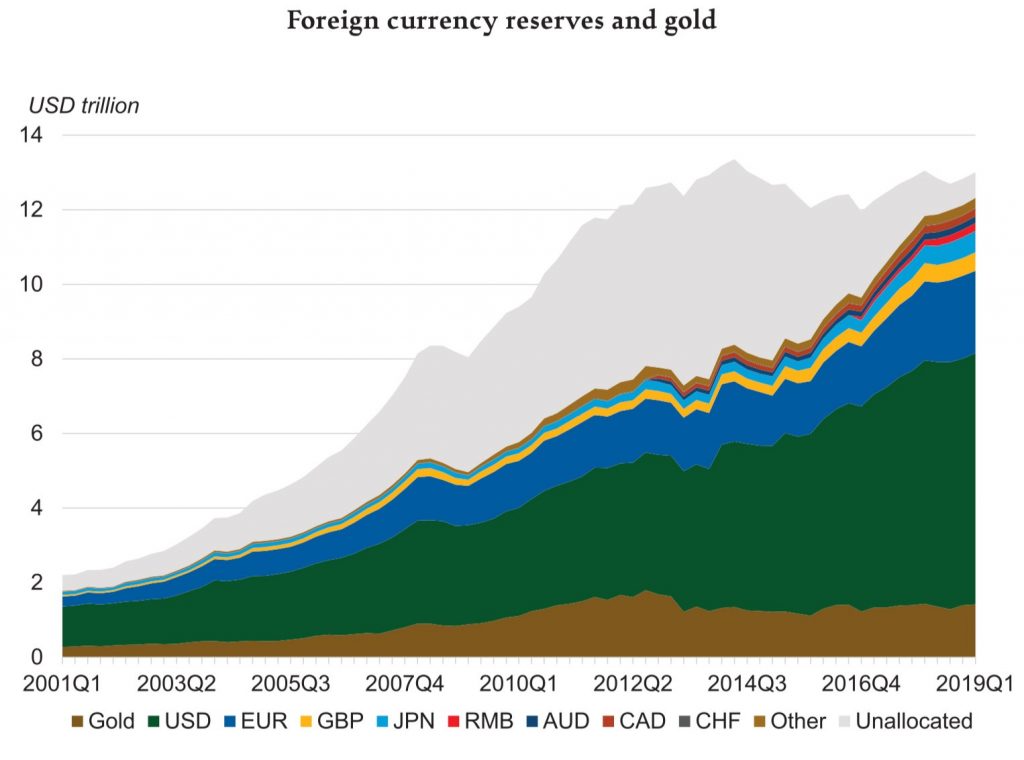
 

Watch gold, silver, platinum, palladium and EUR/USD live on the below interactive charts.

Important warning: Prices of the past do not necessarily repeat in future. Technical analyses may not be correct or even fail under unexpected influential developments in global and national politics, crises, economic developments, natural occurrences etc. Do only consider to invest funds that you do not need for your current life style or to cover your liabilities!

Gold / USDollar

Globally, gold is mainly – but not only – traded based on its USD value.


Gold / EURO

European buyers often prefer to buy gold based on their own currency, Euro. Global buyers holding Euro may prefer buying gold based on Euro when the Euro is strong.


Silver / USDollar

The global majority of silver is traded in USD.


Silver / EURO

European buyers often prefer to buy silver based on their own currency, Euro. Global buyers holding Euro may prefer buying silver based on Euro when the Euro is strong


Gold / Silver

The parity of gold to silver is an important indicator when predicting possible future price development of gold against silver or silver against gold.


Platinum / USD

Platinum can be traded both in US Dollar and Euro denomination. Thus, the EUR / USD parity plays an important role.


Platinum / EUR

Platinum can be traded both in US Dollar and Euro denomination. Thus, the EUR / USD parity plays an important role.


Palladium / USD

Palladium is a very rare precious metal, mainly used in the car industry and electronics industry.It can be traded both in US Dollar and Euro denomination. Thus, the EUR / USD parity plays an important role.


Palladium / EUR

Palladium is a very rare precious metal, mainly used in the car industry and electronics industry.It can be traded both in US Dollar and Euro denomination. Thus, the EUR / USD parity plays an important role.


EURO / USD

As gold and silver are mainly traded based on US Dollar and Euro, the EUR / USD parity is of course of interest.

Important warning: Prices of the past do not necessarily repeat in future. Technical analyses may not be correct or even fail under unexpected influential developments in global and national politics, crises, economic developments, natural occurrences etc.

Do only consider to invest funds that you do not need for your current life style or to cover your liabilities!

We do not offer investment advice:

This information is provided solely for general information and educational purposes. It is not, and should not be construed as, an offer to buy or sell, or as a solicitation of an offer to buy or sell.
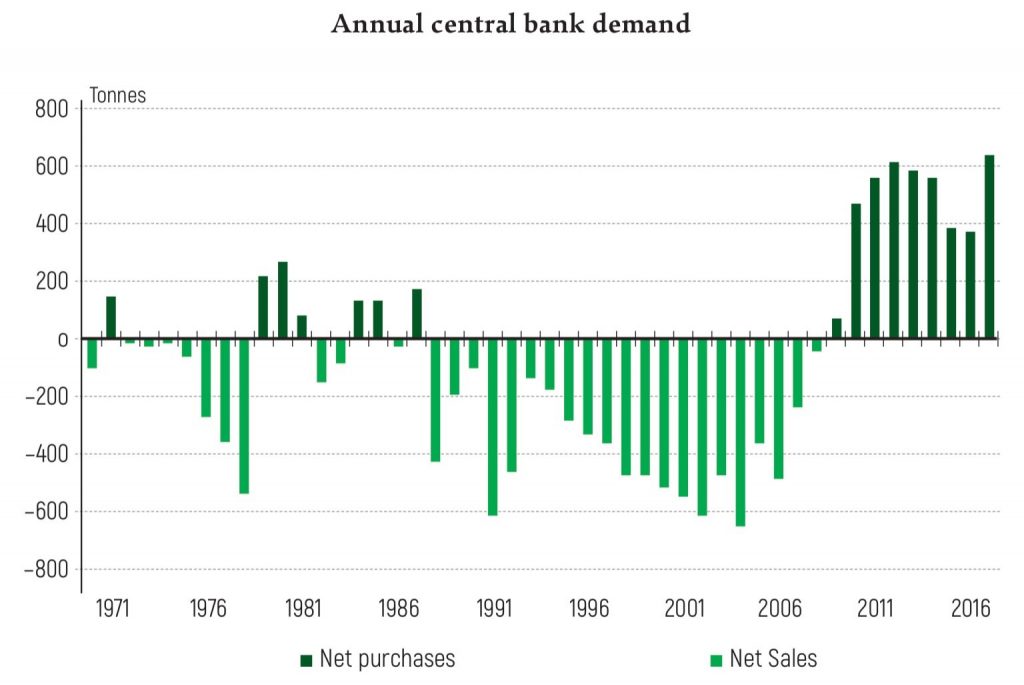
“Risk-Off”, “Gold-On”

When the risk appetite of investors is tapered due to changing market sentiment, they choose ‘flight to quality’ investments such as safe-haven-assets, such as Gold, to protect their investment portfolio against further losses. A move that has long been as visible as during the month of May, 2019.


The Main Markets

Stock markets ended the month discernibly lower across the globe with their worst monthly return since December 2018. Average global stock returns at end of May:

  • US Tech -9%
  • Japan -8%
  • EM -8%
  • US S&P 500 -6%
  • Europe -6%
  • China -6%

The US-China Trade War is continuing and additionally we have been taken by surprise by the announcement of the US planning to impose tariffs on Mexico in the coming weeks resulting in yet a further downturn in the market. May also marked a price fall in commodities, led by oil which dropped 8% on a week and a cumulative of 15% over the month of May. Since the financial crisis, the 3m/10y yield curve is the most negative at -20bps. This is contrary to the 2m/10y curve which, despite falling yields, in fact steepened last week with the news that it is highly likely that the Fed will indeed impose further rate cuts (near to 100% probability) despite their dovish stance a few months ago. The market is now signaling 2-3 rate cuts to come this year with a probability of 50% by July and 80% by September, as the chart below shows.


Fed Rate Cut Probabilities

Source: Bloomberg


The Effect on the Gold Market

The week ending May showed a marked rise in the gold price which was up 1,6% and this was mainly reasoned by Friday’s market sell-off. The flight to quality is clearly evident with gold shining in its role as a safe-haven-asset during the week. End of May gold stood 1,71% higher, denoting the strongest month since January this year, whilst on the year gold stands 1,9% higher. With that, gold is outpacing emerging market stock performance in USD terms. Gold’s role as a safe haven during periods of marked sell-offs and/or an increase in systematic risk is apparent. Gold remained fairly flat over the month where there were only small movements in the market, however when the US stock market was down by more than 1% in a day, which occurred 4 times in May, gold rose on average by 90bps on each of those days.

End of last week, the gold price surged above USD 1.300 and is continuing to do so this week. Traders and analysts are now focusing on the USD 1.365 level which has been a multi-year resistance line.


Source: Netdania – daily Gold Price in USD

References: World Gold Council, Bloomberg, Netdania


Why LIEMETA ME Ltd?

LIEMETA ME Ltd, Nicosia, Cyprus, provides physical storage of precious metals at its prime location in Liechtenstein as well as trade services of precious metals, mainly gold, silver, platinum and palladium. 

Your precious metals are safely and securely stored “segregated and allocated” and we are one of the few physical storage houses for precious metals that provide full-cover insurance, including embezzlement.

Stored assets are fully legally owned by the client, client assets are of course not on our companies’ balance sheets.

LIEMETA is a privately owned, independent and non-bank company, meaning that its services do not fall within the scope of CRS or AEOI.

LIEMETA provides 100% discretion, 24/7 access to clients’ stored assets at its sophisticated unit and high-security building.

LIEMETA is proud to be chosen by high net-worth individuals as their trustworthy custodian, in Liechtenstein.

You are welcome to contact us through the below contact form.


We do not offer investment advice:

This information is provided solely for general information and educational purposes. It is not, and should not be construed as, an offer to buy or sell, or as a solicitation of an offer to buy or sell.
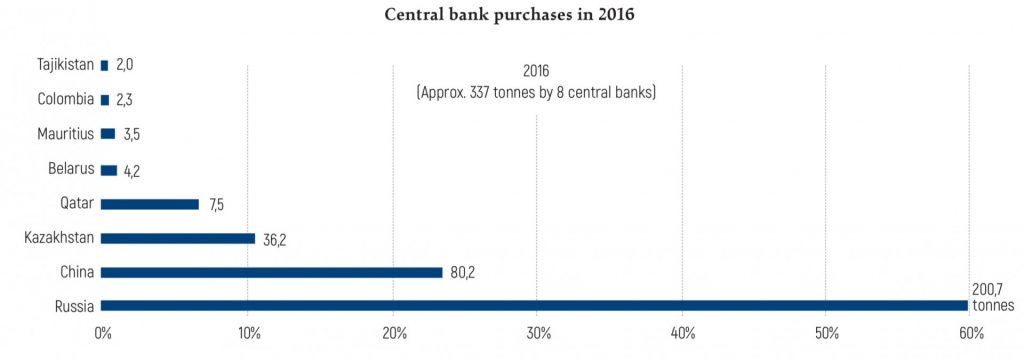


Gold As A Strategic Asset


Some buy gold as a luxury good, in the form of jewellery, and some use it for investment, or both. It is a highly liquid asset that is also very scarce and unlike many other commodities it is not used. It is no one’s liability. Being an element there is as much gold today as there was thousands, or even millions of years ago. The World Gold Council outlines four fundamental roles that holding gold plays in a portfolio which are discussed in depth here under:


As a source of long-term returns


Gold is valuable. It has been used in history as a form of money and today is used as a store of wealth. The price of gold has increased by an average of 10% year on year since 1971 when it began to be freely traded. Gold’s long-term results are comparable to stocks and actually higher than bonds or commodities. Gold’s value increases and price surges in times of market stress as opposed to other key asset classes, as witnessed during the 2008 financial crisis. We saw a 150% gain in the value of gold while on the other hand stocks crashed. As such, even a small allocation in gold would have offset the unfavourable returns elsewhere. It would also have provided security and a peace of mind when the banks crashed, provided gold was not stored in that specific bank and instead at a designated private physical storage company on segregated and allocated basis (such as Liemeta ME Ltd). For in depth information on the forms of gold storage please read our article: Physical Gold Storage.

Wealth preservation often only matters at certain times and that is usually during times of turmoil, war, currency debasement and financial troubles. Since these are too difficult to accurately predict it is always a good idea to have a small allocation of your portfolio in gold (as a rule of thumb: 7-15% approximately). Thus enhancing overall asset performance.

“Gold has not just preserved capital but has helped capital grow.” It has consistently outpaced inflation:


During the past 8 years Central Banks have been net-buyers of gold. During the first quarter of 2019, central banks bought a total of 145,5 tonnes of gold which is 68% percent more than a year earlier and a 7% increase in global gold demand for that period.


As a portfolio diversification tool to mitigate losses during times of market stress


It is not the standalone performance of gold that works, it is its stature as an example of “diversification that works”, as the WGC says. During times of rising correlations between other asset classes, gold remains reserved for most of the time. Extreme times then send people away and towards gold. During the 2008-09 crisis, for example, “hedge funds, broad commodities and real estate, long deemed portfolio diversifiers, sold off alongside stocks and other risk assets.” That was not, though, true of gold.

Gold investors benefit from both the fact that the gold market is deep and liquid. By the WGC’s estimates, “physical gold holdings by investors and central banks are worth approximately US$2.9 trillion, with an additional US$400 billion” as open interest via the gold derivatives markets. There is definitely some depth there.

The source of gold demand for its value as diversification looks like this:


The source of gold demand for its value as diversification.


As to the liquidity of the gold market we get transactions between US$ 150 billion to US$ 220 billion per day. This is the combined figure of both spot and derivatives OTC markets.

The average trading volume in gold exceeds the trading volume of all stocks in the S&P 500, for example.


It is a liquid asset with no credit risk that has outperformed fiat currencies


Gold is rare and gold is finite. Fiat money on the contrary can be printed in unlimited quantities to support monetary policies.


Gold has outperformed all major fiat currencies over time.


Gold goes beyond commodities


Although gold shares some similarities with commodities there are some distinctive differences when analyzing the supply and demand side such as:

Gold supply is balanced and mining is spread out evenly around the world such that political instability in a particular region will not create excessive supply shocks. Unlike typical commodities gold is not consumed thus its above ground stocks can be continuously utilized. Its demand for both as a luxury good and as an investment safe vehicle speaks for itself and results for more effective downside portfolio protection. Due to its nature and purpose being used and bought all around the world, its correlation to other assets is reduced.


In conclusion “from an empirical perspective, including a distinct allocation to gold has improved the performance of portfolios with passive commodity exposures” ~ World Gold Council.


Reference: World Gold Council


Why LIEMETA ME Ltd?

LIEMETA ME Ltd, Nicosia, Cyprus, provides physical storage of precious metals at its prime location in Liechtenstein as well as trade services of precious metals, mainly gold, silver, platinum and palladium. 

Your precious metals are safely and securely stored “segregated and allocated” and we are one of the few physical storage houses for precious metals that provide full-cover insurance, including embezzlement.

Stored assets are fully legally owned by the client, client assets are of course not on our companies’ balance sheets.

LIEMETA is a privately owned, independent and non-bank company, meaning that its services do not fall within the scope of CRS or AEOI.

LIEMETA provides 100% discretion, 24/7 access to clients’ stored assets at its sophisticated unit and high-security building.

LIEMETA is proud to be chosen by high net-worth individuals as their trustworthy custodian, in Liechtenstein.

You are welcome to contact us through the below contact form.


We do not offer investment advice:

This information is provided solely for general information and educational purposes. It is not, and should not be construed as, an offer to buy or sell, or as a solicitation of an offer to buy or sell.
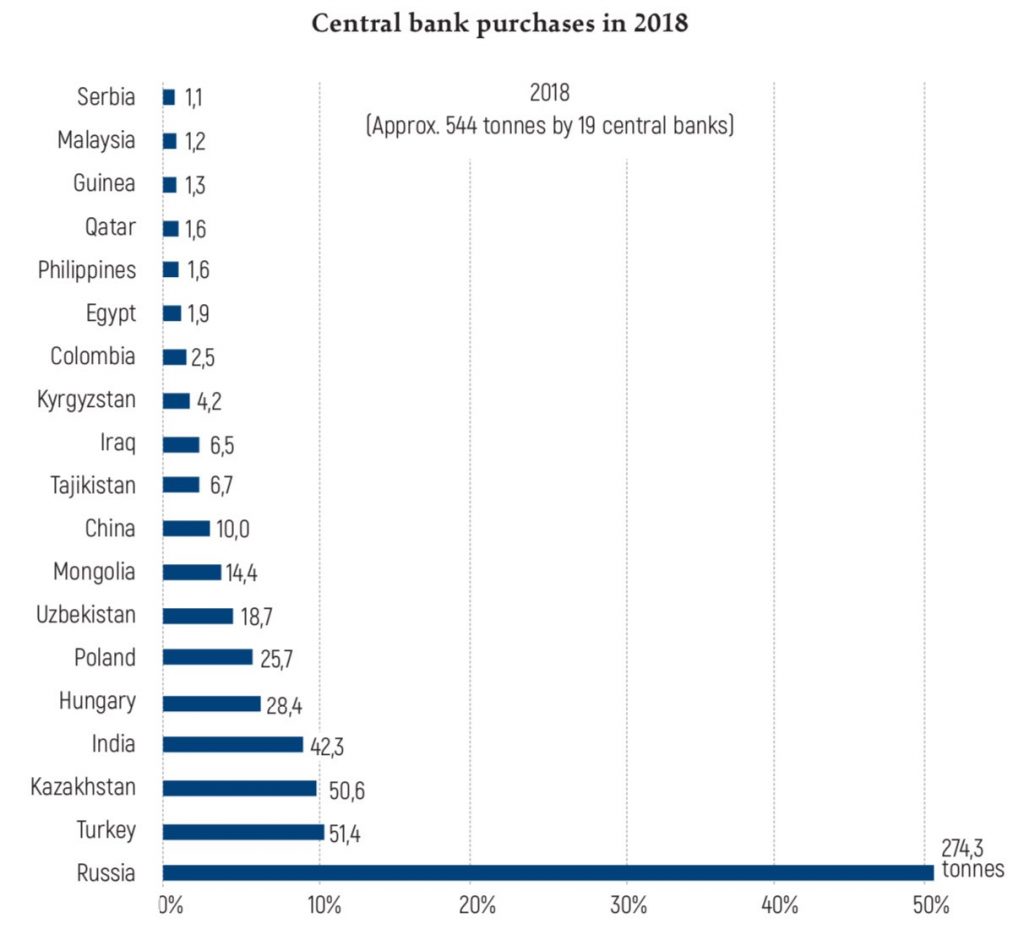
 

Shariah Gold Standard Encouraging Investors


Wealthy individuals in Islam have often been shying away from investing in gold and other precious metals in order to safeguard their investment portfolio against risks (and not for the purpose of speculation), as it did not exist as an investible Shariah-compliant asset until lately. Since December 2016, the AAOFI Shariah Standard No. 57 on Gold has been opening doors to an entirely new vast, safe asset class; investment in physical gold and silver to provide guidance and less hesitation to invest in gold and silver as a means of portfolio diversification and hedging against risks such as banking, political, economic, credit and counter-part risks.

In Muslim tradition, gold has for far more than one thousand years, and still does, played a pivotal role as a means of payment, for wealth protection and to facilitate trade. Its use has however been restricted due to its Ribawi nature, putting it into a special category regarded as so important to life that they cannot be hoarded (others being silver, dates, wheat, salt and barley). In terms of Shariah compliance these items must be sold on weight and measure and cannot be traded for future value or speculation.

Muslim Investors have therefore been restricted in gold investment in the form of bullion bars and even mining shares.

Since inception of the Shariah Standard No. 57 on Gold jointly launched by the Accounting and Auditing Organization for Muslim Financial Institutions AAOFI and the World Gold Council (WGC) “Muslim consumers and investors can now benefit from exposure to gold, including its portfolio diversification properties, its status as a safe haven asset, and its role as a long-term preserver of wealth,” Ms. Dempster says of the WGC.

A key element to meeting the Shariah Standard is that any investment must be backed by physical gold.

During 2018, a strong trend in the gold sector was witnessed from West to East, partly fueled by the increasing demand from Muslim investors both retail and institutional. Demand for gold bars and coins in the Middle East hit a five-year record high in 2018 amounting to 255,3 mt, which denotes an increase of 6% on 2017. On a single market basis, the forerunners were Iran with 91,2 mt (+41%), Egypt with 27,2 mt (+11%) and Kuwait with 17 mt (+3%.

In Turkey, where investors are interested in Shariah Gold too, the Central Bank has vastly been increasing its gold deposits and investors’ demand for gold surged. In 2018, Turkey’s annual gold purchases increased to 74,1. The Turkish Republic launched the first sovereign gold-backed Sukuk in 2017, therewith demonstrating its leadership in Sukuk innovation and its national ambition to be an Muslim finance hub of the region. This development mobilized 2.200 mt of household gold (i.e. gold privately held at home) to enter the economy.

It is apparent that the MENA region, particularly GCC, as well as SEASIA will play a vital role in shaping the future demand of gold not only in terms of reducing the overall risk-profile of one’s investment portfolio but it may well assist in Muslim banks meeting the regulatory requirements of Basel III. Basel III requires a bank to hold a higher amount of high-quality liquid assets to buffer against financial stress. Most banks prefer to use bonds. However, since bonds do not meet Shariah requirements, gold can now be used instead. Naturally, this growth will have a positive effect on the gold price in the near future. The Shariah Gold Standard will facilitate the creation of a broader range of saving, hedging and diversification products. This will furthermore become interesting to the shifting mindset in terms of investment techniques of the millennials of the Middle East, who are already controlling 10% of the world’s wealth which is likely to increase to 17% by 2020.

Advantages of investing in gold to hedge against risks

Gold practically exhibits no correlation to major Muslim asset classes such as major Muslim equity indices, sukuk and REITs and is therefore a powerful diversification tool. Since it is also less volatile it is also a safe asset class with no credit risk or third-party liability. Gold has produced 8% stronger returns over the last 8 years over other Sharia-compliant asset classes thus undermining its powerfulness as a diversifier of an investor’s portfolio. For Muslim investors gold has become a strong new tool to protect Muslim investment portfolios as Muslim investors cannot use derivative-based risk management instruments. Gold provides a safe and accessible asset class to the illiquid and limited investible asset classes available for Muslim investors as it is one of the largest liquid asset classes. In fact, it is 24 times larger than the current volume of issued sukuk. Gold is safer than many sovereign sukuk and valued at USD 7,0 trillion in size.

Some important Shariah Rulings on Gold in terms of Constructive Ownership and Physical Possession

“Gold for gold, silver for silver, wheat for wheat, barley for barley, dates for dates, and salt for salt; like for like, in equal amounts, hand to hand; and if these types differ, then sell as you wish as long as the payment is made hand to hand.” ~ narration by Ubaidah bin al-Samit.

This lays out the framework of Hadith dealing with gold and establishes two key principles, namely:

  • Same type: equal amount and immediate delivery
  • Different type: immediate delivery

Constructive possession is only realized when there is a proof of ownership through holding of a certificate with the stated serial numbers, for example. The gold must also be clearly identifiable, allocated and distinguishable from others, i.e. best stored segregated and allocated. Unallocated storage is not permitted. Physical possession of gold must be a given and enabling the buyer to dispose of it at his wish.

Reference: The original Shariah Standard No. 57 on Gold
in English, Arabic and Turkish language.


Why LIEMETA ME Ltd?

Liemeta – Fully Shariah Compliant Certified Gold and Silver

Liemeta is certified Shariah compliant by the Scholars of the Shariah Supervisory Board of Amanie Advisors, all our operations and procedures regarding the sale and custody storage of physical gold and silver are in line with the AAOIFI Shariah Standard No 57 on Gold.

LIEMETA ME Ltd, Nicosia, Cyprus, provides physical storage of precious metals at its prime location in Liechtenstein as well as trade services of precious metals, mainly gold, silver, platinum and palladium. 

Your precious metals are safely and securely stored “segregated and allocated” and we are one of the few physical storage houses for precious metals that provide full-cover insurance, including embezzlement.

Stored assets are fully legally owned by the client, client assets are of course not on our companies’ balance sheets.

LIEMETA is a privately owned, independent and non-bank company, meaning that its services do not fall within the scope of CRS or AEOI.

LIEMETA provides 100% discretion, 24/7 access to clients’ stored assets at its sophisticated unit and high-security building.

LIEMETA is proud to be chosen by high net-worth individuals of the MENA region as their trustworthy custodian, in Liechtenstein.

You are welcome to contact us through the below contact form.


We do not offer investment advice:

This information is provided solely for general information and educational purposes. It is not, and should not be construed as, an offer to buy or sell, or as a solicitation of an offer to buy or sell.
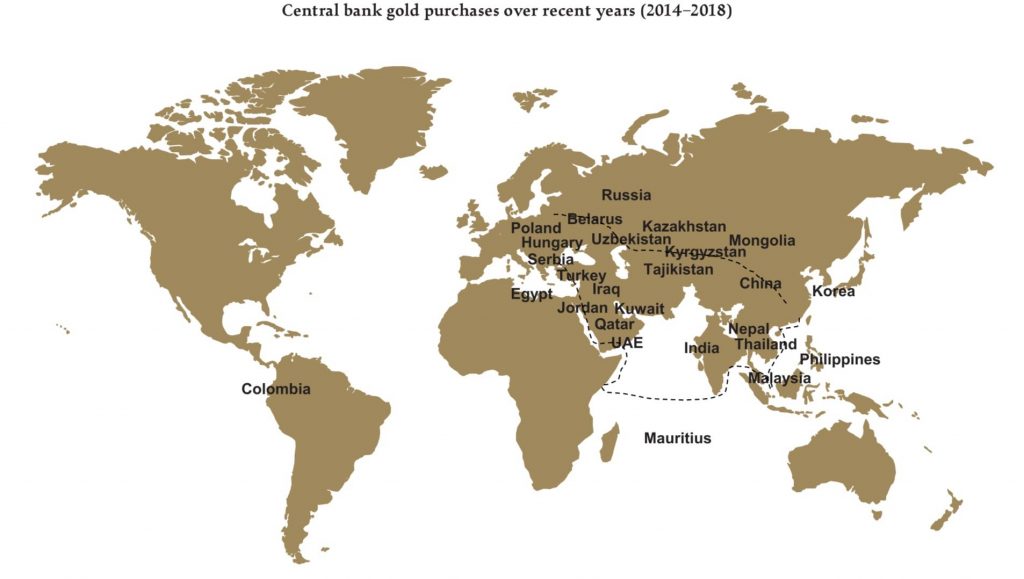
 

Fiziki altın ve gümüșe uzun vadeli yatırım: en emniyetli saklama hizmeti, Avrupa’nın kalbinde.

Fiziki altın ve gümüș, yüzyıllardan beri en güvenilen uzun vadeli yatırım aracıdır.

Fiziki kıymetli madenlere yatırım (bașlıca altın, gümüș, platin ve paladyum olmak üzere), enflasyondan korunmak için en önemli yöntemdir. Örneğin; 1910 yılında ABD’de bir galon benzin 10 US cent’ti, yani USD 0,10. Bu rakam, 0,72 ons gümüș’e eșdeğerdi. 104 yıl sonra, yani 2014 yılında, ABD’de bir galon benzin USD 3,61 değerine yükseldi. Fakat bu fiyatın gümüș karșılığı 2014’te yine 0,72 ons’tu.

Ayrıca, bilindiği gibi, birçok ülkenin Merkez Bankaları tonlarca fiziki altın saklamaktadır ki – para birimlerinin olası așırı bir de değer kaybına ya da bașka ekonomik felaketlere karșı en güvenli önlemdir.

Altın ya da gümüșünüzün hukuki sahibi olmak önemlidir

Fiziki altın ya da gümüșe stratejik yatırım yapan kimseler varlıklarını muhtelif risklere karșı korumak ister.

Ancak enflasyon, korunması gereken risklerden sadece bir tanesidir. Örneğin:

  1. Bankaların kasa dairelerinde saklanan fiziki altınlar ya da son zamanlarda pek rağbet gören “altın hesapları”na kayıtlı altınların hukuki sahibi bankalardır.

    Neden?

    %99,99 saflığında olan fiziki altın nakit parayla eșit olarak değerlendirilir ve bu yüzden bankaların nakit varlıklarının arasında yeralmakta ve bankaların bilançolarının aktiflerine kayıtlıdır. Bankalar, kasa dairlerinde bulunan ya da altın hesaplarına endekslenmiș altınlarının hukuki sahipliğini müșterilerine devretse, devredilen altınlar bankanın aktiflerinden ve nakit pozisyonlarından çıkar. Bu durumda bankanın nakit pozisyonları azalıp yasal sermaye-nakit paritesi tehlikeye girer ya da yasal asgari oranının altına iner.

    Bu yüzden, bankalar fiziki altın satarken sattıkları altının hukuki mülkiyetini müșterisine devretmeyip sadece kendisine ait olan ve kendisinin bilanço aktiflerinde kalan belirli miktardaki altın için müșterisine bir “hak” verir. Yani, bankadan altın satınalan müșteriye kendine ait olan altın üzerine bir hak tanır. Böylece yasal mülkiyet, bankada kalır. Bir krizde iflas eden bir bankadaki “müșteri” altınları da bankanın varlıkları arasında olduğu için müșteri sözde altınlarını kaybeder.

    Dolayısıyla temkinli yatırımcının, altınlarının yasal sahibi olacak șekilde altına yatırım yapması tavsiye edilir. Bu da ancak altınları bankaların dıșında saklama hizmeti veren bir kurulușu tercih ederek mümkündür.

  2. Yukarıda anlatılan sebeplerden dolayı bankalar “sattıkları” fiziki altınları müșterisine teslim etmez, çünkü gerçek yasal sahibi bankadır. İleri yıllarda altınlarınızı bașka bir yerde saklamak istediğinizde bu mümkün olmayacaktır.

    Bu yüzden uzun vadeli ciddi yatırımcılar, yine altınlarını bankaların dıșında saklama hizmeti veren bir kuruluș nezdinde saklanmasını tercih eder.

  3. Çok büyük bir risk teșkil etmemekle beraber, satınalınan kıymetli madenlerin sigorta durumuna bakmakta fayda var. Kıymetli madenlerin sigortalanması pek masraflıdır, çünkü sigorta primleri yüksektir. Bu yüzden birçok bankanın sakladıkları kıymetli madenler %100 olarak sigortalı değildir.

    Bu riske girmek istemeyen yatırımcı dolayısıyla saklama kurulușunun sigortasından kendisine ait olan kıymetli madenlerin ful sigorta kapsamında olduğuna dair bir teyit belgesini talep eder ya da kıymetli madenlerini kendi namına sigortalatırılmasını talep eder.


Liemeta, Lihtenștayn’de en yüksek güvenlik seviyelerinde bulunan özel binada ve banka sistemi dıșında kıymetli madenler saklama hizmetini sunmaktadır.

Yukarıda değinilen konularla ilgili olarak önemli avantajlarımız:

  • Lihtenștayn’deki saklama ve depo șirketi banka ya da finansal kurum olmayıp müșterilere ait olan kıymetli madenleri kendi bilançosunda tutmaz. Kıymetli madenlerini bizimle saklanan müșterilerimiz, kıymetli madenlerinin gerçek yasal sahibidir.
  • Müșterilerimiz, kıymetli madenlerini her zaman görebilir, teslim alabilir ya da bașka bir yere nakledilmesini talep edebilir.
  • Bizimle saklanan kıymetli madenlerin ful kapsamlı sigortalandığına dair, sigorta tarafından tanzim edilen sigorta teyit belgesi müșterilerimize teslim edilir. Sigorta teyit belgesi müșteri adına tanzim edilir, sigortalı kıymetli madenleri gösterir ve parasal sigorta kapsamını teyit eder.

Fiziki kıymetli maden müșterimizin yatırımları genellikle EUR 250.000’den bașlamasına rağmen daha küçük yatırım planlayan müșteriler de kabul ederiz.

Daha fazla bilgi için așağıdaki formla bize hemen ulașabilirsiniz.

Gold Prices Up as Fed Moves Dovish


Gold prices leaped on Wednesday, 20th March, to $1.309 an ounce, up 0,19% on that day, following the Federal Reserve’s unexpected dovish stance. The FOMC announced its decision to keep interest rates unchanged (between 2,25% and 2,50%) and no further rate hikes for 2019 versus the initially prognosed two rate hikes. It also announced that it will end its balance sheet runoff in September this year. This decision led to the US dollar plunging over night against its rival currencies and the EUR/USD surging to a six-week high.

Monetary Policy and the direction of the US Dollar have been a key trend to watch out for in 2019 to determine the direction of gold performance, but why is this so important?

A short historical analysis

Historically, gold performance has increased when the Fed shifted from a tightening to a more neutral stance. This effect may not always have been immediate but it has been apparent and the current cycle is similar to the last two cycles: 1999-2000 and 2004-2007, suggesting an upward trend in gold prices is possible in the near future:

  • Continuous rising gold prices over at least a 12-month period as witnessed in both cycles
  • A flat or inverted yield curve as was apparent in both cycles
  • Falling retail sales which also occurred during both cycles
  • Worsening credit conditions as happened during the 2006-2007 cycle
  • Unusual extensions of risk assets’ valuations during 2000
  • Peaking oil price during 2000

Basis the above there is a tendency towards increased gold performance during a post-tightening cycle. In 2001 it took 12 months for the gold price to rise 3.6% (12 months after the Fed stopped raising rates). On the hand, in 2007, it took only one month for the gold price to rise by 7% and 19% a year later. In 2008 gold significantly outperformed all other major stock markets. The average annual performance of gold from 2001 to 2019 has been +9.1%.

Today

Though there is an eventual visible strong gold performance it is not only the outcome of the FOCM that has an impact on this nor is this the only reason one should consider to add gold to their portfolio at this moment in time. Gold is and remains a safe-haven asset providing a source of return, diversification and liquidity to one’s wealth especially during times signaling a potential pre-recession phase. Demand and prices may therefore increase further on the basis of the following global financial markets risks:

  • The trailing road to current recovery which may be a sign of economic exhaustion
  • The flatting and inverting of key yield curves could well be a sign of a possible recession
  • Markets are reaching uncomfortably lofty valuations as last seen during the dotcom bubble and increased volatility
  • Consumer and corporate investors are having to deal with worsening credit conditions
  • Ongoing uncertainty surrounding trade negotiations between China and USA
  • Uncertainty on Brexit and its global implications

Tides are turning in the global monetary set-up

The global economy is dominated by the US Dollar however faith in the USD currency is diminishing which is measured in the proportion of global currency reserves held in US Dollars. Over recent years we have seen especially emerging countries steadily expanding their gold reserves. Central bank gold reserves of China, Russia, Turkey and India have substantially increased by 209%, 428%, 118% and 68% respectively since 2007 up to Q4 2018. A clear signal in the growing distrust of the US dollar and the global monetary and credit system therewith associated.

Precious Metals continue their rally today, 21.03.2019 noon (GMT+2):

Gold (USD)                      1.317,63             +0.17% (20.03.2019)

Silver (USD)                       15,593             +0.52% (20.03.2019)

Platinum (USD)                868,51             +0.15% (20.03.2019)

Palladium (USD)           1.605,92              +0.31% (20.03.2019)

Source of information: World Gold Council | Investment Update: The impact of monetary policy on gold


Why Liemeta ME Ltd?

Liemeta ME Ltd, Nicosia, Cyprus, provides physical storage of precious metals at its prime location in Liechtenstein as well as trade services of precious metals, mainly Gold, Silver, Platinum and Palladium. 

Your precious metals are safely and securely stored “segregated and allocated” and we are one of the few physical storage houses for precious metals that provide full-cover insurance including embezzlement.

Your stored asset is fully legally owned by you, client assets are of course not on our companies’ balance sheets.

We are a privately owned, independent and non-bank company, meaning that our services do not fall within the scope of CRS or AEOI.

We provide 100% discretion, 24/7 access to your stored assets at our sophisticated unit and high-security building.

You are welcome to contact us through the below contact form.


We do not offer investment advice:

This information is provided solely for general information and educational purposes. It is not, and should not be construed as, an offer to buy or sell, or as a solicitation of an offer to buy or sell.

 

The World Gold Council today launched a one-off essay collection, Gold 2048, bringing together industry-leading experts from across the globe to analyse how the gold market is set to evolve in the next 30 years.

Key conclusions emerging from authors such as George Magnus, senior economist; Rick Lacaille, Global Chief Investment Officer of State Street Global Advisors; and Michelle Ash, Chief Innovation Officer at Barrick Gold include:

  • The expanding middle class in China and India, combined with broader economic growth, will have a significant impact on gold demand.
  • Use of gold across energy, healthcare and technology is changing rapidly. Gold’s position as a material of choice is expected to continue and evolve over the coming decades.
  • Mobile apps for gold investment, which allow individuals to buy, sell, invest and gift gold will develop rapidly in India and China.
  • Environmental, social and governance issues will play an increasing role in reshaping mining production methods.
  • The gold mining industry will have to grapple with the challenge of producing similar levels of gold over the next 30 years to match the volume it has historically delivered.

Aram Shishmanian, CEO of the World Gold Council commented: Since its creation in 1987, the World Gold Council has worked with policymakers, regulators and industry participants to drive understanding of and, ultimately, demand for gold.” “The next 30 years will no doubt bring significant changes – some we anticipate, some that none of us predict. I am delighted that in Gold 2048 we have brought together a stellar set of contributors – economists, investment managers, leaders in the mining industry, as well as our own specialists – to consider the global trends and dynamics that will drive this fascinating market forward.” The full collection is available for download here: Report Gold 2048. You can follow the World Gold Council on Twitter at @goldcouncil.

(Press release of the World Gold Council, 17 May 2018)

Why LIEMETA ME LTD?

Liemeta ME Ltd, Nicosia, Cyprus, provides physical storage of precious metals at its prime location in Liechtenstein as well as trade services of precious metals, mainly Gold, Silver, Platinum and Palladium. 

Your precious metals are safely and securely stored “segregated and allocated” and we are one of the few physical storage houses for precious metals that provide full-cover insurance including embezzlement.

Your stored asset is fully legally owned by you, client assets are of course not on our companies’ balance sheets.

We are a privately owned, independent and non-bank company, meaning that our services do not fall within the scope of CRS or AEOI.

We provide 100% discretion, 24/7 access to your stored assets at our sophisticated unit and high-security building.

You are welcome to contact us through the below contact form.

We do not offer investment advice:

This information is provided solely for general information and educational purposes. It is not, and should not be construed as, an offer to buy or sell, or as a solicitation of an offer to buy or sell.
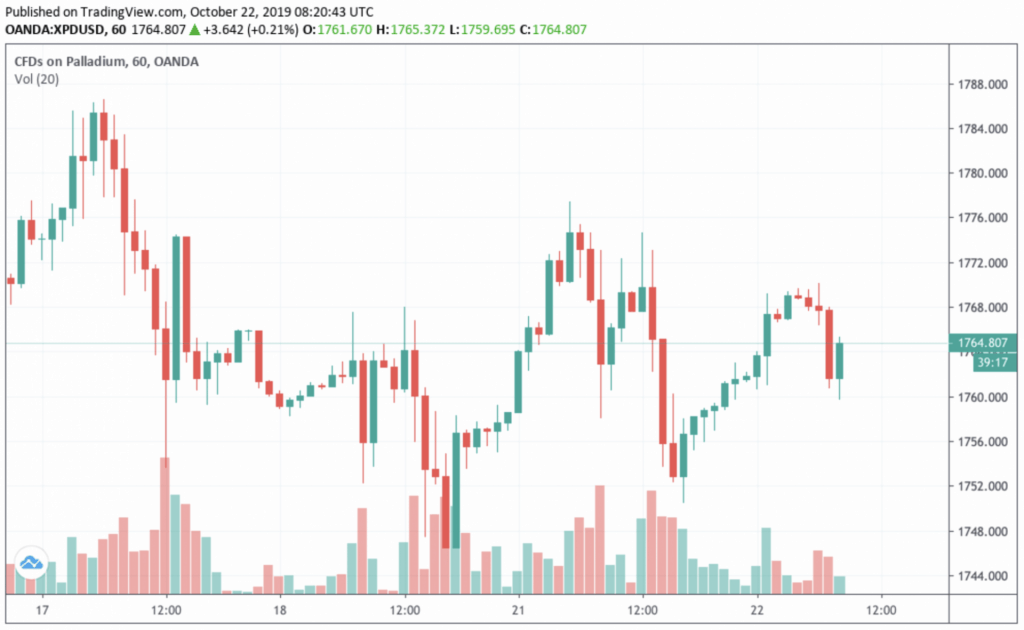
Physical Gold Storage – How?

“Unallocated”, “allocated”, “segregated”, or “allocated and segregated”.

These terms describe the type of storage and the legal relation the gold owner has to their purchased gold. It is therefore important to know the differences in order to purchase your gold through the correct channel bearing in mind the end-objective of your gold / investment.

UNALLOCATED Gold Storage

Also referred to as ‘Bank Gold’. Unallocated gold basically remains the property of the bank (or security storage companies, pool account providers, fabrication businesses, etc.) and you as an investor are essentially a creditor of the bank. This is the most widely traded form of gold and on which the ‘spot’ price is based.

Although unallocated gold is the most widely traded, it does have its downside future implications.

Once you have concluded your deal you are provided with a Certificate or a Purchase Confirmation stating that you now own 25 kg, for example, of physical gold that is safely stored with the bank. On the other hand, you may even open a gold account with the bank into which these 25 kg of gold are credited, without value, since value changes.

Your certificate or gold account does not include any bar numbers, i.e. no specific bar numbers from the banks’ gold stock have actually been allocated to you as the new owner. Physically speaking, the bank did not actually sell you any gold. The bank only sold you the right on any 25 kg of the banks’ stock of gold.

Thus, if at some point you wanted to collect your physical gold and take it elsewhere you would not be able to because you do not legally own any particular bars (only the “rights” on them). The assets in fact remain assets of the bank. Naturally, banks like to do this in order to meet various fiscal regulations and as gold is equally liquid to cash money, they can easily use this when calculating various capital adequacy ratios.

Should the bank go into insolvency, your gold is most likely at risk too for that sake and will become part of the liquidation trust, for example.

ALLOCATED Gold Storage

With allocated gold you actually become the outright owner of your purchased 25 kg of gold, as per the example above. The serial numbers of your gold bars will be on your certificate or your gold account confirmation, stored together with the bank’s general gold stock.

With this form you would actually find your owned gold bars in the bank’s vaults down below.

On the other side, you could actually rent your own safety deposit box at the bank and store your 25 kg of gold therein. Most banks will not necessarily suggest this option and will also dissuade you from doing this for reasons that your gold is much safer in their own vaults with the added benefit of their insurance cover. A bank would much rather keep your gold in their own assets. Accountancy leaves this open to allocate the gold as both the bank’s assets and your own.

Allocated gold is a more secure form or gold investment as you have the tangibility of the physical gold as well as the security of actually owning the gold.

SEGREGATED Gold Storage

Segregated implies that your 25 kg of gold are stored in a truly separated and clearly distinguishable location away from other owned gold bars.

Your gold bars are basically moved out of the bank’s or security storage company’s own stocks, placed in a separate safety deposit box that is marked and identifies you as the outright owner. Often, in fact they should be, these boxes are sealed and your certificate or gold account will show the seal numbers of the respective box(es). This means that you actually receive the exact same amount of gold you put into storage as when you take them out again.

Segregated is therefore a safer way for you as the owner to have your gold as part of your assets solely protected against third party claims or insolvency of the bank or security storage company for example.

SEGREGATED AND ALLOCATED Gold Storage

As the term explains, your 25 kg of gold are both separated from any other gold and your specific gold bars are allocated to you being the lawful owner of those 25 kg. This is the most sophisticated and secure from of physical gold storage.

Upon conclusion of the purchase of your 25 kg your confirmation will include both the box seal numbers as well as the serial numbers of your bars – unmistakably defined and distinguishable.

With segregated and allocated your gold bars are fully and legally-owned by you. This may be a pre-requisite if you are looking to insure your gold under your name or you may require this for tax declaration purposes.

To unlock the full investment potential of your physical gold, this form is no doubt the safest form of storage to use to especially hedge against counterparty and credit/insolvency risk through full private ownership and often with 24/7 access to your gold.

The above does not come without a price and each form of physical storage results in different level of expenses; the more sophisticated, the more operative expenses are involved. This will be discussed in another article.

Information for readers from the Middle East and other Muslim countries: Segregated and allocated storage, in the name of the client, is the only form of storage that is Shari’ah compliant.

Why LIEMETA ME LTD?

Liemeta ME Ltd, Nicosia, Cyprus, provides physical storage of precious metals at its prime location in Liechtenstein as well as trade services of precious metals, mainly Gold, Silver, Platinum and Palladium. 

Your precious metals are safely and securely stored “segregated and allocated” and we are one of the few physical storage houses for precious metals that provide full-cover insurance including embezzlement.

Your stored asset is fully legally owned by you, client assets are of course not on our companies’ balance sheets.

We are a privately owned, independent and non-bank company, meaning that our services do not fall within the scope of CRS or AEOI.

We provide 100% discretion, 24/7 access to your stored assets at our sophisticated unit and high-security building.

You are welcome to contact us through the below contact form.


We do not offer investment advice:

This information is provided solely for general information and educational purposes. It is not, and should not be construed as, an offer to buy or sell, or as a solicitation of an offer to buy or sell.